The Rise of Justinian
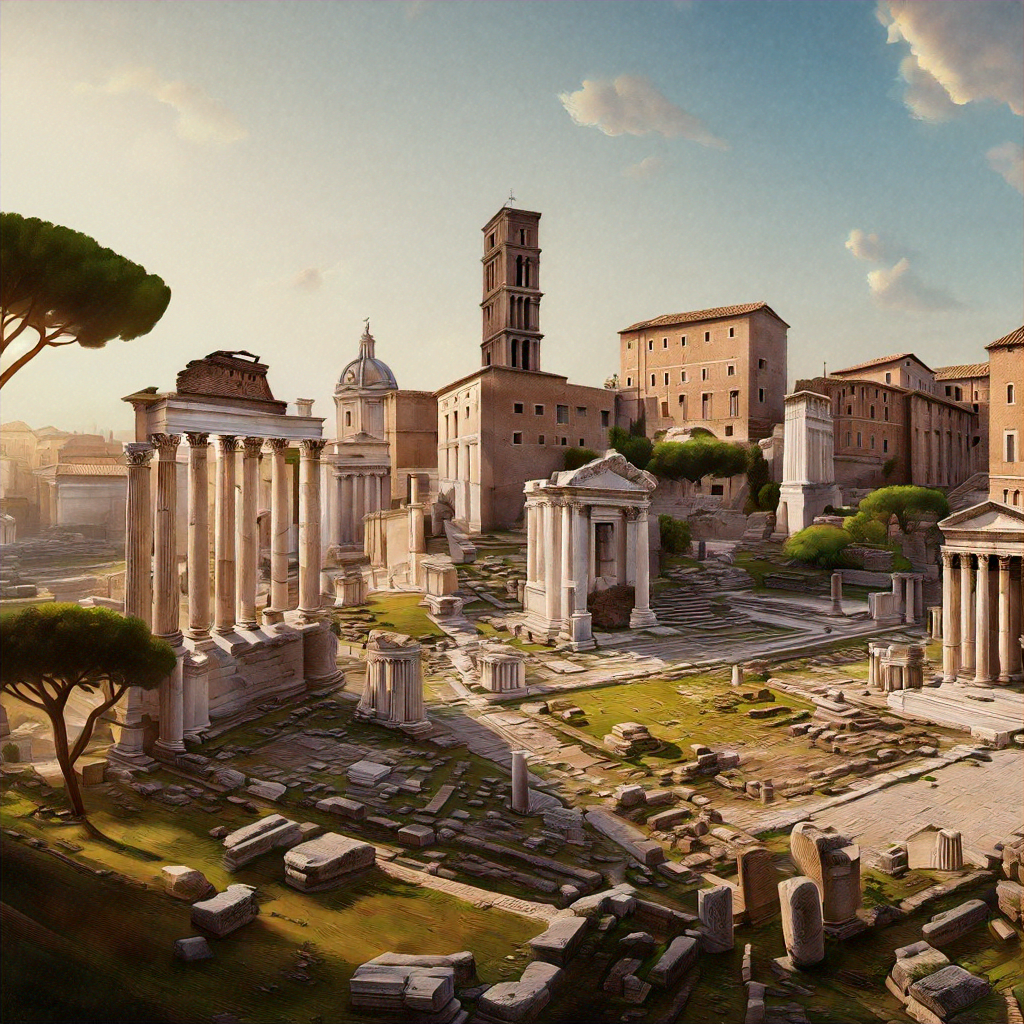
Opening Scene: Constantinople, 527 CE
The great dome of Hagia Sophia cast long shadows across the marble floors as the first rays of dawn crept through its eastern windows. Emperor Justin I, now in his seventies and barely able to stand, shuffled toward his throne for the last time. At his side walked his nephew Justinian, a man whose presence commanded attention despite his humble origins. The old emperor's hands trembled as he removed the imperial diadem – the crown that symbolized rule over the Roman world.
The assembled senators and courtiers held their breath. Many among them still whispered about Justinian's past: the peasant boy from Thrace who had arrived in Constantinople with nothing but a sheepskin bag, seeking his uncle's patronage. Some remembered how he had once spoken with a thick rural accent, how he had struggled to read Greek and Latin in his youth. Yet here he stood, about to become master of an empire that stretched from the Danube to the Nile.
As Justin placed the crown on his nephew's head, the gathered crowd erupted in acclamation: "Justinian Augustus, tu vincas!" (Justinian Augustus, may you be victorious!) The new emperor stood motionless, his face an inscrutable mask. At his side, a woman of extraordinary beauty watched with calculating eyes – Theodora, the former actress and courtesan who would become his empress and closest advisor. Together, they would attempt something that hadn't been achieved in centuries: the restoration of Roman power across the Mediterranean world.
Historical Context: An Empire at a Crossroads
By 527 CE, the Roman Empire had been effectively split for over a century. The western half had fallen to Germanic kingdoms, while the eastern portion – which we now call the Byzantine Empire – remained intact but faced mounting challenges. The empire was caught between the powerful Sassanid Persian Empire to the east and various "barbarian" peoples pressing on its European frontiers.
The previous century had seen the eastern empire weather numerous storms through a combination of diplomacy, military strength, and economic resilience. Constantinople, founded by Constantine in 330 CE, had grown into the greatest city in the Christian world, its massive walls protecting a population of nearly half a million people. The empire maintained sophisticated bureaucratic and legal systems inherited from Rome, even as Latin gave way to Greek as the primary language of administration.
Yet serious problems threatened the state's stability. Religious controversies between Orthodox Christians and various "heretical" groups created internal divisions. The army struggled to defend long frontiers while the treasury strained to pay for both military expenses and the elaborate court ceremonial that legitimized imperial rule. Many of the empire's subjects in Syria and Egypt felt alienated from Constantinople's Greek-speaking elite.
Into this complex situation stepped Justinian, whose reign would mark both the high point of the early Byzantine Empire and the last serious attempt to reunify the Roman world.
Main Narrative: Ambition and Achievement
Justinian's rise to power represented an unprecedented social climb in Roman society. Born Petrus Sabbatius around 482 CE in the village of Tauresium, he was adopted by his uncle Justin – a former peasant who had risen through military service to become emperor. The young Justinian received an education in Constantinople, quickly showing both intellectual gifts and burning ambition.
His marriage to Theodora in 525 CE shocked society but proved politically masterful. Despite her controversial past as an actress and courtesan, Theodora possessed a brilliant political mind and would prove invaluable during crises. Their partnership defied convention but transformed the empire.
Upon becoming emperor in 527 CE, Justinian launched ambitious programs on multiple fronts. He ordered a complete overhaul of Roman law, resulting in the Corpus Juris Civilis – a systematic legal code that would influence European law for centuries. He initiated a massive building program, with Hagia Sophia as its crowning achievement. Most ambitiously, he dispatched armies to reconquer the lost western provinces.
The empire's resources were stretched to their limits. In 532 CE, these pressures erupted in the Nika Riots, when competing chariot racing factions united in rebellion against Justinian's government. For five days, Constantinople burned as rioters controlled the streets. Many urged Justinian to flee, but Theodora famously declared, "Purple makes a fine shroud" – meaning she would rather die an empress than live as a fugitive. Justinian stayed, and his general Belisarius ruthlessly crushed the revolt, killing an estimated 30,000 citizens in the Hippodrome.
The military reconquest began in 533 CE with an invasion of North Africa, then controlled by the Vandal kingdom. Against odds, Belisarius succeeded brilliantly, restoring Roman rule within a year. This was followed by campaigns in Italy against the Ostrogoths, and in southern Spain against the Visigoths. By 554 CE, much of the western Mediterranean had returned to Roman control.
Consequences and Legacy
Justinian's achievements came at an enormous cost. The treasury was depleted, the army stretched thin, and newly conquered territories proved difficult to hold. When bubonic plague struck in 542 CE, killing perhaps 40% of Constantinople's population, the empire's resources were further strained.
Yet Justinian's legacy proved lasting in several ways. His legal code became the foundation of civil law traditions across Europe. Hagia Sophia stood as architectural inspiration for centuries. The empire's boundaries would never again reach so far, but his reign demonstrated that Constantinople remained the most powerful and sophisticated state in the post-Roman world.
Most importantly, Justinian's reign defined what the Byzantine Empire would become: a Greek-speaking, Orthodox Christian state that preserved Roman political and legal traditions while developing its own distinct culture.
Looking Ahead
As Justinian aged, new challenges emerged. The Sassanid Persians pressed harder on the eastern frontier, while Slavic peoples began moving into the Balkans. The next episode will explore how the empire faced these threats and adapted to a changing world, leading to the dramatic events of Heraclius's reign and the rise of a new threat: Islam.
This episode was created with AI assistance and audited for factual accuracy. See our AI methodology and editorial policy.