The Purple Death: Justinian's Plague
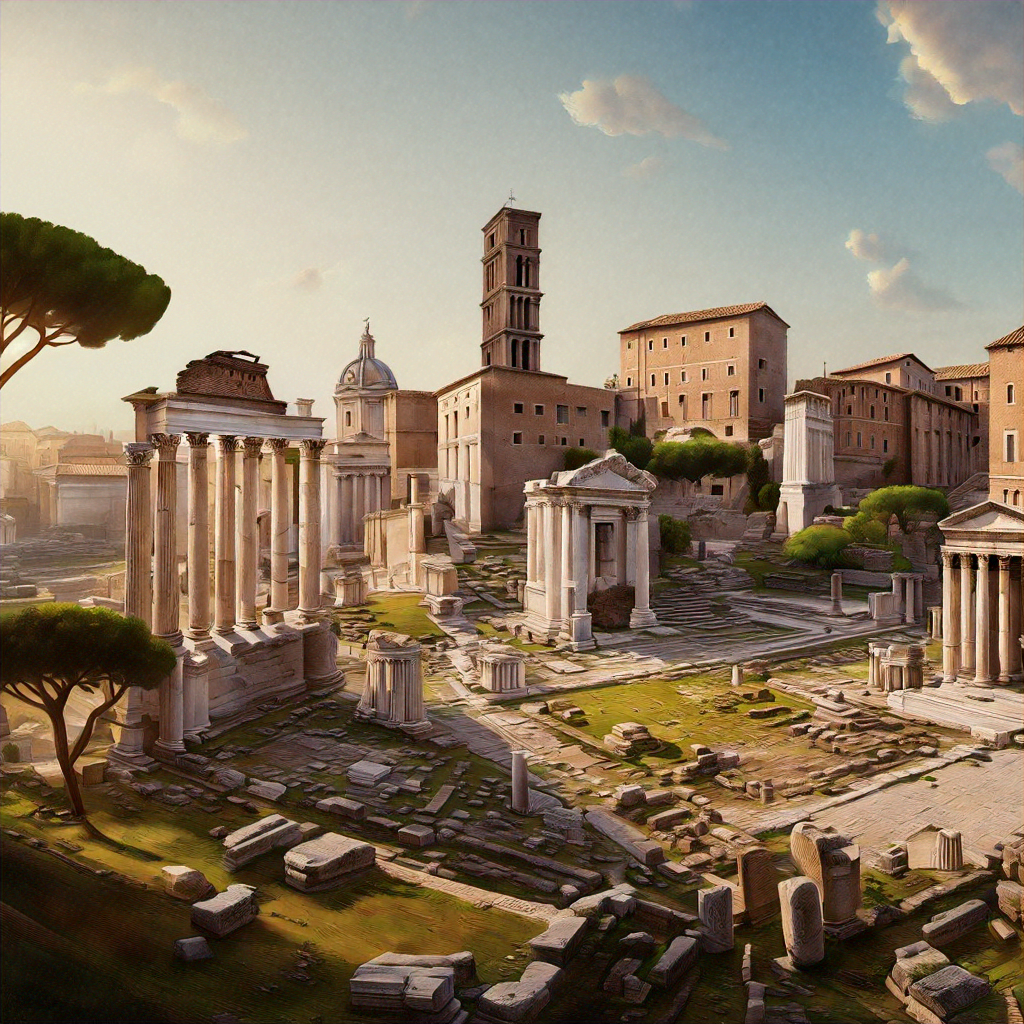
Opening Scene - Constantinople, 542 CE
The stench of death hung over Constantinople like a shroud. In the narrow streets of the capital, carts piled high with corpses creaked their way toward the city walls, while desperate prayers echoed from the great church of Hagia Sophia. Emperor Justinian I, who had dreamed of restoring the Roman Empire to its former glory, now stood at his palace window overlooking the Bosphorus, watching as his city died before his eyes.
The emperor's own body burned with fever – he too had been struck by the mysterious disease that was decimating his people. His wife, the formidable Empress Theodora, kept a vigil by his bedside even as reports arrived hourly of new deaths throughout the city. In the streets below, black buboes swelled on victims' bodies before they succumbed to agonizing deaths. The living abandoned the dead where they fell; family ties meant nothing in the face of this invisible killer.
The historian Procopius, writing from within the plague-stricken capital, recorded the horror: "And in some cases the bubonic swellings became inflamed, and the sufferer, overcome by the pain, would fall into a state of coma. Others were seized by a madness, and would leap from their beds and run wildly through the streets until they collapsed."
The great harbor of the Golden Horn, usually bustling with merchant ships from across the Mediterranean, lay eerily silent. The only vessels moving were funeral boats, carrying the dead to mass graves on the city's outskirts. The plague had arrived on grain ships from Egypt, transforming the empire's vital trade networks into carriers of death.
Historical Context
The Plague of Justinian struck the Byzantine Empire at its zenith. Under Emperor Justinian I (527-565 CE), the empire had embarked on an ambitious program of reconquest, seeking to restore Roman rule across the Mediterranean. His brilliant general Belisarius had already reconquered North Africa from the Vandals in 534 CE and was making significant progress in Italy against the Ostrogoths.
The empire's capital, Constantinople, was the largest and wealthiest city in the Christian world, with perhaps 500,000 inhabitants. Justinian had just completed construction of the magnificent Hagia Sophia, the greatest church in Christendom. Trade networks stretched from Britain to India, bringing wealth and goods to the empire's ports.
The plague first appeared in Pelusium, Egypt, in 541 CE. Modern scientific analysis has identified it as Yersinia pestis – the same bacterium responsible for the later Black Death. Carried by rats and spread by fleas, the disease moved rapidly along Byzantine shipping routes, reaching Constantinople in the spring of 542 CE.
The empire was particularly vulnerable due to its urbanization and extensive trade networks. Cities were densely populated, sanitation was poor by modern standards, and grain shipments – along with their rat passengers – moved constantly throughout the Mediterranean basin.
The Plague Strikes
The disease struck with devastating speed and efficiency. Procopius reported that at its height, Constantinople was losing 10,000 people per day. The symptoms were horrific: fever, chills, and the characteristic buboes – painful swellings in the groin, armpits, and neck that turned black before bursting.
In the countryside, entire villages were wiped out. Farmers died in their fields, leaving crops to rot unharvested. In urban centers, the dead piled up faster than they could be buried. Emperor Justinian ordered the construction of massive burial pits outside the city walls, but even these proved insufficient. Bodies were stacked like cordwood in churches or simply thrown into the sea.
The social fabric began to unravel. John of Ephesus, another contemporary chronicler, described how "Noble and middle-class men, as well as women, were carried away, corpse upon corpse, and died with no one to care for them or bury them." The wealthy fled to their country estates, while the poor died in their thousands.
The plague struck all levels of society. In addition to Emperor Justinian himself (who survived), many government officials and military commanders fell ill. The army was particularly hard hit, forcing the abandonment of several military campaigns. In Italy, Belisarius found his forces too depleted to press his advantage against the Ostrogoths.
The economic impact was catastrophic. Trade nearly ceased, tax revenues plummeted, and prices for basic goods soared. Many urban craftsmen died, taking their skills with them. Agricultural production collapsed as rural populations were decimated. The empire's sophisticated economic systems, built up over centuries, began to break down.
Consequences and Legacy
The Plague of Justinian marked the beginning of the end for Justinian's dream of reconstituting the Roman Empire. While he survived and continued to rule until 565 CE, his empire never fully recovered from the demographic and economic devastation.
Modern estimates suggest that the plague killed between 25% and 50% of the empire's population – perhaps 25-100 million people across the Mediterranean basin. The population of Constantinople would not return to its pre-plague levels for nearly a thousand years.
The plague returned in waves every 15-20 years until the mid-8th century, preventing demographic recovery. This population collapse contributed to the empire's inability to resist the Islamic conquests of the 7th century, which permanently stripped away the wealthy provinces of Syria, Egypt, and North Africa.
The Plague of Justinian also marked a turning point in human history – the first well-documented pandemic of bubonic plague, which would return centuries later as the Black Death. It demonstrated how interconnected trade networks could spread disease across vast distances, a lesson that remains relevant today.
Looking Ahead
As Justinian recovered from the plague, he faced a changed empire. His dreams of reconquest would continue, but with diminished resources and manpower. In our next episode, we'll explore how the emperor and his successors attempted to maintain their grip on power in this new reality, even as new threats emerged from the east and west. The Byzantine Empire would survive, but it would never again reach the heights it had achieved before the purple death struck.
This episode was created with AI assistance and audited for factual accuracy. See our AI methodology and editorial policy.