The Golden Age of Justinian
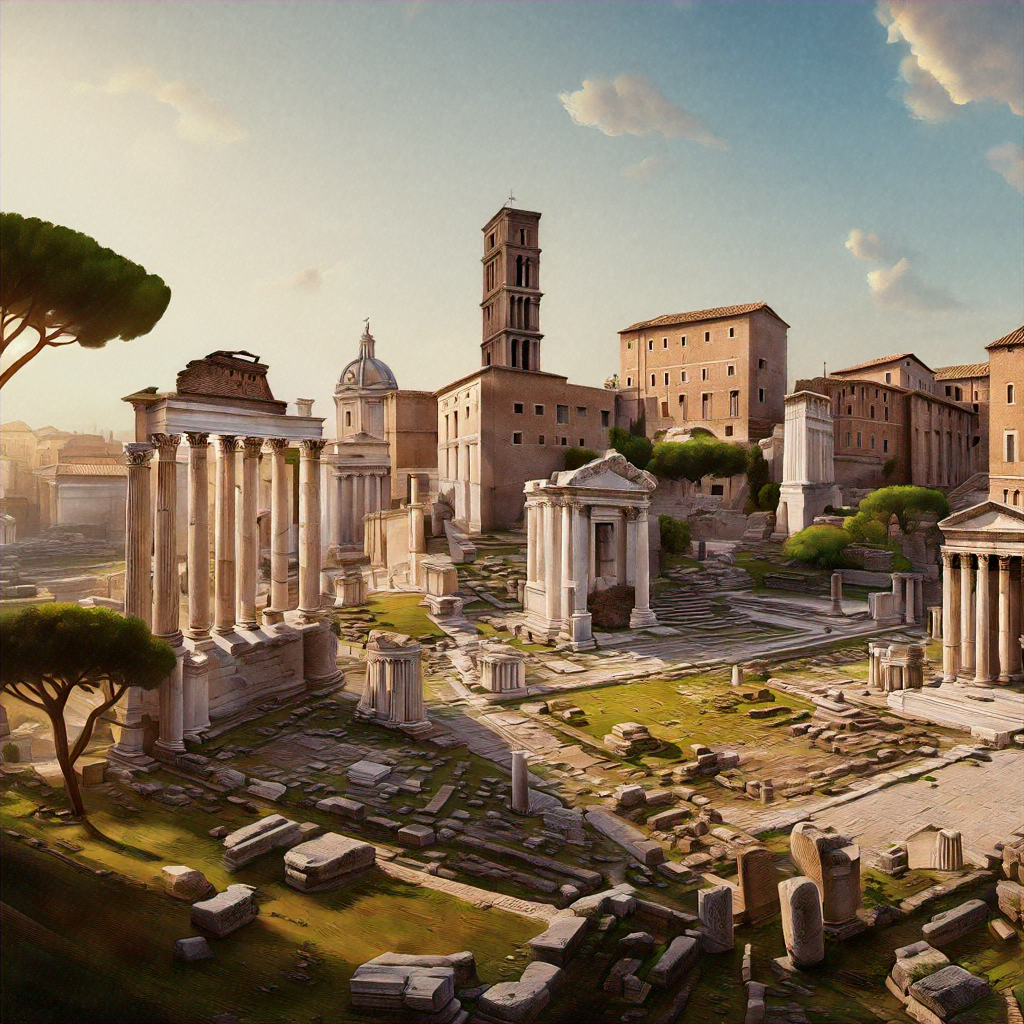
Constantinople, 532 CE
The air was thick with smoke and the screams of the dying. From his palace window, Emperor Justinian watched in horror as Constantinople burned. The Nika Riots had spiraled beyond control. What began as sports fan violence between the Blue and Green chariot racing factions had grown into a full-scale rebellion against his rule. Nearly half the city was ablaze, including the magnificent Hagia Sophia church.
His advisers urged him to flee. The mob numbered in the tens of thousands, and they had already proclaimed a rival emperor. Even his trusted general Belisarius counseled retreat. But then Theodora, his empress, rose from her purple cushioned throne. The former actress, whom many still scorned as a woman of low birth, spoke with steel in her voice:
"Those who have worn the crown should never survive its loss. Never will I see the day when I am not saluted as empress. If you wish to save yourself, my lord, you have money; ships await you; the sea is open. But consider whether, when you reach safety, you will regret that you did not choose death instead of safety. As for me, I approve a certain ancient saying: the royal purple is the noblest shroud."
Her words galvanized Justinian. He ordered Belisarius to take action. The general led his troops to the Hippodrome where the rebels had gathered, sealed the exits, and unleashed his soldiers. By day's end, over 30,000 rioters lay dead. The rebellion was crushed, and Justinian's grip on power was stronger than ever. This moment would mark the beginning of Byzantium's golden age.
The Empire in 527 CE
When Justinian ascended to the throne in 527 CE, the Roman Empire in the East stood at a crossroads. The Western Empire had fallen to Germanic tribes in 476 CE, but the Eastern half remained wealthy and powerful, centered on Constantinople. It still faced serious pressure: Persian aggression in the east, tribal invasions from the north, and the loss of wealthy western provinces to Germanic kingdoms.
Justinian himself came from humble origins. Born Petrus Sabbatius in a small Balkan village, he was adopted by his uncle Justin I, who had risen from peasant to emperor through a military career. Taking the name Justinian, he received an excellent education in law, theology, and classical literature. His marriage to Theodora, a former actress and courtesan who had reinvented herself as a deeply pious woman, scandalized society but proved to be one of history's most effective political partnerships.
The empire Justinian inherited still thought of itself as Roman, though Greek was increasingly the common language. Christianity had become deeply entrenched, yet theological disputes threatened unity. The economy was strong, built on trade and efficient tax collection, giving Justinian resources his western predecessors could only dream of.
The Great Reconquest
Justinian's grand vision was nothing less than the restoration of Roman rule across the Mediterranean. In 533 CE, he dispatched his brilliant general Belisarius to North Africa with a relatively small force of 15,000 men. Through superior tactics and technology, including the devastating composite bow of his horse archers, Belisarius conquered the Vandal kingdom in less than a year. North Africa returned to Roman rule after a century of Germanic control.
Emboldened by this success, Justinian turned his attention to Italy. The campaign proved far more difficult. Beginning in 535 CE, the Gothic War dragged on for twenty years. The Ostrogoths proved tenacious defenders, and the fighting devastated the Italian peninsula. Rome itself changed hands multiple times. Yet by 554 CE, Italy was once again Roman, though much poorer than before.
Byzantine forces also seized the southern coastal regions of Spain from the Visigoths. At its height in the 550s CE, Justinian's empire once again controlled most of the Mediterranean coastline, fulfilling his dream of renovatio imperii (restoration of the empire).
Military conquest was only one part of the story. In Constantinople, Justinian embarked on an ambitious building program. After the Nika Riots, he rebuilt the Hagia Sophia on an unprecedented scale, creating what would remain the world's largest church for nearly a millennium. Its massive dome and sophisticated architecture still inspire awe today.
Perhaps most lastingly, Justinian ordered the codification of Roman law. The resulting Corpus Juris Civilis systematized centuries of legal precedent into a coherent whole. This Code of Justinian later formed the basis of many European legal systems and remains influential in civil law today.
The Price of Glory
Justinian's achievements came at an enormous cost. Constant warfare drained the treasury and overtaxed the population. Then, in 542 CE, disaster struck in the form of the Plague of Justinian, a pandemic of bubonic plague that killed perhaps 40% of Constantinople's population and spread throughout the Mediterranean world.
The plague's demographic impact severely weakened the empire's ability to defend its reconquered territories. By the time of Justinian's death in 565 CE, the empire was exhausted. His successors struggled to maintain his gains. Within a few decades, Italy was largely lost to the Lombards, and the rise of Islam in the 7th century stripped away the eastern and southern provinces.
Legacy and Impact
Despite the eventual loss of most reconquered territories, Justinian's reign represented the last great flourishing of classical Roman civilization. The Corpus Juris Civilis preserved Roman legal thinking for future generations. The Hagia Sophia set new standards in architecture and religious art. The empire's defense of Mediterranean trade routes helped preserve urban civilization through Europe's Dark Ages.
Justinian and Theodora's partnership also demonstrated a new model of imperial rule, one where the empress was not merely a consort but a co-ruler. Theodora's influence on legislation, especially regarding women's rights, left a lasting mark on Byzantine society.
As Justinian's successors struggled to maintain his oversized empire, new threats emerged on all fronts. The next episode will explore how the empire faced its greatest challenge yet: the explosive rise of Islam and the loss of its richest provinces in Egypt and Syria. The Byzantine Empire would survive, but it would be transformed into a medieval Greek state, very different from Justinian's Roman empire.
Editor's Context
Read this episode through the Byzantine habit of adaptation. The empire repeatedly survived by changing its military, fiscal, religious, and diplomatic tools while insisting that it remained Roman. The date markers (527 CE, 532 CE) are included because chronology is one of the easiest places for narrative history to become misleading. The episode's themes (history, empire, power) are the editorial lens for weighing cause and consequence rather than treating the story as isolated trivia.
Reviewed under the EmpiresDiary editorial workflow by Obadiah.
Drafted with AI. Accuracy review and corrections are ongoing — if you spot an error, please report it. See our workflow and editorial policy.