Augustus: Birth of an Empire
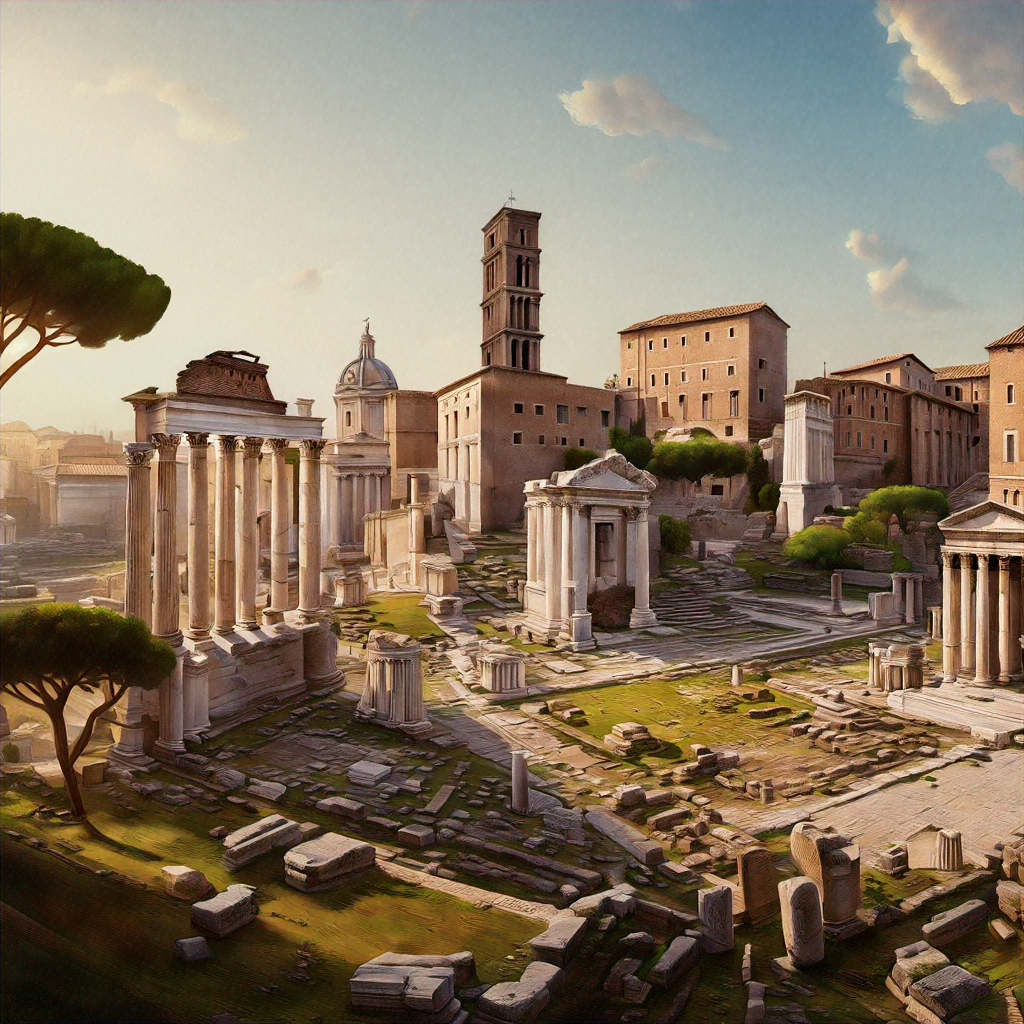
On the Ides of March, 44 BCE, the marble floors of Pompey's Theater ran red with blood. Julius Caesar, Dictator of Rome, lay dead at the foot of his rival's statue, pierced by twenty-three dagger wounds. The eighteen-year-old who would one day be known as Augustus heard the news far from Rome, completing his military training in Apollonia. That young man, Gaius Octavius, was Caesar's great-nephew and adopted son. His mother's urgent letter warned him to flee, to renounce his adoption and inheritance, to save himself from Caesar's fate. He had other plans.
Alone in his quarters, Octavius made a decision that would alter the course of history. Despite his age and inexperience, he would return to Rome, claim his inheritance, and avenge his adopted father. In doing so, he would transform a republic into an empire.
The Rome that Octavius returned to in 44 BCE was a powder keg. Decades of civil wars had torn the Republic apart, and Caesar's assassination, far from restoring the old order as the conspirators had hoped, plunged the state into deeper turmoil. Mark Antony had seized control of the dictator's papers and fortune, positioning himself as Caesar's political heir. The assassins, led by Marcus Junius Brutus and Gaius Cassius Longinus, held significant military forces. The Senate, under Cicero's influence, attempted to hold a precarious balance between the factions.
Into this volatile situation stepped young Octavius, now calling himself Gaius Julius Caesar in honor of his adopted father. The political elite met his arrival with derision. Antony, in particular, dismissed him as a "boy" who could be easily pushed aside. They would soon learn how badly they had misjudged him.
Octavian, as he was increasingly known, built his power base with striking shrewdness. He traveled to Campania, where Caesar's veteran legions had been settled, and promised them the generous rewards specified in Caesar's will. His youth and his name both worked in his favor. Many of those old soldiers had served under Caesar and saw in Octavian a chance to honor their fallen commander.
He played all sides against each other. He aligned himself with Cicero and the Senate against Antony while quietly maintaining channels with Caesar's old supporters. When Antony was declared an enemy of the state in 43 BCE, Octavian raised his own army and, barely twenty years old, became consul, the youngest in Rome's history.
What followed was a dizzying run of alliances and betrayals. Octavian formed the Second Triumvirate with Antony and Marcus Aemilius Lepidus, dividing the Roman world among the three of them. Together they launched a brutal campaign of proscriptions against their enemies, a purge that claimed Cicero among thousands of others. They then turned their combined strength against Caesar's assassins and defeated them decisively at the Battle of Philippi in 42 BCE.
With the assassins gone, the triumvirs carved up the empire: Antony took the East, Lepidus received Africa, and Octavian controlled Italy and the West. Such arrangements rarely hold. Lepidus was soon shoved aside, and tensions between Octavian and Antony steadily worsened. Antony's relationship with Cleopatra VII of Egypt, along with his increasingly "oriental" behavior, handed Octavian exactly the propaganda he needed.
Octavian turned Roman public opinion against Antony through a sustained campaign of political pressure and messaging. He published Antony's will, which supposedly left Roman territories to Cleopatra's children, and cast himself as the defender of Roman tradition against an Eastern threat. The conflict ended at the Battle of Actium in 31 BCE, where Octavian's forces, commanded by the admiral Agrippa, destroyed the combined fleets of Antony and Cleopatra.
Octavian returned to Rome in 30 BCE as the undisputed master of the Roman world. He had watched what happened to Caesar, and he was careful not to repeat the mistake. He kept the Republican forms intact while steadily accumulating authority that no Republican office had ever carried. In January 27 BCE, in a choreographed session of the Senate, he "restored" power to the Senate and People of Rome. In return, he received the name Augustus and extraordinary powers that made him princeps, first citizen of the state.
The Roman Empire had begun, though few contemporaries would have called it that. Augustus maintained the fiction of a restored Republic while building a system of government that would endure for centuries. He established a standing army, created the Praetorian Guard, overhauled the tax system, and launched building projects that transformed Rome from a city of brick into a city of marble. These weren't decorative gestures. They were the architecture of permanent rule.
As Augustus consolidated his position and laid the foundations of imperial government, he set in motion changes that would echo through centuries of Roman history. The peace and prosperity of his reign, the famous Pax Romana, became a golden age that later generations recalled with longing. But within that triumph lay a structural problem. The system he built depended heavily on the personal qualities of whoever held power. What would happen when less capable men inherited it?
In the next episode, we'll look at how Augustus's immediate successors, the Julio-Claudian dynasty, handled the enormous responsibility of ruling the Roman world, and how their strengths and failures shaped the empire's future.
Editor's Context
Read this episode as part of a longer argument about institutional strain: Rome did not simply collapse because one battle, emperor, or migration went wrong. The important pattern is how military pressure, political legitimacy, taxation, and local survival choices reinforced each other. The date markers (44 BCE - Assassination of Julius Caesar, 43 BCE - Formation of Second Triumvirate) are included because chronology is one of the easiest places for narrative history to become misleading. The episode's themes (Political transformation, Power and ambition, Military conflict) are the editorial lens for weighing cause and consequence rather than treating the story as isolated trivia.
Reviewed under the EmpiresDiary editorial workflow by Obadiah.
Drafted with AI. Accuracy review and corrections are ongoing — if you spot an error, please report it. See our workflow and editorial policy.