The Year Without Summer
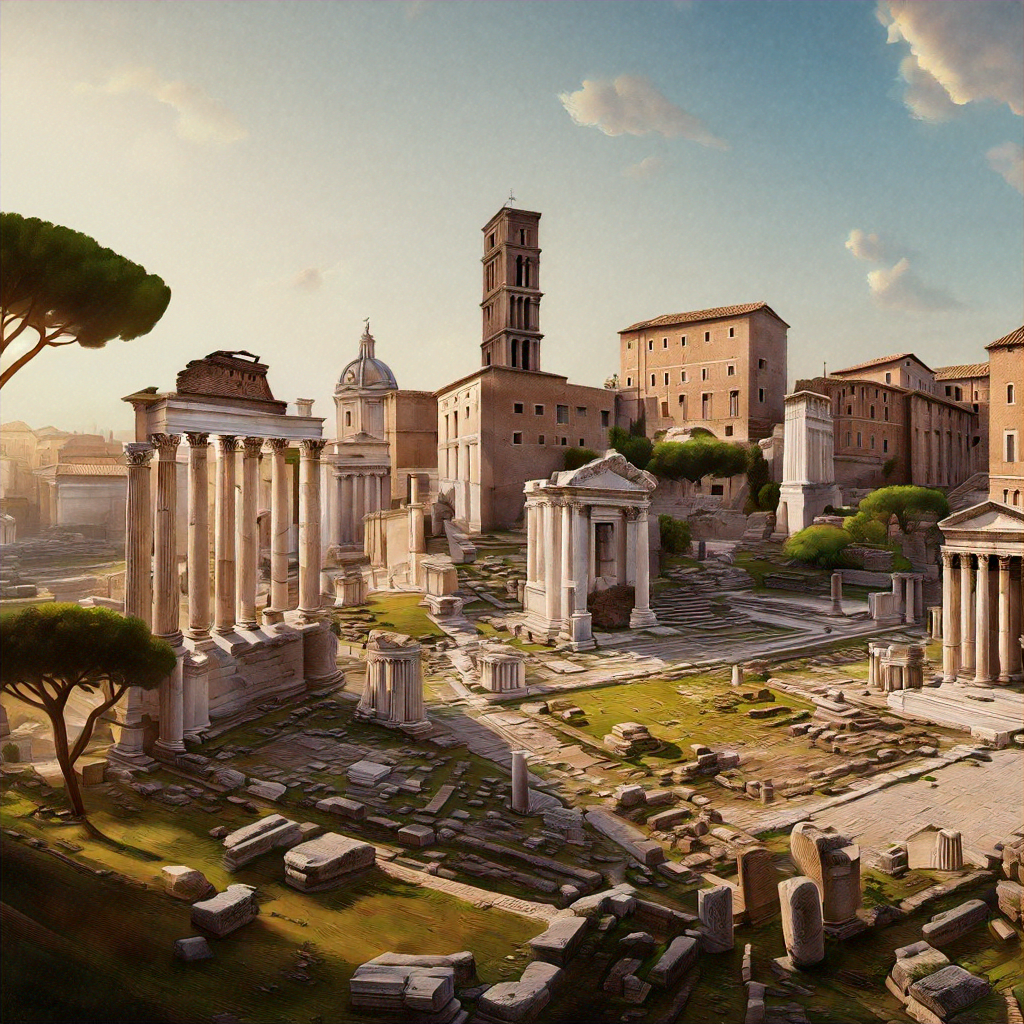
The Sun Dims
Constantinople, Summer 536 CE
Procopius stood at his writing desk near an open window, squinting at the parchment before him. Something was wrong with the light. For months now, the sun had appeared veiled by a perpetual haze, casting a muted, eerie glow across the imperial capital. The renowned historian dipped his quill and recorded what he observed:
"The sun gave forth its light without brightness, like the moon, during this whole year, and it seemed exceedingly like the sun in eclipse, for the beams it shed were not clear."
In the streets below, citizens hurried about with worried expressions, many wearing cloaks despite the summer season. Temperatures had remained unusually cold, and crops throughout the empire were failing. Whispers of divine punishment spread through the markets and churches. Even Emperor Justinian, who had been pursuing his dream of reconquering the Western Empire, seemed disturbed by the otherworldly phenomenon.
From Britannia to Mesopotamia, Romans looked up at the same dim sun and felt the same unseasonable chill. Farmers watched helplessly as frost killed their wheat and vegetables months before harvest. Grape vines withered on their trellises. Olive trees produced little fruit. The Mediterranean world, long accustomed to predictable growing seasons, was plunging into an agricultural nightmare.
What no one yet knew was that this was only the beginning. The year 536 would mark the onset of the coldest decade in the last two thousand years, a climate catastrophe that would push an already fragile empire closer to the brink.
An Empire Already Strained
By the 530s CE, the Roman Empire was fighting for survival on multiple fronts. In the East, Emperor Justinian had depleted the treasury trying to reconquer lost Western territories while simultaneously defending against Persian aggression. The plague that would later bear his name had not yet struck, but trade networks were already stressed by warfare and political instability.
The empire's agricultural system had grown increasingly fragile over the previous centuries. The ancient Roman agricultural revolution, built on sophisticated irrigation and crop rotation, had gradually declined as central authority weakened. Many of the most productive farming regions in North Africa had been lost to the Vandals, and Italy, once the empire's breadbasket, was ravaged by war between the Ostrogoths and Justinian's forces.
Climate conditions had generally been favorable during Rome's rise and height. Scientists now call this period the "Roman Warm Period" (250 BCE-400 CE), a stretch of reliable growing seasons and good harvests that helped enable Rome's population growth and urbanization. By the 6th century, though, the empire had become dangerously dependent on agricultural surplus from a shrinking territory, with almost no margin for error when harvests failed.
The mysterious dimming of 536 CE struck at this moment of vulnerability. Modern scientists have determined it was caused by a massive volcanic eruption in Iceland, possibly combined with other eruptions, that pumped sulfur particles into the stratosphere. Those particles reflected sunlight back into space, producing the cold period that contemporary sources described.
The Crisis Unfolds
As the unnatural twilight persisted through 536 and into 537, the effects rippled through Roman society. In Constantinople, the grain ships from Egypt arrived half-empty. Food prices soared. Justinian was forced to suspend his military campaigns in Italy as supply lines broke down. His dream of reunifying the empire would have to wait.
The rural population bore the heaviest burden. Across the countryside, farmers watched crops fail while tax demands continued. Fields that had reliably produced grain for generations lay barren. Communities that had little stored surplus found themselves with nothing to fall back on as the cold seasons stretched on.
Similar scenes played out across the empire. In Syria, John of Ephesus wrote of people eating grass and tree bark to survive. The wealthy hoarded grain while the poor starved. Social bonds began to fray as communities turned against each other in the struggle for scarce resources.
The crisis deepened in 538 when another volcanic eruption, likely in North America, caused a second cooling event. Temperatures dropped further. Snow fell in Mesopotamia during summer. The Mediterranean fishing industry collapsed as marine life patterns were disrupted. Church leaders struggled to explain the calamity to their frightened congregations, with some blaming human sin and calling for repentance, while others saw it as a sign of the apocalypse. In 540, the Persian emperor Khosrow I broke the Perpetual Peace of 532 and invaded Roman Syria, sacking Antioch and deporting much of its population, adding severe military pressure to the ongoing environmental crisis.
In Italy, the ongoing Gothic War became a nightmare of starvation and attrition. The Byzantine general Belisarius found his armies unable to feed themselves in the devastated countryside. The Ostrogothic king Witiges faced similar problems supplying his forces. Civilians caught between the armies suffered worst of all.
The Lasting Impact
The "Late Antique Little Ice Age," as scientists now call it, lasted until approximately 660 CE. Its immediate effects were catastrophic: demographic collapse, abandoned farmland, and weakened imperial authority. The longer-term damage ran just as deep.
The climate crisis permanently altered settlement patterns as people abandoned marginal agricultural lands that could no longer support them. Urban populations declined sharply. The empire's tax base shrank, reducing its ability to maintain armies and infrastructure.
When Justinian's Plague arrived in 541 CE, striking a population already weakened by years of malnutrition, the death toll was especially severe. The combination of climate disaster and pandemic marked a point of no return for the Roman Empire's ability to control its territory effectively. The elaborate Roman agricultural system never fully recovered, and the shift toward more resilient but less productive farming methods contributed to the medievalization of Europe.
As we'll explore in our next episode, the arrival of Justinian's Plague in 541 CE would deliver another devastating blow to an empire already reeling from environmental catastrophe. The confluence of climate change, pandemic, and ongoing military conflicts reshaped the Mediterranean world, accelerating the transition from classical antiquity to the medieval period. Join us as we examine how these cascading disasters transformed Roman society at every level.
Editor's Context
Read this episode as part of a longer argument about institutional strain: Rome did not simply collapse because one battle, emperor, or migration went wrong. The important pattern is how military pressure, political legitimacy, taxation, and local survival choices reinforced each other. The date markers (400 CE, 250 BCE) are included because chronology is one of the easiest places for narrative history to become misleading. The episode's themes (history, empire, power) are the editorial lens for weighing cause and consequence rather than treating the story as isolated trivia.
Reviewed under the EmpiresDiary editorial workflow by Obadiah.
Drafted with AI. Accuracy review and corrections are ongoing — if you spot an error, please report it. See our workflow and editorial policy.