The Last Watch on the Walls
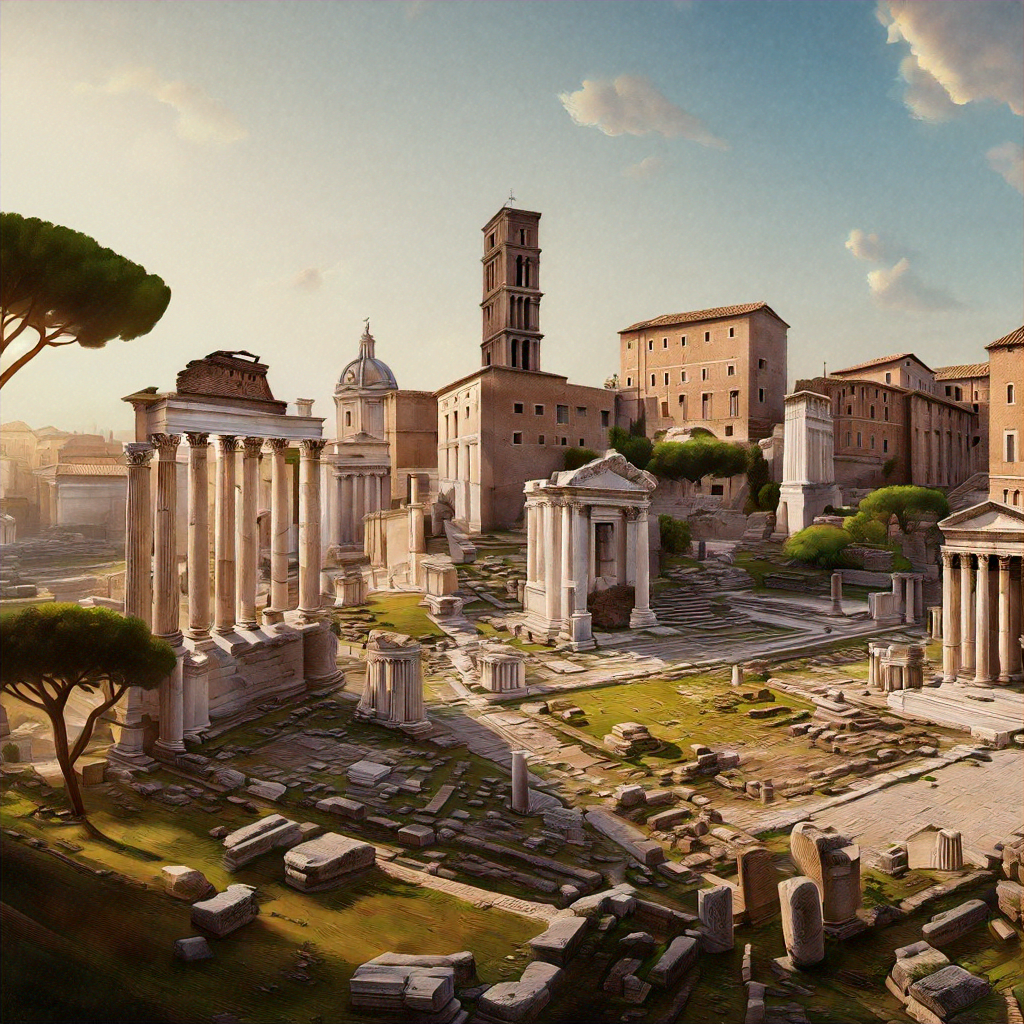
August 24, 410 CE
The summer night was unusually still as guards patrolled the Porta Salaria, one of Rome's northeastern gates. Torch flames flickered against the ancient walls that had protected the Eternal City for centuries. Inside those walls, over a million residents slept fitfully, their dreams haunted by rumors of approaching barbarian armies. The city had survived two previous sieges by Alaric and his Visigothic forces, and each time diplomacy and gold had kept the invaders at bay.
This night would be different. As the guards made their rounds, they heard an unexpected sound: the creaking of the massive gate's hinges. To their horror, they watched slaves from within the city quietly opening the portal. Before anyone could raise the alarm, Visigothic warriors poured through the entrance.
The night watchmen's horns finally blared, but it was too late. Alaric's army, nearly 40,000 strong, had breached the walls of Rome for the first time in eight centuries. Panicked screams began filling the streets as residents awoke to find their nightmare had become real. Rome, the capital that had ruled the known world for centuries, was being overrun.
The bishop of Rome, Innocent I, had already left for Ravenna days earlier with a senatorial delegation to negotiate with Emperor Honorius, and was absent when the city fell. In the Subura district, a wealthy merchant named Quintus gathered his family and most precious possessions, preparing to seek sanctuary in the Basilica of St. Peter. And in the Forum Romanum, the heart of the ancient Republic, the first waves of Visigothic warriors arrived, their torchlight reflecting off the marble facades of temples and government buildings that had stood for centuries.
The sack of Rome in 410 CE was the culmination of decades of deteriorating relations between the Western Roman Empire and the Visigoths. Originally settled as foederati (allied peoples) in the Balkans, the Visigoths had grown increasingly restless under Roman authority. Their leader Alaric had served in Roman armies and understood Roman military tactics well. When promises of land and status were repeatedly broken by the imperial government, Alaric began using his military expertise against his former employers.
The Western Roman Empire of 410 was a shadow of its former self. The capital had been moved to Ravenna in 402 CE, leaving Rome as more of a symbolic than administrative center. Emperor Honorius, who had assumed the purple at age ten in 395 CE, proved to be an ineffective ruler more interested in raising chickens than governing. Real power rested with his general Stilicho, who managed to keep Alaric in check for years through a combination of military action and diplomacy.
In 408 CE, Honorius had Stilicho executed on suspicion of plotting to place his own son on the throne. This removed the empire's most capable military commander and negotiator in a single stroke. Alaric, who had been demanding settlement rights and official recognition for his people, saw his opportunity. He led his forces into Italy and laid siege to Rome three times between 408 and 410 CE.
The city's population, which may have numbered over a million, was already suffering from famine and disease when Alaric arrived. Each previous siege had been lifted only after the payment of enormous ransoms that depleted the city's wealth. By 410, Rome's granaries were nearly empty and its leadership was absent. Emperor Honorius remained safely ensconced in Ravenna, leaving the city to fend for itself.
Main Narrative
As dawn broke on August 24, 410 CE, the full scope of the disaster became clear. Visigothic warriors moved methodically through the city's fourteen districts, systematically looting homes and public buildings. Alaric, who was himself a Christian (though of the Arian sect), had given orders to spare the churches and respect holy places. The great basilicas of St. Peter and St. Paul became refugee centers, filled with Romans seeking sanctuary, and those who reached them were largely protected in accordance with Alaric's standing orders.
Marcella, an elderly noblewoman who had transformed her mansion on the Aventine Hill into a Christian monastery, faced the invaders with remarkable courage. When Visigothic warriors demanded she reveal her hidden treasures, she opened her coarse religious garment and declared that her poverty was her wealth. Though beaten and tortured, she successfully protected the young women in her care by appealing to the raiders' respect for holy places, and they eventually escorted her and her charges to the Basilica of St. Paul.
In the Forum, centuries of accumulated wealth was stripped from government buildings and temples. Gold and silver statues were torn down and melted, precious stones prized from their settings, and ancient treasures loaded onto wagons. The House of the Vestals, where the sacred flame of Rome had burned for over a millennium, was ransacked. The flame had been extinguished years earlier by Christian emperors, but the violation of this sacred space marked a powerful symbolic break with Rome's past.
The sack did not descend into pure chaos. Alaric's orders to spare those sheltering in the major basilicas gave the violence certain limits, and writers such as Orosius and Augustine later noted that many Romans survived by taking refuge in the churches of St. Peter and St. Paul. The restraint was uneven and far from universal, but it distinguished the event from an uncontrolled massacre.
The Roman Senate, that ancient institution that had guided the Republic and Empire for centuries, met one final time in the Curia Julia. Several senators proposed organizing a resistance, but with no military forces at their disposal, they could only negotiate terms with Alaric to limit the destruction. The Visigothic king agreed to spare lives in exchange for all precious metals and valuable movable goods.
For three days the systematic looting continued. Wagons loaded with treasure rolled out through the same gates where the army had entered. Slaves, seeing an opportunity for freedom, joined the Goths by the thousands. Some Romans too, particularly merchants and craftsmen, chose to leave with the Visigoths, seeing better prospects outside the dying empire than within it.
Consequences and Lasting Impact
The sack of Rome sent shockwaves through the ancient world. Though the physical damage was relatively limited and the city would recover, the psychological impact was enormous. St. Jerome, writing in Bethlehem, lamented that the city which had conquered the whole world had itself been conquered. The fall of Rome seemed impossible to many who had grown up believing in Roman invincibility.
The event sparked a theological crisis among Christians, as pagans blamed the abandonment of traditional gods for Rome's humiliation. St. Augustine was prompted to write "The City of God" in response, arguing for the separation of earthly and heavenly kingdoms and helping to shape medieval Christian philosophy.
Politically, the sack accelerated the Western Empire's decline. It demonstrated that Rome could no longer protect itself, much less its provinces. Over the next decades, various Germanic peoples established independent kingdoms in former Roman territories, leading to the empire's final collapse in 476 CE.
In our next episode, we'll follow Alaric's Visigoths as they move south through Italy, carrying Rome's treasures with them. Their attempt to cross to Africa would end in disaster, and Alaric's sudden death would force them to seek a new homeland in Gaul. The sack of Rome was not the end of the empire, but it marked the beginning of its final chapter.
Editor's Context
Read this episode as part of a longer argument about institutional strain: Rome did not simply collapse because one battle, emperor, or migration went wrong. The important pattern is how military pressure, political legitimacy, taxation, and local survival choices reinforced each other. The date markers (410 CE, 000) are included because chronology is one of the easiest places for narrative history to become misleading. The episode's themes (history, empire, power) are the editorial lens for weighing cause and consequence rather than treating the story as isolated trivia.
Reviewed under the EmpiresDiary editorial workflow by Obadiah.
Drafted with AI. Accuracy review and corrections are ongoing — if you spot an error, please report it. See our workflow and editorial policy.