Death Ships at Ostia
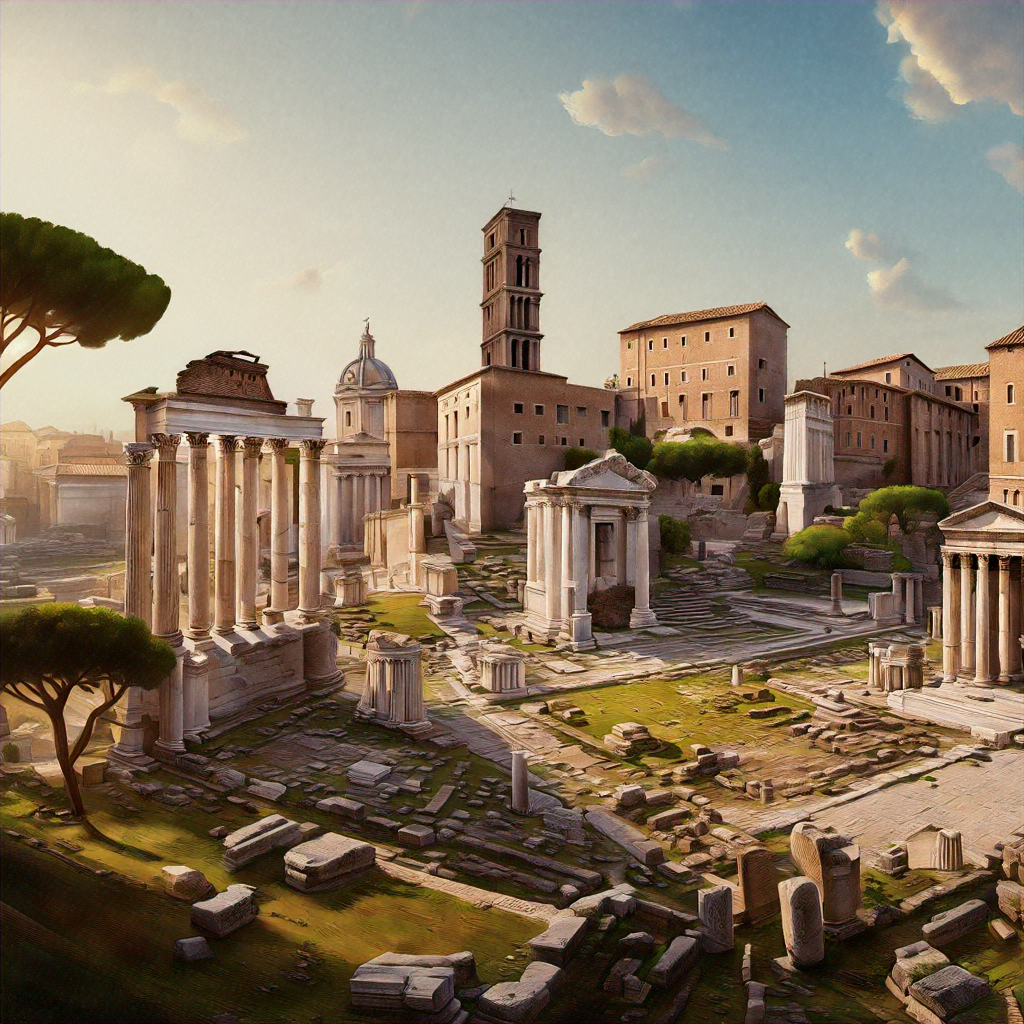
The merchant ship creaked into Ostia's harbor on a warm spring morning in 165 CE, its holds packed with silks and spices from the distant East. But among its precious cargo lurked an invisible killer that would soon bring the mighty Roman Empire to its knees.
Dock workers swarming aboard to unload the vessel found several crew members burning with fever, their skin erupting in angry pustules. Within days, similar symptoms appeared among the port's laborers. The mysterious illness spread through the crowded tenements of Ostia, then raced along the Via Ostiensis toward Rome itself.
By summer, the streets of the capital were lined with corpses. The wealthy fled to their country villas, while the poor died in droves. Galen, the empire's most renowned physician, documented the horror in clinical detail: "Black pustules covered the skin. Fever raged without cease. The victims coughed blood and suffered terrible diarrhea before death claimed them, usually by the ninth day." Even the powerful were not spared. Emperor Lucius Verus himself succumbed to what would become known as the Antonine Plague in 169 CE.
In the Subura district, a merchant named Claudius watched helplessly as his wife and three children fell ill one by one. He burned sacred herbs, made offerings to the gods, and consulted every healer he could find. Nothing helped. Within two weeks, his entire family was dead. Claudius was hardly alone in his grief. By some estimates, up to one-third of the population in affected areas perished.
The plague struck Rome at the height of its power and prosperity. The Pax Romana had brought unprecedented peace and wealth to the Mediterranean world. Trade routes stretched from Britain to Egypt, from Spain to Syria. Cities flourished, arts and learning thrived, and the empire seemed eternal.
Under the rule of the "Five Good Emperors" (96-180 CE), Rome had reached its zenith. Trajan expanded the empire to its greatest territorial extent. Hadrian consolidated those gains with his famous wall and other defensive works, and Antoninus Pius oversaw decades of peace and stability. Marcus Aurelius, who became emperor in 161 CE, embodied the ideal of the philosopher-king. Yet his reign would be marked by constant crisis. Even before the plague, Rome faced mounting pressures: Germanic tribes probed the northern frontiers while the Parthian Empire threatened in the east. The plague would transform these challenges into existential threats.
The empire's own success had created vulnerabilities. Dense urban populations and extensive trade networks, once sources of strength, became vectors for disease. The interconnected economy meant local disasters could trigger empire-wide disruptions. And decades of peace had perhaps bred complacency, leaving Rome ill-prepared for simultaneous crises.
The plague's impact rippled through every layer of Roman society. In the countryside, farms lay abandoned as rural populations were decimated. Food production plummeted, triggering inflation and shortages. Urban workshops fell silent as skilled artisans died or fled, and tax revenues collapsed just as the empire needed resources to face external threats.
On the military frontier, entire units were wiped out by disease. General Avidius Cassius reported losing nearly half his men in Syria not to enemy action but to the plague. Marcus Aurelius struggled to find replacements, eventually resorting to unprecedented measures like arming slaves and criminals.
The emperor himself led campaigns against Germanic tribes while managing the plague crisis. His private writings, known as "Meditations," reveal his stoic response to the disaster: "Accept whatever comes to you woven in the pattern of your destiny, for what could more aptly fit your needs?"
Different groups interpreted the catastrophe through their own cultural lenses. Traditional Romans blamed religious impiety and moral decay. Christians saw divine punishment for persecution. Greek physicians like Galen sought natural explanations, though their humoral theory proved inadequate to understand or treat the disease.
What the plague exposed, above all, were the deep fissures already running through Roman society. Some wealthy citizens used their resources to isolate themselves, while the poor remained exposed. Social bonds frayed as fear of contagion made people avoid normal interactions. Traditional funeral practices broke down as bodies accumulated faster than they could be properly buried.
In Alexandria, the Christian bishop Dionysius described both the worst and best of human nature: "Many Christians nursed the sick with no thought for themselves, often dying in the process. But others drove away even their dearest when first symptoms appeared, casting them into the streets to die alone."
The Antonine Plague marked a turning point in Roman history. While the empire would endure for centuries more, it never fully recovered from this blow. Population losses disrupted the economic and social fabric. Military weakness invited increased barbarian pressure. The plague's psychological impact undermined confidence in traditional institutions and beliefs.
Long-term effects included:
- Chronic manpower shortages in agriculture and the army
- Economic instability and currency debasement
- Increased reliance on Germanic foederati for defense
- Acceleration of the transition from slavery to serfdom
- Growing appeal of mystery cults and Christianity
- Weakening of urban culture and civic institutions
Marcus Aurelius died in 180 CE as the plague gradually subsided. But the empire he left to his son Commodus was fundamentally weakened. The next episode will explore how Commodus's disastrous reign would usher in the Crisis of the Third Century, as the cracks exposed by the Antonine Plague widened into chasms that threatened to swallow Rome itself.
Editor's Context
Read this episode as part of a longer argument about institutional strain: Rome did not simply collapse because one battle, emperor, or migration went wrong. The important pattern is how military pressure, political legitimacy, taxation, and local survival choices reinforced each other. The date markers (165 CE, 180 CE) are included because chronology is one of the easiest places for narrative history to become misleading. The episode's themes (history, empire, power) are the editorial lens for weighing cause and consequence rather than treating the story as isolated trivia.
Reviewed under the EmpiresDiary editorial workflow by Obadiah.
Sources & Further Reading
Selected bibliography for this series
The Fall of the Roman Empire: A New History of Rome and the Barbarians
Peter Heather, The Fall of the Roman Empire: A New History of Rome and the Barbarians. Oxford University Press, 2005. (scholarly)
The Fall of Rome and the End of Civilization
Bryan Ward-Perkins, The Fall of Rome and the End of Civilization. Oxford University Press, 2005. (scholarly)
The World of Late Antiquity
Peter Brown, The World of Late Antiquity. Thames & Hudson, 1971. (scholarly)
Res Gestae
Ammianus Marcellinus, Res Gestae. Primary late Roman narrative source for the fourth century. (primary)
Drafted with AI. Edited and fact-checked by Obadiah before publication. See the workflow and editorial policy.