The Sack of Rome, 410 CE
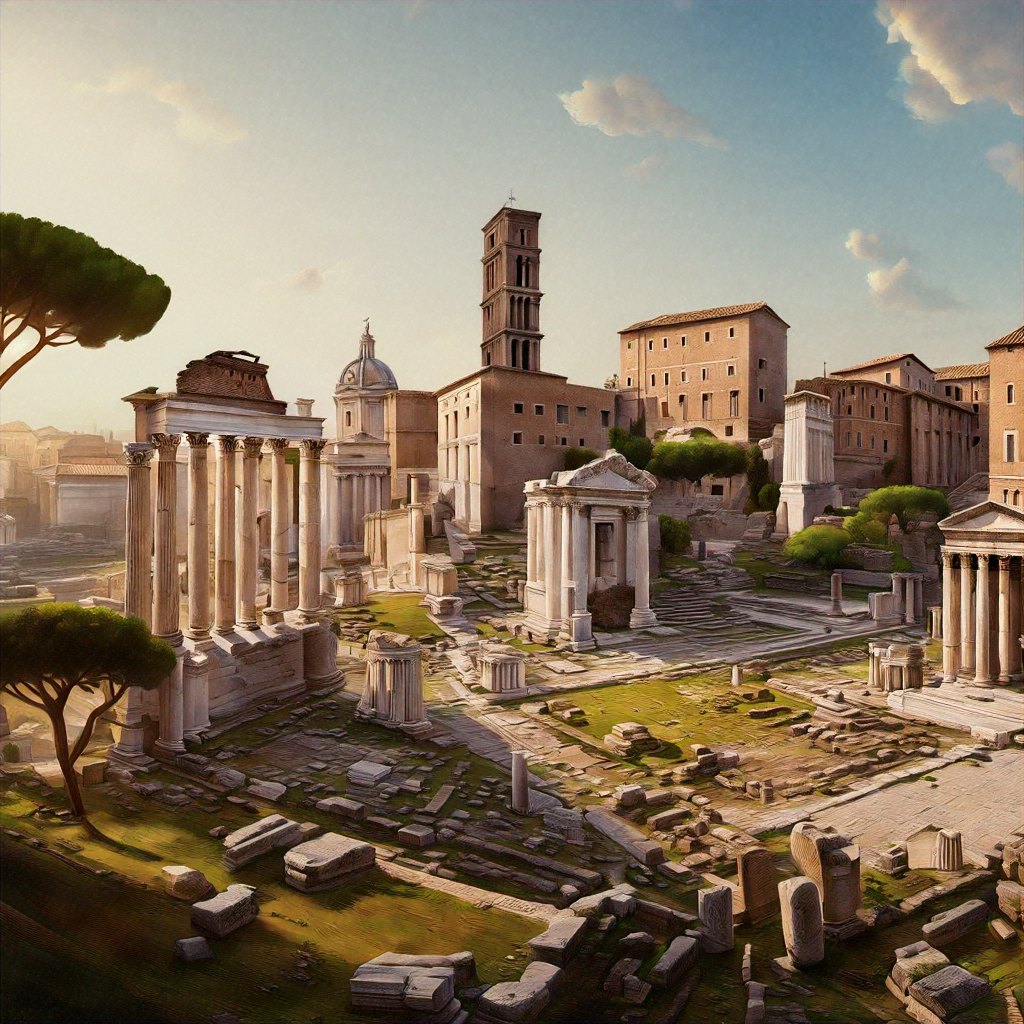
The night of August 24, 410 CE was unusually warm in Rome. Guards stationed along the Aurelian Walls wiped sweat from their brows as they kept watch over a sleeping city of nearly one million souls. Near the Salarian Gate on the northeastern side, a small group of slaves waited for the right moment. Alaric, king of the Visigoths, had positioned them there carefully. He had kept Rome under siege for two years.
As midnight approached, the creaking of the massive bronze gate's hinges pierced the darkness. The slaves, following their secret instructions, slowly pulled open the portal that had for centuries helped keep Rome inviolate. Through that gap poured thousands of Visigothic warriors, their torches casting dancing shadows on the ancient walls as they moved through the streets.
The first alarm was raised by a servant in a wealthy home near the gate, but by then it was too late. The barbarians were inside the walls. Alaric had given strict instructions: the great churches of St. Peter and St. Paul were to be spared, and anyone seeking sanctuary within them was to be left unharmed. Everything else was fair game.
As dawn broke over the seven hills, columns of smoke rose from burning buildings. The sounds of breaking doors and screaming citizens echoed through the narrow streets. Wealthy senators' wives stripped off their jewelry and fine silks, trying to avoid attention. Merchants hastily buried their gold, while ordinary citizens fled toward the basilicas with whatever they could carry.
Rome, the Eternal City, which had not fallen to a foreign enemy in eight hundred years, was being pillaged by people its citizens still called "barbarians." The psychological impact was immediate and devastating. As Jerome, the famous Christian scholar, would later write from his monastery in Bethlehem: "My voice sticks in my throat, and, as I dictate, sobs choke my utterance. The City which had taken the whole world was itself taken."
The sack didn't happen in a vacuum. Decades earlier, the Huns had begun pushing westward from the steppes of Central Asia, forcing Germanic tribes to flee toward Roman territory. The Visigoths, led by Alaric, had been serving as foederati (allied troops) for the Eastern Roman Empire, but broken promises and political machinations had turned them from allies into enemies.
Alaric had received a Roman military education and had once commanded Roman troops. He understood the Empire's weaknesses intimately. The Visigoths had been promised land and supplies in exchange for military service, but the Romans repeatedly reneged on these agreements. By 408 CE, his patience had worn thin.
The Empire itself was deeply divided. The death of Theodosius I in 395 CE had split the realm between his sons: Arcadius in the East and Honorius in the West. The Eastern Empire remained relatively stable, but the West faced mounting challenges. The military genius Stilicho, who had long protected Western interests, was executed in 408 CE through court intrigue, leaving a massive void in Roman leadership.
Honorius had retreated to the protected city of Ravenna, abandoning Rome to its fate. The Senate, once the most powerful political body in the world, was reduced to desperate negotiations with Alaric, offering gold, silver, and precious spices to prevent the sack. When Honorius refused to grant Alaric the military position he desired, the Visigothic king decided to take by force what had been denied him by diplomacy.
The sack unfolded from multiple perspectives, each telling a different story of the city's ordeal.
From Alaric's viewpoint, the operation was carefully controlled. Unlike the popular image of mindless destruction, the Visigothic king implemented a strategic plan. His troops were ordered to respect the churches and avoid unnecessary bloodshed. This was a calculated demonstration of power aimed at forcing concessions from Honorius, not simple pillage.
Galla Placidia, half-sister of Emperor Honorius, was among the high-ranking hostages taken by the Goths. Her account, preserved in letters, describes the mixture of restraint and violence: "They took our treasures but spared our lives. Their leader spoke Latin and quoted Virgil, even as his men carried off the golden plates from our dining room."
For the common people of Rome, the experience was more chaotic. Procopius, though writing later, collected eyewitness accounts: "Many fled to the catacombs, taking shelter among the bones of their ancestors. Others threw their valuables into the Tiber, hoping to retrieve them later. Some wealthy families who had never walked more than a few steps were seen trudging miles along the Via Appia, seeking safety in the countryside."
The Christian churches became islands of refuge. Bishop Innocent I, who was in Ravenna at the time, later documented how thousands crowded into St. Peter's Basilica and other churches. The Visigoths, many of them Christian themselves (albeit Arian rather than Catholic), respected these sanctuaries.
The Senate house was plundered, and many ancient Roman treasures were lost forever. The great families who had ruled Rome for centuries saw their palaces looted. Yet amid the chaos there were surprising moments of civilization. Some Visigothic soldiers actually protected Roman families who had shown them kindness, and certain areas of the city remained relatively untouched.
After three days, Alaric ordered his forces to withdraw. They departed southward, carrying wagons loaded with treasure and hostages, Galla Placidia among them. The Visigoths had achieved their immediate goal: demonstrating that Rome was no longer invulnerable.
The sack of 410 CE marked a psychological turning point in Roman history. Though the Western Empire would struggle on for another 66 years, the myth of Roman invincibility was shattered forever. The event sent shockwaves throughout the Mediterranean world, prompting Saint Augustine to write "The City of God" in response to pagans who blamed Christianity for Rome's misfortunes.
The immediate practical consequences were severe but not fatal. Rome remained the nominal capital, though Ravenna became the effective seat of Western imperial power. Many wealthy Romans fled to their estates in North Africa or to the Eastern Empire, accelerating the decay of Rome's economic and cultural life.
The sack demonstrated that the Western Empire could no longer effectively protect its heartland. This encouraged other Germanic peoples to press their advantages, leading to further incursions and the establishment of independent kingdoms within former Roman territories.
As Alaric's Visigoths moved south, they aimed to secure a permanent homeland within the Empire's boundaries. Their journey would take them through Italy and eventually into Gaul and Spain, where they would establish the first lasting Germanic kingdom on Roman soil. In our next episode, we'll follow their path and examine how other Germanic peoples began carving up the Western Empire, piece by piece.
Editor's Context
Read this episode as part of a longer argument about institutional strain: Rome did not simply collapse because one battle, emperor, or migration went wrong. The important pattern is how military pressure, political legitimacy, taxation, and local survival choices reinforced each other. The date markers (408 CE, 410 CE) are included because chronology is one of the easiest places for narrative history to become misleading. The episode's themes (history, empire, power) are the editorial lens for weighing cause and consequence rather than treating the story as isolated trivia.
Reviewed under the EmpiresDiary editorial workflow by Obadiah.
Sources & Further Reading
Selected bibliography for this series
The Fall of the Roman Empire: A New History of Rome and the Barbarians
Peter Heather, The Fall of the Roman Empire: A New History of Rome and the Barbarians. Oxford University Press, 2005. (scholarly)
The Fall of Rome and the End of Civilization
Bryan Ward-Perkins, The Fall of Rome and the End of Civilization. Oxford University Press, 2005. (scholarly)
The World of Late Antiquity
Peter Brown, The World of Late Antiquity. Thames & Hudson, 1971. (scholarly)
Res Gestae
Ammianus Marcellinus, Res Gestae. Primary late Roman narrative source for the fourth century. (primary)
Drafted with AI. Edited and fact-checked by Obadiah before publication. See the workflow and editorial policy.