Midnight at the Porta Salaria
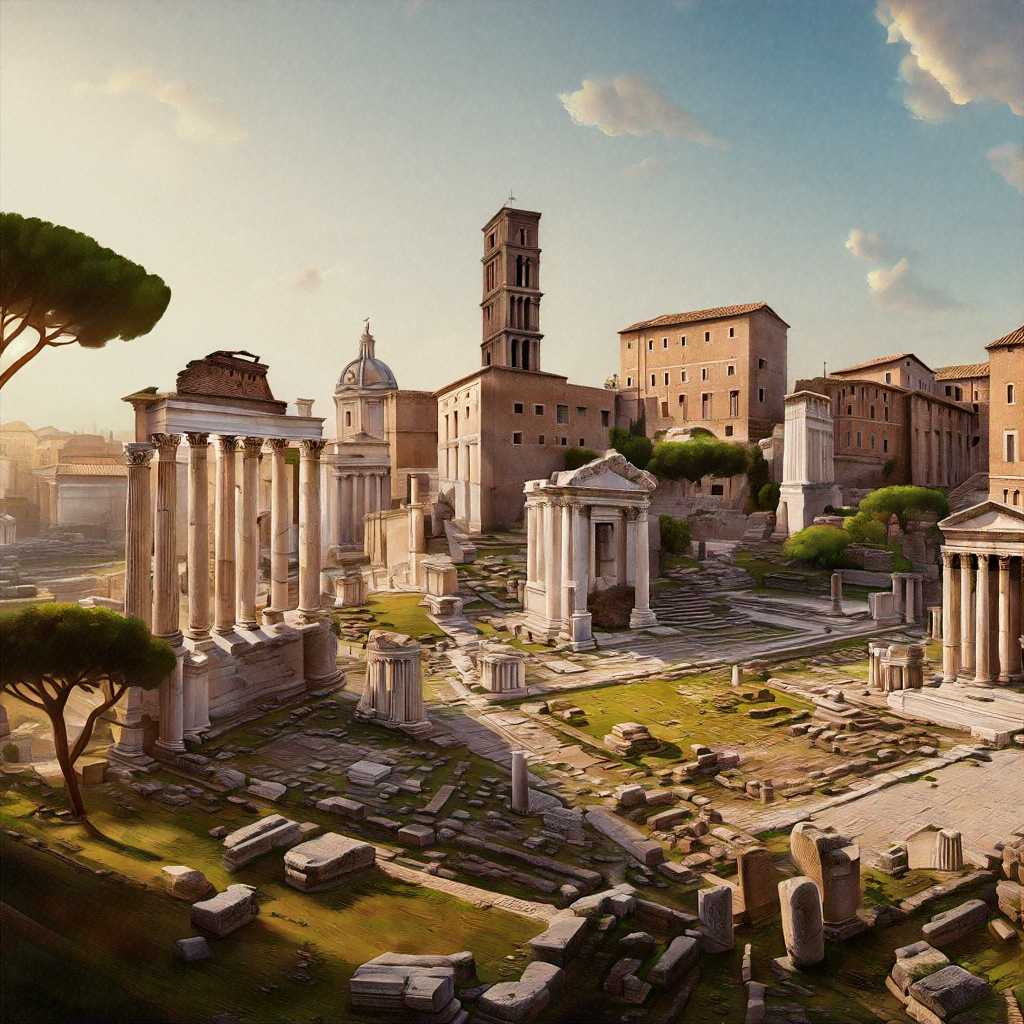
The night of August 24, 410 CE was unusually warm in Rome. The great Porta Salaria, one of the city's main northern gates, had stood for centuries, a monument to Roman engineering and confidence. But on this night, something unprecedented occurred. Around midnight, the massive bronze doors creaked open, not by Roman hands, but by treacherous ones within the city itself.
Alaric, king of the Visigoths, had waited three long years for this moment. His army of 40,000 warriors, camped in the darkness beyond the walls, began their silent advance into the city that had once ruled them. The Gothic warriors, many of whom had served in Roman armies, moved with disciplined precision through the darkened streets, their torches still unlit.
Inside the Palatine Palace, the teenage Western Roman Emperor Honorius was nowhere to be found. He had fled to the safety of Ravenna months earlier. The city's prefect, elderly senators, and wealthy patricians slept in their marble-columned villas, believing Rome's walls would protect them as they had for eight centuries. No enemy had breached them since the Gauls of Brennus in 390 BCE.
The first screams began near the Porta Salaria, as residents awoke to find armed warriors in their homes. Smoke rose from the first fires, and the night sky took on an ominous red glow. The unthinkable was happening. Rome, the Eternal City, caput mundi (head of the world), was being sacked by barbarians.
The sack of Rome didn't happen in isolation. For decades, the Western Roman Empire had been unraveling through internal weakness and external pressure. Emperor Diocletian's decision to split the empire into Eastern and Western halves in 285 CE created administrative efficiency but also rivalry and division. The West, with its capital moved to Ravenna, became increasingly vulnerable.
Alaric and his Visigoths were themselves products of Rome's complex relationship with Germanic peoples. Born around 370 CE, Alaric had commanded Gothic auxiliaries in Roman armies, learning Roman military tactics and witnessing Roman wealth firsthand. When the Empire reneged on promises of land and payment to his people, Alaric turned from ally to enemy.
The immediate catalyst came in 408 CE. The powerful Roman general Stilicho, himself of half-Vandal descent, was executed on orders of Emperor Honorius. Stilicho had maintained an uneasy peace with Alaric through diplomacy and payments, and his death removed the last competent military commander in the West. It also prompted thousands of barbarian soldiers to desert Roman service and join Alaric's forces.
Between 408 and 410 CE, Alaric besieged Rome three times, demanding land for settlement and official recognition from Honorius. Each time, the emperor in distant Ravenna refused to negotiate seriously, believing Rome's defenses impregnable.
The sack of Rome unfolded over three days that would forever change how people viewed Roman power and invincibility.
On that first night, Alaric showed tactical restraint that surprised many Romans. His orders were clear: no wholesale slaughter, no burning of churches, and respect for those claiming sanctuary in Christian buildings. The Visigoths were Christians themselves, albeit Arian Christians whom orthodox Romans considered heretics. This religious connection may have prevented worse atrocities.
Senator Marcellus Claudius, writing years later, described the scene at dawn of the first day: "We awoke to find barbarians in our streets, yet they moved with purpose, not chaos. They sought gold and valuables, yes, but many seemed more interested in food stores and practical goods than random destruction. Still, any who resisted met swift death."
The wealthy Anicia family barricaded themselves in their villa near the Forum. The family's matriarch, Proba, recorded how Gothic warriors broke in: "They took our silver, our silks, even our stored grain. But when I showed them the cross I wore and spoke of Christ, their leader nodded and prevented his men from further violence. We survived with our lives, if not our fortune."
Not all areas fared so well. The Subura, Rome's crowded working-class district, saw significant bloodshed. With fewer valuable goods to offer as ransom, its residents faced harsher treatment. Fires, whether accidental or intentional, destroyed entire blocks of the closely-packed wooden apartments.
By the second day, smoke hung thick over the city. The Forum Romanum, heart of the Empire for centuries, saw its shops looted and administrative buildings burned. The great horrea (warehouses) were emptied of grain. Some historians estimate that 40,000 refugees fled the city, many heading for the relative safety of North Africa.
The third day brought focus on the great private estates on the Caelian and Aventine hills. Generations of aristocratic families had accumulated vast wealth there. The Visigoths systematically stripped these villas of gold, silver, art, and valuable hostages for future ransom.
The physical damage to Rome, while significant, was repairable. The psychological impact was devastating and permanent. Jerome, writing from Bethlehem, captured the shock felt throughout the Empire: "My voice sticks in my throat, and, as I dictate, sobs choke my utterance. The City which had taken the whole world was itself taken."
The sack destroyed the myth of Rome's invincibility. Though the Western Empire would struggle on for another 66 years, its aura of eternal power was shattered. Many saw it as divine punishment for Roman pride or decadence. Augustine of Hippo was prompted to write "City of God" in response, arguing for a spiritual rather than earthly empire.
Practically, the sack accelerated the West's decline. Many wealthy Romans fled to their provincial estates or to Constantinople, taking their tax revenue with them. Trade networks were disrupted, and the city's population dropped dramatically over the following decades.
As Alaric's Visigoths departed Rome laden with treasure, they moved south, seeking to reach Africa's grain-producing regions. Nature intervened. Storms destroyed their ships in the Strait of Messina, and Alaric died shortly after, allegedly buried with his treasure under a diverted river. In our next episode, we'll follow his successor Ataulf north into Gaul, where the Visigoths would establish the first lasting Germanic kingdom on Roman soil, another step in the Empire's fragmentation.
Editor's Context
Read this episode as part of a longer argument about institutional strain: Rome did not simply collapse because one battle, emperor, or migration went wrong. The important pattern is how military pressure, political legitimacy, taxation, and local survival choices reinforced each other. The date markers (000, 390 BCE) are included because chronology is one of the easiest places for narrative history to become misleading. The episode's themes (history, empire, power) are the editorial lens for weighing cause and consequence rather than treating the story as isolated trivia.
Reviewed under the EmpiresDiary editorial workflow by Obadiah.
Sources & Further Reading
Selected bibliography for this series
The Fall of the Roman Empire: A New History of Rome and the Barbarians
Peter Heather, The Fall of the Roman Empire: A New History of Rome and the Barbarians. Oxford University Press, 2005. (scholarly)
The Fall of Rome and the End of Civilization
Bryan Ward-Perkins, The Fall of Rome and the End of Civilization. Oxford University Press, 2005. (scholarly)
The World of Late Antiquity
Peter Brown, The World of Late Antiquity. Thames & Hudson, 1971. (scholarly)
Res Gestae
Ammianus Marcellinus, Res Gestae. Primary late Roman narrative source for the fourth century. (primary)
Drafted with AI. Edited and fact-checked by Obadiah before publication. See the workflow and editorial policy.