The Silence Before the Storm
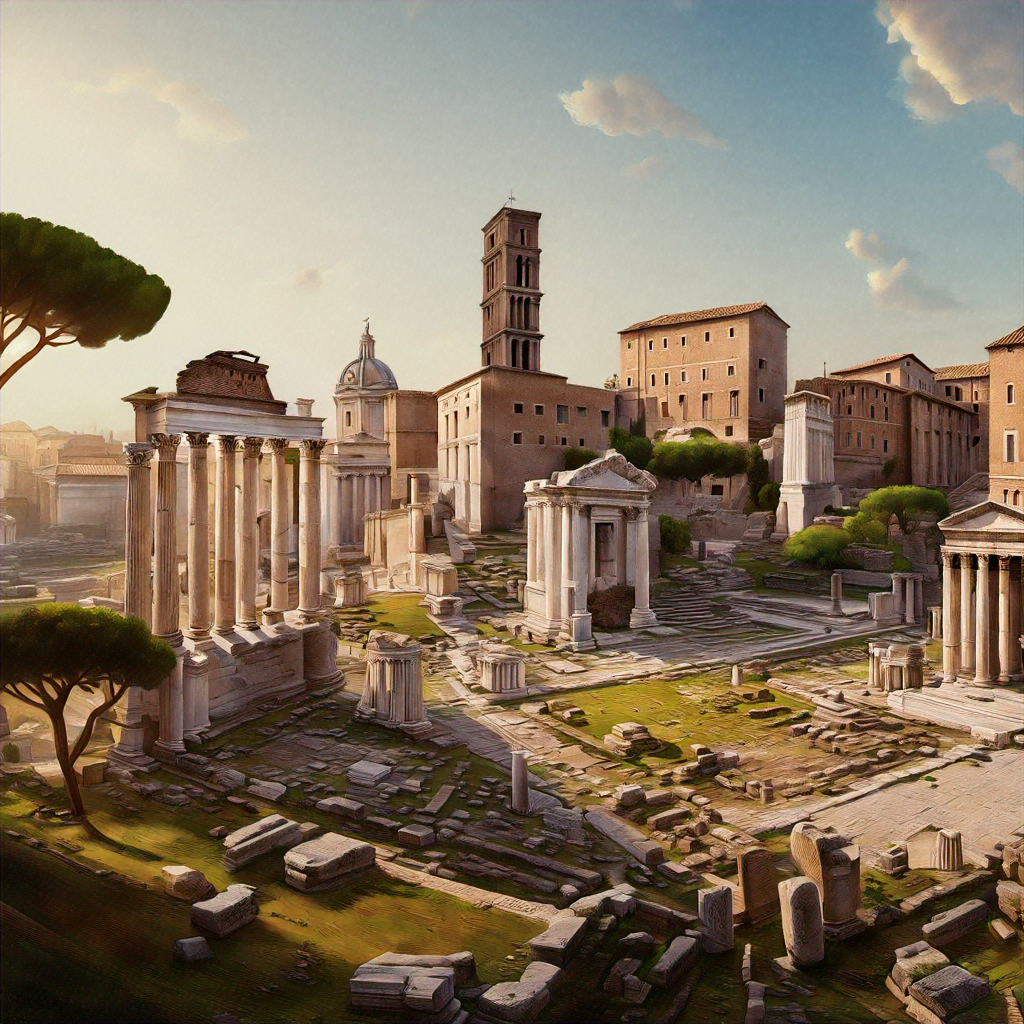
The night air hung heavy over the Eternal City. Along the Aurelian Walls, exhausted Roman guards peered into the darkness, their oil lamps casting weak halos against the ancient stones. For three days, the city had endured an eerie silence from the Gothic army surrounding them, a silence more terrifying than the war cries that had echoed for months.
Near the Salarian Gate, a young aristocrat named Marcella huddled in her villa with her servants, praying to Christ for deliverance. The city's granaries were nearly empty. The stench of death and disease wafted through streets once perfumed with incense and spices from distant lands. Rome, the capital that had ruled the Mediterranean world for centuries, was starving.
Then, in the deep hours before dawn, the silence shattered. The massive bronze hinges of the Salarian Gate groaned. According to contemporary accounts, slaves within the city, desperate and bitter, had opened the way for Alaric's Gothic warriors. The sound of thousands of boots on stone echoed through the streets as barbarian forces poured into Rome for the first time in eight centuries.
The sack had begun. Alaric's men, many of whom had once served in Roman armies, moved with disciplined precision toward key targets: the homes of wealthy patricians, government treasuries, and churches rumored to hold vast stores of gold. The Gothic king had given strict orders. Spare those who sought sanctuary in churches, take alive any who surrendered, but show no mercy to those who resisted.
As dawn broke over the seven hills, columns of smoke rose from burning buildings. The unthinkable had happened. Rome, the eternal city, had fallen to a barbarian army.
The sack of Rome didn't occur in a vacuum. For decades, the relationship between Rome and the Goths had been complex and deteriorating. The Goths, pushed westward by pressure from the Huns, had crossed the Danube River in 376 CE seeking refuge within Roman territory. Emperor Valens had allowed them to settle as foederati (allied peoples), but poor treatment, exploitation, and Roman administrative corruption led to a Gothic uprising.
The Battle of Adrianople in 378 CE marked a turning point. Gothic forces destroyed a Roman army and killed Emperor Valens, and the disaster forced Rome to increasingly rely on Gothic and other Germanic warriors, creating a dangerous dependency.
Alaric himself embodied this complex relationship. Born around 370 CE, he had risen through the ranks of Roman military service, leading Gothic auxiliary forces. Repeated Roman betrayals and broken promises of land and status pushed him toward confrontation. By 395 CE, he had become king of the Visigoths and begun a campaign of strategic pressure against the empire, alternating between negotiations and military action.
The weak Western Emperor Honorius, ruling from the safety of Ravenna, repeatedly mishandled relations with Alaric. Multiple opportunities for peaceful resolution were squandered through diplomatic incompetence and Roman arrogance. The situation reached a crisis point in 408 CE when Alaric, frustrated by Roman duplicity, began his series of sieges against Rome itself.
The sack unfolded across three dramatic days. From multiple contemporary sources, including the historian Procopius and the Christian writer Orosius, we can piece together the events from various perspectives.
For the Gothic warriors, many of whom were Christian themselves, entering Rome produced mixed emotions. One Gothic soldier, as recorded by Orosius, reportedly found a wealthy Roman woman in her villa and demanded her gold. When she revealed a cache of sacred Christian vessels, he immediately sent word to Alaric, who ordered the items protected and escorted to the Basilica of St. Peter under guard.
The Roman population experienced varying fates. Marcella, the aristocrat mentioned earlier, faced Gothic warriors in her home. According to Jerome's letters, when they demanded gold, she showed them her coarse religious garment, explaining she had given her wealth to the poor. They beat her but respected her plea for sanctuary at St. Peter's Basilica.
The Roman Senate, once the most powerful political body in the Mediterranean world, found itself negotiating directly with Alaric. Senator Faltonia Proba, one of the wealthiest women in Rome, used her resources to help fellow citizens escape the city. Some senators, however, chose suicide over the humiliation of barbarian rule.
The three days saw systematic looting rather than wholesale destruction. Alaric, showing strategic restraint, prevented the city from burning. His forces focused on portable wealth: gold, silver, precious stones, and valuable hostages who could be ransomed. The Gothic king understood the propaganda value of showing relative mercy while still extracting maximum practical gain.
Meanwhile, Emperor Honorius remained in Ravenna, allegedly more concerned about his favorite chicken (also named "Rome") than the fate of the eternal city. When a messenger brought news of Rome's fall, Honorius reportedly exclaimed with relief that his chicken was fine, having misunderstood the message entirely.
The city's fall reverberated across the empire. In North Africa, Augustine of Hippo began writing "City of God" in response to pagans who blamed Rome's adoption of Christianity for the disaster. In Constantinople, the eastern Roman capital, the news strengthened calls for military intervention in the west, though little practical help materialized.
The psychological impact was profound. Though the city would recover physically, the myth of Roman invincibility was shattered forever. The sack demonstrated that the western empire's military and political system was fundamentally broken. Unable to defend even its symbolic heart, Rome's authority in the provinces eroded further still.
The event accelerated several historical processes. Power shifted toward Constantinople, Germanic peoples gained deeper footholds in the empire's power structure, and the Christian Church grew as a stabilizing institution. The Church, whose major basilicas had served as sanctuaries during the sack, emerged with enhanced prestige and real practical authority.
Economically, the loss of wealth and population contributed to Rome's declining importance. Many aristocratic families fled to provincial estates or to Constantinople, taking their wealth and administrative expertise with them. The city would never again serve as the administrative capital of the western empire.
As Alaric's Goths departed Rome laden with treasure, they moved south, planning to cross to Africa. Storms destroyed their ships, and Alaric died shortly after. His successor Ataulf would lead the Visigoths to Gaul, establishing what would become one of the first post-Roman kingdoms. In our next episode, we'll explore how these Germanic kingdoms began carving up the western empire, creating the foundations of medieval Europe.
Editor's Context
Read this episode as part of a longer argument about institutional strain: Rome did not simply collapse because one battle, emperor, or migration went wrong. The important pattern is how military pressure, political legitimacy, taxation, and local survival choices reinforced each other. The date markers (410 CE, 370 CE) are included because chronology is one of the easiest places for narrative history to become misleading. The episode's themes (history, empire, power) are the editorial lens for weighing cause and consequence rather than treating the story as isolated trivia.
Reviewed under the EmpiresDiary editorial workflow by Obadiah.
Sources & Further Reading
Selected bibliography for this series
The Fall of the Roman Empire: A New History of Rome and the Barbarians
Peter Heather, The Fall of the Roman Empire: A New History of Rome and the Barbarians. Oxford University Press, 2005. (scholarly)
The Fall of Rome and the End of Civilization
Bryan Ward-Perkins, The Fall of Rome and the End of Civilization. Oxford University Press, 2005. (scholarly)
The World of Late Antiquity
Peter Brown, The World of Late Antiquity. Thames & Hudson, 1971. (scholarly)
Res Gestae
Ammianus Marcellinus, Res Gestae. Primary late Roman narrative source for the fourth century. (primary)
Drafted with AI. Edited and fact-checked by Obadiah before publication. See the workflow and editorial policy.