The Siege of Ravenna
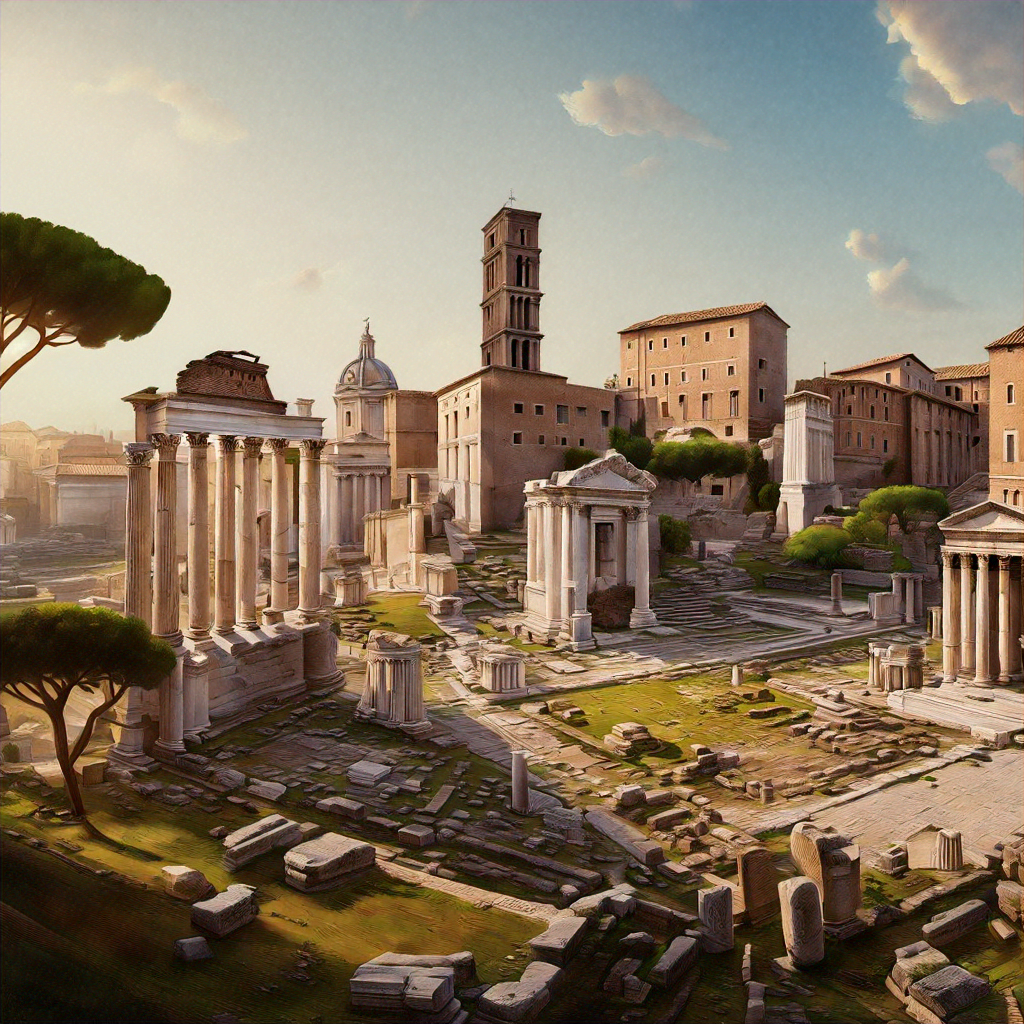
The winter winds howled through the marble colonnades of Ravenna, carrying the acrid smell of smoke from countless campfires dotting the landscape outside the city walls. Inside his palace, Odoacer, the first barbarian king of Italy, stood at his window, weathered hands gripping the sill as he surveyed the Gothic army that had besieged his capital for nearly three years.
The once-bustling port city, protected by marshes and canals, had become a prison. Its granaries, once overflowing with grain from Sicily and Africa, now held mere scraps. The proud citizens of Ravenna, who had witnessed the last Western Roman Emperor abdicate seventeen years earlier, were reduced to eating horses and dogs.
Outside the walls, Theodoric the Ostrogoth had patience on his side. His men, well-supplied by their Eastern Roman allies, maintained their iron grip on the city. Their king, resplendent in Roman-style military regalia, had transformed from a distant barbarian threat into Italy's apparent savior. The Eastern Emperor Zeno had sent him west with a clear mandate: remove Odoacer and govern Italy as an imperial representative.
As dawn broke over the Adriatic, messengers hurried through Ravenna's streets carrying word that Theodoric had proposed a meeting. After years of bloodshed, both kings would share power in a joint rule over Italy. The bishops of Ravenna had negotiated the terms, swearing sacred oaths that neither leader would harm the other. For Odoacer, trapped in his dwindling sanctuary, it seemed the only way forward.
The events unfolding in Ravenna were the culmination of a century of transformation in the Western Roman world. Since Attila's Hun armies had terrorized Europe in the 450s, various Germanic peoples had carved out kingdoms from former Roman territories. The Visigoths ruled Spain and southern Gaul. The Vandals controlled North Africa, while the Burgundians and Franks divided northern Gaul among themselves.
Odoacer's rise to power in 476 CE had marked the official end of the Western Roman Empire. A former mercenary commander of mixed barbarian heritage, he had deposed the teenage emperor Romulus Augustulus but maintained many Roman institutions and governed with relative success for over a decade. His position was precarious, though. He ruled without official recognition from Constantinople and faced constant challenges from other barbarian leaders.
Theodoric represented a new generation of Germanic leadership. Raised as a hostage in Constantinople, he understood both Roman and Gothic ways. When Emperor Zeno faced troubles with Theodoric's Ostrogoths in the Balkans, he cleverly redirected them westward, granting Theodoric authority to rule Italy as an imperial representative. This solved multiple problems at once: it removed a dangerous force from the east, legitimized the removal of the troublesome Odoacer, and theoretically brought Italy back under Constantinople's influence.
The negotiations for joint rule culminated in a grand feast at the Palace of Lauretum on March 15, 493 CE. The great hall was prepared according to Roman custom, with reclining couches and fine tableware that harkened back to more prosperous times. Both Gothic and Italian nobles attended, their weapons checked at the door in accordance with the peace agreement.
As Odoacer reclined at the main table, Theodoric entered the hall. Contemporary sources differ on what happened next. The Gothic historian Jordanes claims Theodoric himself struck the killing blow, while other accounts suggest hidden assassins emerged from behind curtains and tapestries. What is certain is that Odoacer, the first king of barbarian Italy, died during the feast that was meant to cement peace.
The violence did not end there. Theodoric's men, positioned throughout Ravenna, simultaneously struck at Odoacer's family and supporters. His wife Sunigilda was starved to death in prison. Their son Thela, who had attempted to flee, was captured and executed. Within days, the systematic elimination of Odoacer's entire power structure was complete.
The Gothic soldiers who had maintained the siege now became an occupation force. Theodoric moved swiftly to consolidate his position, distributing land to his followers while maintaining much of the existing Roman administrative structure. He presented himself to the Italian population not as a conqueror but as a legitimate ruler, acting with Constantinople's authority.
The Roman aristocracy, pragmatic as ever, quickly aligned themselves with the new regime. Many had already hedged their bets during the siege, maintaining contacts with both sides. Now they offered their expertise in administration and tax collection to Theodoric, helping to ensure a relatively smooth transition.
Theodoric's treacherous victory at Ravenna ushered in what historians would later call the Ostrogothic Kingdom of Italy, one of the most successful post-Roman states. For thirty-three years he ruled with remarkable effectiveness, maintaining Roman institutions while settling his Gothic followers throughout the peninsula. His reign was a genuine attempt at fusion between Roman and Germanic traditions.
The kingdom he established became a model of post-Roman governance, with parallel systems for Goths and Romans. Goths served as the military elite; Romans retained control of the civil administration. Theodoric preserved Roman art and architecture, minted coins with imperial imagery, and encouraged classical education among the Roman population.
The very success of this system, though, contained the seeds of its eventual destruction. When the Eastern Roman Empire under Justinian attempted to reconquer Italy in the 530s, the careful balance between Gothic military power and Roman civil authority broke down. The wars that followed were devastating. They didn't just end the Ostrogothic Kingdom; they ended the Roman era in Italy itself.
In our next episode, we'll explore how Theodoric built his new kingdom, examining his careful balancing act between Roman and Gothic traditions. We'll see how this "barbarian" king became one of the most sophisticated rulers of his age, even as tensions simmered beneath the surface of his seemingly perfect synthesis of Roman and Germanic worlds.
Editor's Context
Read this episode as part of a longer argument about institutional strain: Rome did not simply collapse because one battle, emperor, or migration went wrong. The important pattern is how military pressure, political legitimacy, taxation, and local survival choices reinforced each other. The date markers (493 CE, 476 CE) are included because chronology is one of the easiest places for narrative history to become misleading. The episode's themes (history, empire, power) are the editorial lens for weighing cause and consequence rather than treating the story as isolated trivia.
Reviewed under the EmpiresDiary editorial workflow by Obadiah.
Sources & Further Reading
Selected bibliography for this series
The Fall of the Roman Empire: A New History of Rome and the Barbarians
Peter Heather, The Fall of the Roman Empire: A New History of Rome and the Barbarians. Oxford University Press, 2005. (scholarly)
The Fall of Rome and the End of Civilization
Bryan Ward-Perkins, The Fall of Rome and the End of Civilization. Oxford University Press, 2005. (scholarly)
The World of Late Antiquity
Peter Brown, The World of Late Antiquity. Thames & Hudson, 1971. (scholarly)
Res Gestae
Ammianus Marcellinus, Res Gestae. Primary late Roman narrative source for the fourth century. (primary)
Drafted with AI. Edited and fact-checked by Obadiah before publication. See the workflow and editorial policy.