The Sack of Thessalonica
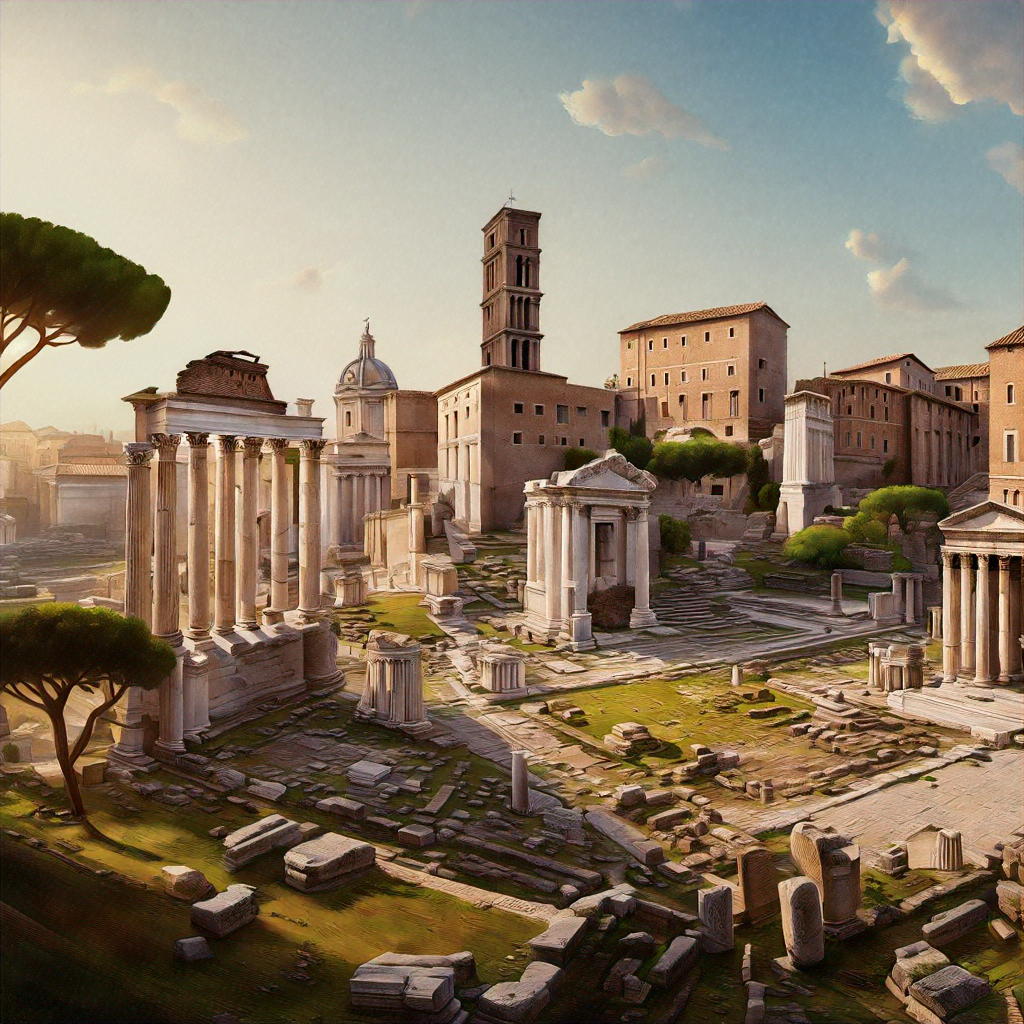
The late summer sun cast long shadows across Thessalonica's bustling harbor as merchant ships bobbed at their moorings. Children played among stacked amphorae while dock workers loaded the last cargo of the day. The great city, second only to Constantinople in the Eastern Roman Empire, was enjoying another prosperous evening along its celebrated waterfront.
High in one of the watchtowers, guard captain Theodore squinted at the horizon, where dark shapes were emerging from the gathering dusk. He assumed at first they were the usual merchant vessels returning from Mediterranean trade routes. Yet something about their sleek, aggressive profiles sent a chill down his spine. As they drew closer, his worst fears were confirmed: the distinctive dragon-headed prows of Norse longships were cutting through the waves toward Thessalonica's harbor.
Theodore's hands trembled as he lit the warning beacon. Within minutes the city's warning bells began to toll, their peals echoing off the massive Theodosian walls. But it was too late. Over fifty Viking ships under the command of Leo of Tripoli, a Greek-born Muslim convert who had allied with the Norse raiders, were already entering the harbor. Their oars churned the water to foam as trained warriors readied their weapons.
The peaceful evening erupted into chaos. Merchants abandoned their wares, mothers grabbed their children, and the city militia scrambled to defensive positions. The Vikings had chosen their moment carefully. Many of Thessalonica's regular garrison troops were away fighting the Bulgarians to the north. As the sun set on that fateful day in July 904, one of the empire's greatest cities was about to experience a catastrophe that would echo through the centuries.
By the early 10th century, the Eastern Roman (Byzantine) Empire was facing threats from all directions. Still powerful, it was no longer the undisputed master of the Mediterranean it had been under Justinian four centuries earlier. The rise of Islamic powers had stripped away its southern provinces, while Bulgarian kingdoms threatened from the north. The empire's vast merchant fleet still dominated Mediterranean trade, making its wealthy ports tempting targets for raiders.
The Vikings, known to the Byzantines as the Rus, had already made their presence felt in the East. Their raids along the Black Sea coast had forced Constantinople to negotiate treaties and even recruit some as elite guards. But this new threat, the alliance between Norse raiders and Leo of Tripoli (born Ghulam Zurafa before his conversion to Islam), represented a dangerous new development in the region's already volatile politics.
Thessalonica itself was no stranger to siege and assault. Its position as a major commercial hub and its role as the main Byzantine military base in the Balkans had made it a target for various enemies over the centuries. The city had survived attacks by Slavs, Avars, and Arabs, protected by its massive walls and usually well-manned defenses. In 904, though, several factors conspired to leave it vulnerable: the absence of much of its garrison, a false sense of security bred from previous successes, and the unprecedented combination of Viking naval expertise with Leo's intimate knowledge of Byzantine defensive systems.
The initial Viking assault focused on the harbor defenses. Using tactics perfected in countless raids across Europe, they launched a coordinated attack that overwhelmed the undermanned harbor chain and tower defenses. Leo of Tripoli's knowledge proved invaluable. He knew exactly where the weakest points were and how Byzantine defenders would likely respond.
From her house near the harbor, Anna Komnena (whose account survives in fragments) described the terrifying scene: "The barbarians poured through the harbor like wolves into a sheepfold. Their axes gleamed in the last light of day, and their war-cries froze the blood of even the bravest defenders. Some of our soldiers fought valiantly, but they were too few, and the enemy too many."
The city's civilian leadership, led by Archbishop Leo, attempted to organize a defense while simultaneously trying to negotiate with the raiders. Contemporary accounts suggest they offered a massive ransom to spare the city, but the combined Viking-Arab force wasn't interested in mere payment. They had come for total plunder.
Street fighting lasted through the night. Small groups of defenders made desperate stands at key intersections and public buildings before being systematically overwhelmed. The Vikings' experience in urban warfare, gained from raids on cities like Paris and London, showed in their methodical advance through the city quarters.
By dawn, most organized resistance had collapsed. The Vikings and their Arab allies began a systematic plunder of Thessalonica that would last for ten days. They looted homes, churches, and public buildings, taking not only portable wealth but also thousands of citizens as slaves. The great Church of St. Demetrios, dedicated to the city's patron saint, was stripped of its famous silver decoration and its holy relics desecrated.
The Byzantine historian John Kaminiates, captured during the raid, left a detailed account of his experience: "They separated the young from the old, the men from the women. Those with skills or education were set aside for higher ransoms. I saw mothers torn from children, husbands from wives. The barbarians showed no mercy, driven by their greed and their contempt for our faith."
The sack of Thessalonica sent shockwaves through the Byzantine Empire. Thousands were killed and up to 22,000 were taken as slaves. The economic damage was catastrophic, disrupting the city's role as a major trading center for years.
In Constantinople, Emperor Leo VI was forced to acknowledge the empire's naval vulnerabilities. He ordered a program of coastal fortification and naval rearmament. The Byzantine fleet was reorganized, with new squadrons specifically tasked with anti-piracy operations.
The psychological impact cut even deeper. If Thessalonica, with its massive walls and centuries of defensive experience, could fall so quickly, what city was truly safe? The event became a watershed moment in Byzantine military history, driving significant reforms in urban defense strategies and naval patrol patterns.
As Thessalonica slowly rebuilt, the Byzantine Empire faced a harsh new reality. It could no longer take its maritime supremacy for granted. The Vikings would return to the Mediterranean, and Arab raiders would grow bolder still. In our next episode, we'll explore how the Empire responded to these challenges, and how the lessons of Thessalonica's fall would shape Byzantine military thinking for centuries to come.
Editor's Context
Read this episode as part of a longer argument about institutional strain: Rome did not simply collapse because one battle, emperor, or migration went wrong. The important pattern is how military pressure, political legitimacy, taxation, and local survival choices reinforced each other. The date markers (904, 000) are included because chronology is one of the easiest places for narrative history to become misleading. The episode's themes (history, empire, power) are the editorial lens for weighing cause and consequence rather than treating the story as isolated trivia.
Reviewed under the EmpiresDiary editorial workflow by Obadiah.
Sources & Further Reading
Selected bibliography for this series
The Fall of the Roman Empire: A New History of Rome and the Barbarians
Peter Heather, The Fall of the Roman Empire: A New History of Rome and the Barbarians. Oxford University Press, 2005. (scholarly)
The Fall of Rome and the End of Civilization
Bryan Ward-Perkins, The Fall of Rome and the End of Civilization. Oxford University Press, 2005. (scholarly)
The World of Late Antiquity
Peter Brown, The World of Late Antiquity. Thames & Hudson, 1971. (scholarly)
Res Gestae
Ammianus Marcellinus, Res Gestae. Primary late Roman narrative source for the fourth century. (primary)
Drafted with AI. Edited and fact-checked by Obadiah before publication. See the workflow and editorial policy.