Through Roman Eyes
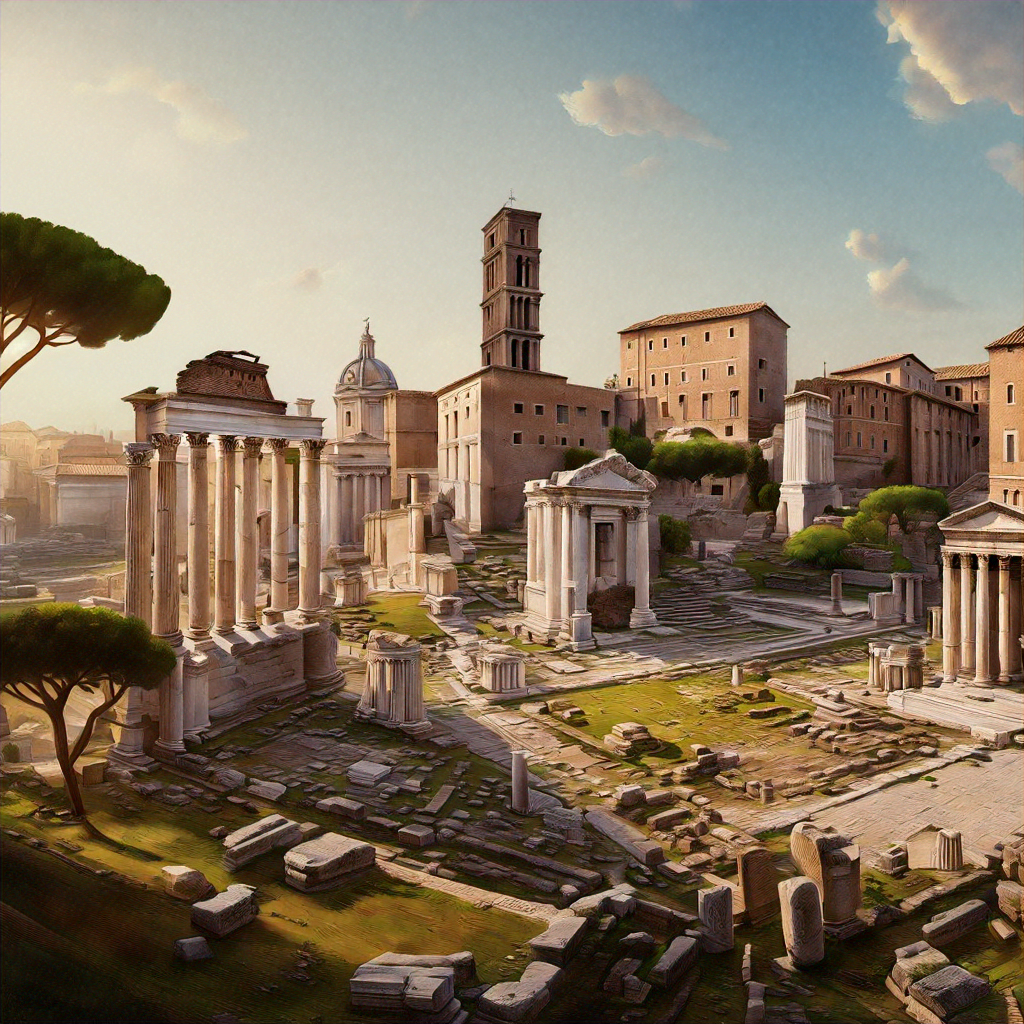
Opening Scene: August 24, 410 CE
The moon cast long shadows across the Salarian Gate as the creaking sound of rusty hinges pierced the night air. Inside Rome's walls, a slave girl named Helena clutched her mistress's jewelry box, watching in horror as several Gothic warriors slipped through the opened portal. The infamous gate, which had kept Rome safe for centuries, now betrayed the Eternal City thanks to conspirators within.
Alaric, King of the Visigoths, sat astride his war horse just beyond the walls, his long blonde hair gleaming in the torchlight. After three failed sieges and years of frustrated negotiations with Emperor Honorius, his moment had finally arrived. The man who had once served as a Roman general would now be the first foreign enemy to breach Rome's walls in eight centuries.
As the Gothic warriors secured the gate, more troops poured in. The night air filled with the sound of thousands of boots on stone and the metallic clank of weapons. Most Romans slept unaware, having grown complacent after so many false alarms. But soon the horns would sound, and the city would erupt in chaos.
In the Lateran Palace, Bishop Innocentius I knelt in prayer, having failed in his diplomatic missions to prevent this catastrophe. Near the Forum, wealthy patrician families hurriedly gathered valuables, preparing to flee to their estates in Sicily. And in the imperial palace at Ravenna, Emperor Honorius reportedly received the news while feeding his favorite chickens, initially misunderstanding that "Rome has fallen" as news about a favorite rooster named "Roma."
Historical Context: The Long Road to Catastrophe
The sack of Rome didn't happen in isolation. For decades, the relationship between Rome and the Goths had been complex and deteriorating. The Goths, pushed westward by Hunnic expansion, had entered Roman territory in 376 CE as refugees. Emperor Valens had settled them in Thrace as foederati (allied troops), but poor treatment and Roman corruption led to rebellion.
The crucial Battle of Adrianople in 378 CE saw the Goths destroy an entire Roman field army and kill Emperor Valens. This disaster forced Rome to increasingly rely on Gothic and other Germanic troops, creating a dangerous dependency. Alaric himself rose through Roman military ranks, commanding Gothic auxiliaries for Emperor Theodosius I in the 390s.
When Theodosius died in 395 CE, the empire was divided between his young sons: Arcadius in the East and Honorius in the West. The real power lay with their guardians – Rufinus in Constantinople and Stilicho in Ravenna. This political instability gave Alaric an opening to press for better terms for his people, including land and official recognition.
Between 395 and 408 CE, Alaric alternated between serving and threatening the empire. Stilicho, himself of half-Vandal descent, often used diplomacy to manage Alaric, seeing him as a potential asset. But when Stilicho was executed in 408 CE for alleged treason, the last capable handler of Gothic affairs was gone. Honorius's subsequent massacre of Gothic families serving in Roman armies pushed Alaric toward open hostility.
Main Narrative: Three Days That Changed History
The sack of Rome unfolded in three distinct phases, each revealing different aspects of the complex relationship between Romans and Goths.
The first day saw relatively disciplined plundering. Alaric, mindful of his Christian faith and desire for legitimacy, ordered his troops to spare churches and respect religious sanctuaries. The Basilica of St. Peter and St. Paul became refuges for thousands of Romans. Gothic soldiers focused primarily on the homes of wealthy senators, many of whom had opposed negotiations with Alaric.
Procopius, writing a century later, recorded the account of an elderly senator's wife: "They took our silver and gold, yes, but the barbarian captain posted guards at our door when he learned my husband had served as consul. Some even showed respect, calling him 'dominus' as our own people do."
The second day brought more chaos as discipline broke down. Lower-ranking Gothic warriors, many bearing personal grudges from years of Roman mistreatment, ignored orders and began indiscriminate looting. Fires broke out in the Subura district and near the Circus Maximus. The Roman prefect Marcellus attempted to organize resistance but found most able-bodied men had fled or were hiding.
Senator Ancius Petronius wrote: "Where once we commanded German tribes, now we hide from them in our cellars. My own German doorman, who served us faithfully for twenty years, joined the looters, shouting that his people's time had come."
The final day saw focus shift to ransoming prominent citizens. Alaric's men systematically identified valuable hostages, particularly from senatorial families. The Gothic king, still thinking politically, knew these captives could be useful in future negotiations with Honorius.
Meanwhile, Roman society revealed its fractures. Some poor citizens joined the Goths in looting wealthy homes. Christian leaders like Saint Jerome later wrote of Roman slaves guiding Goths to their masters' hidden valuables. Yet there were also acts of remarkable courage, like the Roman matron who died protecting young women who had sought shelter in her home.
Consequences: The Psychological Wound
The physical damage to Rome, while significant, was actually limited. Alaric's forces departed after three days, taking wagons of treasure and hundreds of high-ranking hostages. But the psychological impact was devastating and permanent.
The idea of Rome's invincibility, central to Mediterranean civilization for centuries, was shattered. Saint Jerome, in Bethlehem, wrote: "The City which had conquered the world was itself conquered." The shock waves reached across the empire, with many seeing it as a sign of divine punishment or the approaching end of the world.
The sack accelerated the shift of power from Rome to Ravenna and Constantinople. Wealthy families increasingly abandoned the city, taking their resources with them. The Senate, though continuing to meet, never regained its former influence. Most significantly, the event marked a psychological turning point where Romans began to accept that their world was fundamentally changing.
Looking Ahead
As Alaric's Goths moved south, laden with Rome's treasures, they sought to cross to Africa, Rome's breadbasket. But storms destroyed their ships near Messina, and Alaric died shortly after. His successor Ataulf would lead the Goths to Gaul, establishing what would become the Visigothic Kingdom. The sack of Rome in 410 CE was not the end of the Western Empire, but it marked the beginning of its final phase. In our next episode, we'll explore how Rome struggled to maintain control of its vital African provinces in the aftermath of this devastating blow.
This episode was created with AI assistance and audited for factual accuracy. See our AI methodology and editorial policy.