The Year of Six Emperors
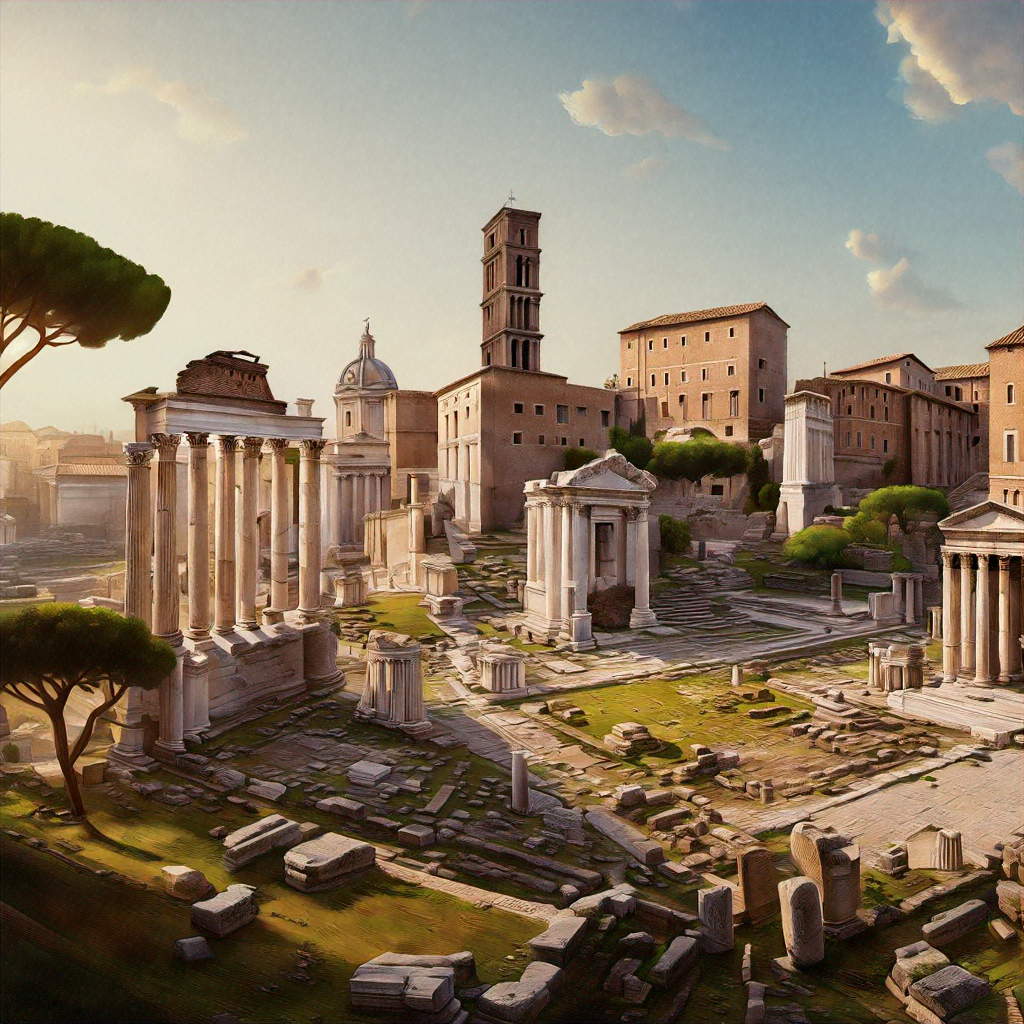
Opening Scene - Rome, Summer 238 CE
The stench of death hung heavy in Rome's summer air. In the Forum Romanum, where senators had once debated great matters of state, bodies lay rotting in the July heat. Just weeks before, the city had witnessed an unprecedented sight: two emperors, Pupienus and Balbinus, dragged from the imperial palace by their own Praetorian Guard, stripped naked, tortured through the streets, and brutally executed.
The year 238 CE would become known as the "Year of Six Emperors," a dizzying descent into chaos that epitomized the Crisis of the Third Century. In January, the elderly Maximinus Thrax had ruled. By December, a thirteen-year-old boy, Gordian III, sat uneasily on the throne. Between them, four other men had claimed the purple, each meeting a violent end.
In the marketplace, a denarius, once pure silver, now contained barely 40% precious metal, its surface a mottled grey. Merchants argued bitterly over prices that seemed to double weekly. Veterans of the legions, their pay worthless, turned to banditry. Along the frontiers, Germanic tribes and Persian armies pressed inward, sensing Rome's weakness.
An elderly senator named Cassius Dio, who had witnessed the golden age of the Antonine emperors, wrote in his histories: "This was the beginning of a time when Rome changed from a kingdom to a tyranny, from a golden age to one of rust and iron."
Historical Context - The Severan Dynasty's Legacy
The seeds of the crisis were planted in the early decades of the third century. The Severan Dynasty (193-235 CE) had maintained stability through military spending and currency debasement. Septimius Severus famously advised his sons to "enrich the soldiers and scorn all others." This policy created a dangerous precedent. Armies increasingly saw themselves as kingmakers.
When Alexander Severus was murdered by his troops in 235 CE, it shattered the last vestiges of dynastic legitimacy. His successor, Maximinus Thrax, was the first emperor who had never served in the Senate, a common soldier who rose through the ranks. The aristocracy was horrified. A new precedent was set: anyone with enough military support could now claim the throne.
The empire faced multiple structural problems:
- Constant warfare on multiple frontiers drained the treasury
- Plague and declining population reduced the tax base
- Debasement of currency led to hyperinflation
- Trade routes were disrupted by internal instability
- Agricultural production fell as farmers abandoned lands
- Military units prioritized regional interests over imperial unity
The Empire Fractures - Multiple Perspectives
From the viewpoint of Uranius Antoninus, a Syrian priest who declared himself emperor in 253 CE, the empire had already effectively ceased to exist as a unified entity. When Persian forces threatened his homeland, Rome seemed distant and irrelevant. He minted his own coins and raised his own army, one of many such breakaway rulers during this period.
The situation reached its nadir in the 260s. Emperor Valerian, campaigning against Persia, suffered the ultimate humiliation: capture by enemy forces. According to Persian accounts, Shapur I used the Roman emperor as a human footstool and eventually had him stuffed as a trophy. His son Gallienus tried to maintain control, but the empire splintered into three competing blocs:
- The Gallic Empire formed in the west (260-274 CE), encompassing Britain, Gaul, and Spain
- The Palmyrene Empire emerged in the east (260-273 CE), controlling Syria, Egypt, and parts of Asia Minor
- The central Roman government controlled only Italy, North Africa, and the Balkans
Zenobia, the formidable queen of Palmyra, expanded her realm while maintaining the fiction of Roman authority. She minted coins showing her son's face alongside the emperor's, even while her armies seized Egypt and pushed west into Asia Minor.
Meanwhile, in Augusta Treverorum (modern Trier), Postumus established a separate Gallic administration, complete with its own senate, consuls, and praetorian guard. He successfully defended the Rhine frontier against Germanic tribes but showed no interest in "liberating" Rome itself. He seemed content to rule his half of the west and leave the rest alone.
The surviving accounts paint a picture of widespread devastation. Zosimus writes of abandoned cities, failed harvests, and roving bands of deserters pillaging the countryside. Archaeological evidence confirms a sharp decline in construction, trade, and artistic production during this period.
Consequences and Impact
The Crisis of the Third Century permanently transformed the Roman Empire. When stability was finally restored under Diocletian (284-305 CE), the empire that emerged was a different creature entirely:
- The Principate gave way to the Dominate, with emperors ruling as absolute monarchs
- The economy shifted from monetary to barter-based in many regions
- Cities declined as centers of civic life, with many becoming fortified strongholds
- The army became increasingly "barbarized" as recruitment shifted to frontier regions
- Christianity gained followers as traditional institutions failed
- The seeds of feudalism were planted as wealthy landowners became more autonomous
These changes would define the character of the Late Roman Empire and shape the development of medieval Europe.
Looking Ahead
In our next episode, we'll explore how Diocletian attempted to resolve these crises through his radical reforms. His creation of the Tetrarchy, rule by four co-emperors, would establish a new imperial system. But would this solution prove lasting, or would it create new problems for the troubled empire? Join us as we continue to trace Rome's long twilight.
Editor's Context
Read this episode as part of a longer argument about institutional strain: Rome did not simply collapse because one battle, emperor, or migration went wrong. The important pattern is how military pressure, political legitimacy, taxation, and local survival choices reinforced each other. The date markers (235 CE, 238 CE) are included because chronology is one of the easiest places for narrative history to become misleading. The episode's themes (history, empire, power) are the editorial lens for weighing cause and consequence rather than treating the story as isolated trivia.
Reviewed under the EmpiresDiary editorial workflow by Obadiah.
Sources & Further Reading
Selected bibliography for this series
The Fall of the Roman Empire: A New History of Rome and the Barbarians
Peter Heather, The Fall of the Roman Empire: A New History of Rome and the Barbarians. Oxford University Press, 2005. (scholarly)
The Fall of Rome and the End of Civilization
Bryan Ward-Perkins, The Fall of Rome and the End of Civilization. Oxford University Press, 2005. (scholarly)
The World of Late Antiquity
Peter Brown, The World of Late Antiquity. Thames & Hudson, 1971. (scholarly)
Res Gestae
Ammianus Marcellinus, Res Gestae. Primary late Roman narrative source for the fourth century. (primary)
Drafted with AI. Edited and fact-checked by Obadiah before publication. See the workflow and editorial policy.