The Antonine Plague
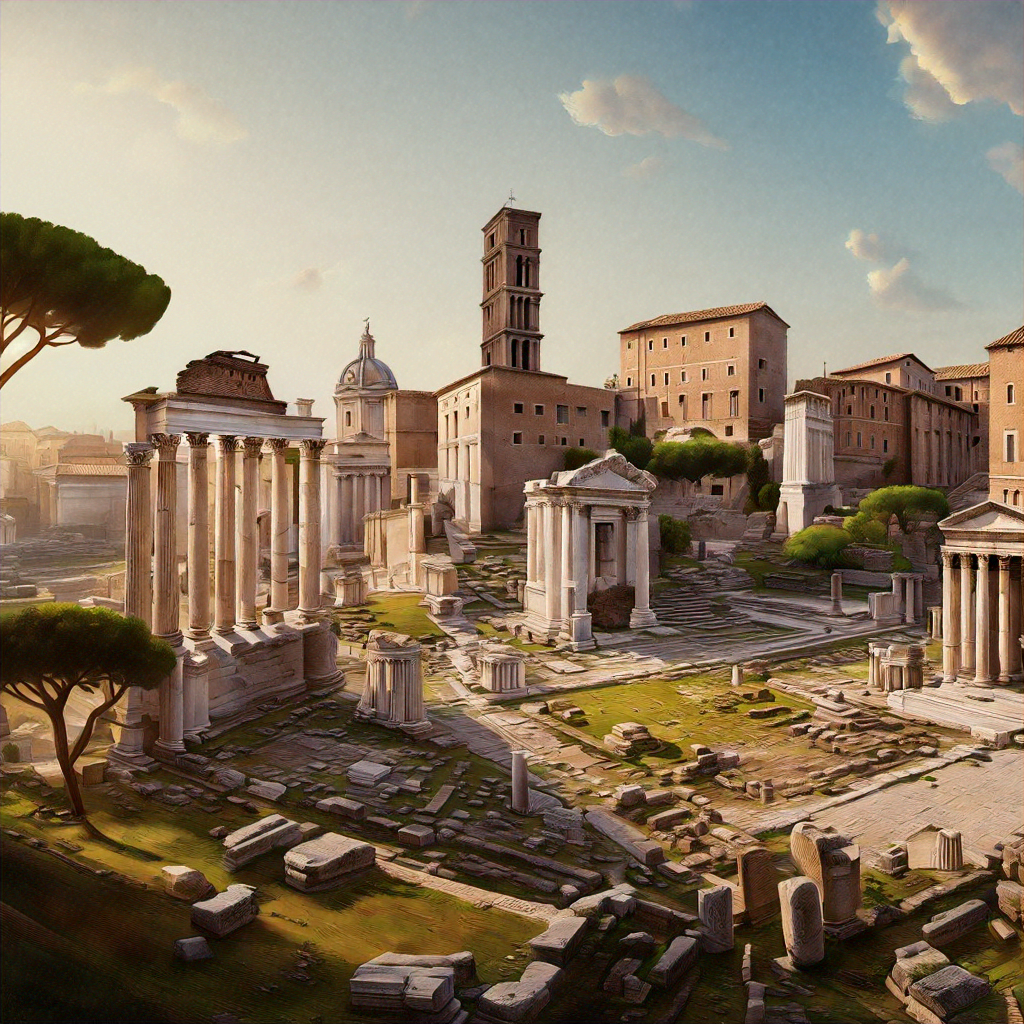
Marcus Aurelius stood at the gates of Rome in the summer of 166 CE, watching his victorious legions march home from the Parthian campaign. His satisfaction at their triumph turned quickly to horror. Many soldiers stumbled as they walked, their faces covered in angry pustules. Others bore dark lesions on their skin, eyes bloodshot and feverish. What should have been a celebration of Roman might became instead the beginning of a nightmare that would shake the empire to its foundations.
The mysterious disease spreading through the returning troops would soon be known as the Antonine Plague, named for the ruling Antonine dynasty. Within days, the streets of Rome echoed with the wails of the afflicted and the lamentations of those who had lost loved ones. The emperor could only watch as death swept through his capital like an invisible army no legion could defeat.
Galen, the empire's most renowned physician, recorded the horrifying symptoms: fever, diarrhea, and pustules covering the body from head to toe. Modern scholars believe it was likely smallpox. Whatever its true nature, it would prove one of the deadliest enemies Rome had ever faced.
The plague moved through the empire with terrifying speed. Trade routes that had once carried spices and gold now transmitted something far more sinister. From the ports of Ostia to the frontiers of Germania, no province was spared. In Alexandria, the dead were said to outnumber the living. In Athens, the streets were littered with corpses as the overwhelmed population struggled to maintain proper burial traditions.
The Roman historian Cassius Dio wrote that up to 2,000 people died each day in Rome at the height of the pandemic. The wealthy fled to their country villas, while the poor died by the thousands in the cramped insulae of the city. Traditional Roman social structures began to break down as the plague ignored all distinctions of class and status.
The military was particularly devastated. Entire units were wiped out, and the constant close contact between soldiers helped spread the disease rapidly. Frontier defenses weakened as garrisons were decimated, and Germanic tribes, sensing Roman vulnerability, began testing the borders with increasing boldness.
The plague's impact extended far beyond the immediate death toll. As workers and farmers succumbed, fields lay fallow and workshops stood empty. Trade declined sharply as merchants feared traveling between infected cities. The empire's sophisticated economic networks, which had created unprecedented prosperity, now helped spread chaos and scarcity.
Tax revenues plummeted just as the empire needed resources to maintain its defenses and care for the sick. Marcus Aurelius was forced to auction off imperial possessions to pay his troops and fund public services. The currency was debased, beginning a spiral of inflation that would trouble Rome for centuries.
Religious tensions escalated as people sought explanations for the disaster. Traditional Roman priests blamed Christian "atheism" for angering the gods, while Christians saw divine punishment for pagan persecution. The plague accelerated the erosion of traditional Roman religious practices and contributed to the spread of mystery cults and Christianity.
By 169 CE, the plague's toll on the military had reached crisis levels. The empire had lost perhaps a third of its total fighting force, with some legions suffering even higher casualties. Marcus Aurelius struggled to find enough healthy men to hold the frontiers against increasing barbarian incursions.
He was forced to take unprecedented steps. Gladiators, slaves, and criminals were recruited into the legions. Barbarian tribes were settled within Roman territory in exchange for military service, a dangerous precedent that would later contribute to the empire's fall.
The Marcomanni and Quadi tribes, seeing Rome's weakness, launched major invasions across the Danube. Marcus Aurelius spent much of his remaining reign campaigning in Germania, trying to hold the frontier with depleted forces. The plague followed the armies, continuing to kill soldiers even as they fought to defend the empire.
The Antonine Plague marked a turning point in Roman history. Though the empire would recover temporarily under the Severan dynasty, the pandemic exposed critical vulnerabilities in the Roman system. The centralized administration, extensive trade networks, and urban concentration that had been sources of Roman strength became vectors of weakness when faced with disease.
Five million people died. That figure represents perhaps a quarter of the empire's entire population. This demographic collapse accelerated trends that would contribute to Rome's fall: labor shortages, military weakness, and economic instability feeding into broader social upheaval.
Marcus Aurelius died in 180 CE, having spent his reign fighting both visible and invisible enemies. His death marked the end of the Pax Romana, the long period of peace and prosperity that had defined the empire's golden age. His son Commodus, who succeeded him, would prove unequal to the challenges of ruling an empire in crisis.
As we'll see in our next episode, Commodus's reign would mark the beginning of the empire's long decline. The Antonine Plague had revealed fundamental weaknesses in the Roman system that were never fully addressed. Though Rome would endure for centuries more, the pandemic had planted the seeds of its eventual fall. The question was no longer if the empire would fall, but when and how.
The stage was set for the Crisis of the Third Century, when Rome would come closer to collapse than ever before. But that is a story for another day.
Summary
The Antonine Plague (166-180 CE) devastated the Roman Empire, killing an estimated five million people and revealing critical weaknesses in Roman society. The pandemic decimated the military, crashed the economy, and accelerated social changes that would contribute to Rome's eventual fall. The episode explores how this invisible enemy did what no human army had managed: shake the empire to its foundations.
Editor's Context
Read this episode as part of a longer argument about institutional strain: Rome did not simply collapse because one battle, emperor, or migration went wrong. The important pattern is how military pressure, political legitimacy, taxation, and local survival choices reinforced each other. The episode's themes (history, empire) are the editorial lens for weighing cause and consequence rather than treating the story as isolated trivia.
Reviewed under the EmpiresDiary editorial workflow by Obadiah.
Sources & Further Reading
Selected bibliography for this series
The Fall of the Roman Empire: A New History of Rome and the Barbarians
Peter Heather, The Fall of the Roman Empire: A New History of Rome and the Barbarians. Oxford University Press, 2005. (scholarly)
The Fall of Rome and the End of Civilization
Bryan Ward-Perkins, The Fall of Rome and the End of Civilization. Oxford University Press, 2005. (scholarly)
The World of Late Antiquity
Peter Brown, The World of Late Antiquity. Thames & Hudson, 1971. (scholarly)
Res Gestae
Ammianus Marcellinus, Res Gestae. Primary late Roman narrative source for the fourth century. (primary)
Drafted with AI. Edited and fact-checked by Obadiah before publication. See the workflow and editorial policy.