Nero's Inferno
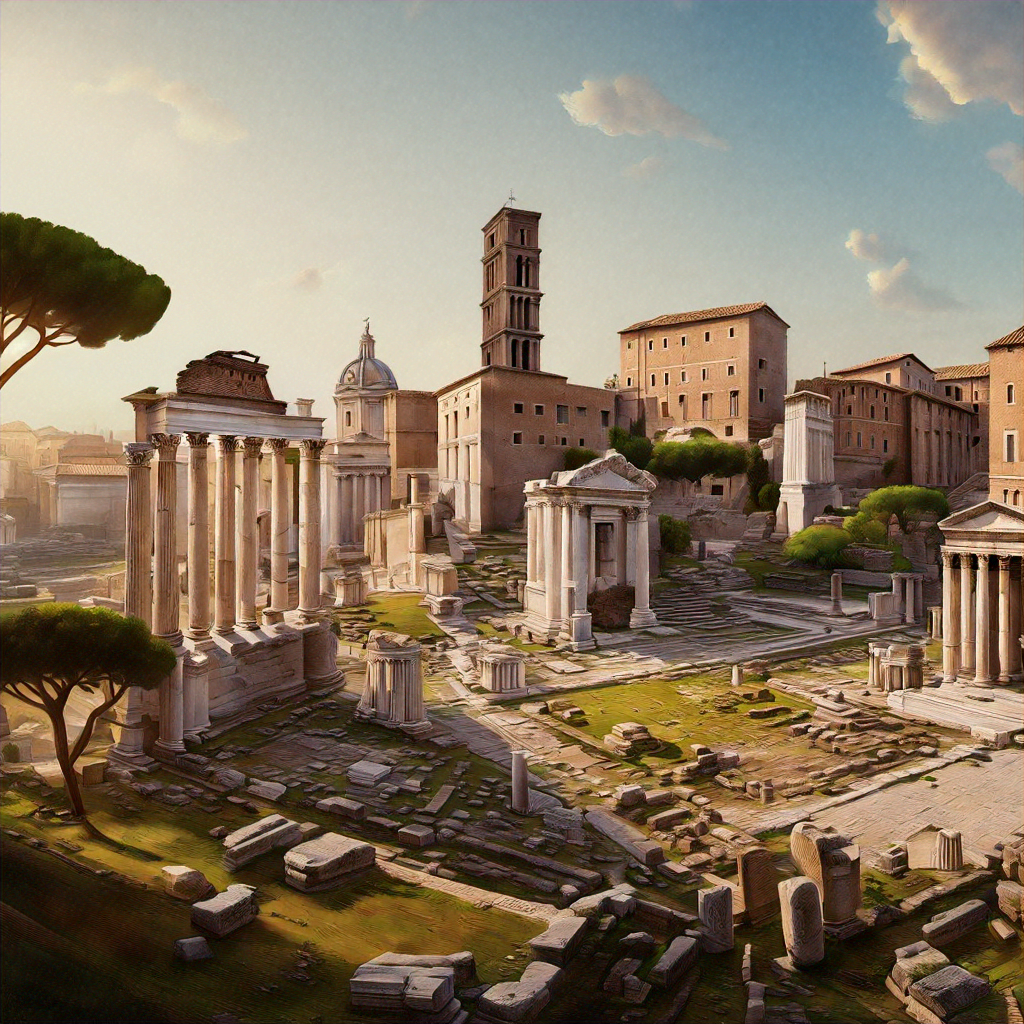
Opening Scene - July 18, 64 CE
The summer night was unusually still in Rome's Circus Maximus district. In the wooden shops and apartments near the massive chariot racing venue, merchants had closed their stalls for the evening, and families settled in for another hot night in the empire's crowded capital. Around midnight, a small fire sparked somewhere among the tightly packed wooden buildings. In normal circumstances, the vigiles (Rome's dedicated firefighters) might have contained it quickly. But that night, driven by strong winds and feeding on the densely packed wooden structures, the flames spread with terrifying speed.
Marcus Antonius, a cloth merchant whose family had operated a shop near the Circus for three generations, awoke to shouts and the acrid smell of smoke. He grabbed his young children from their beds and rushed into streets already filled with panicked citizens. The sky glowed orange as walls of flame leapt from building to building. The narrow alleys that characterized Rome's ancient districts became death traps, with people trampling each other in their desperation to escape.
Above the chaos, on the Palatine Hill, Emperor Nero's palace servants roused him with the news. According to the historian Tacitus, the 26-year-old emperor stood transfixed as he watched the inferno engulf the heart of his capital. The flames illuminated the terror on thousands of faces as they fled with whatever possessions they could carry. The fire would rage for six days and seven nights, destroying ten of Rome's fourteen districts and leaving hundreds of thousands homeless.
Historical Context
By 64 CE, Rome had grown into a metropolis of nearly a million people, making it the largest city the world had ever seen. This unprecedented urban growth had come at a cost. The city was a tangled maze of narrow streets lined with poorly constructed wooden apartment blocks called insulae, often built six or seven stories high. Fire regulations were frequently ignored, and previous emperors' attempts to implement building codes had largely failed.
Nero's reign had begun promisingly in 54 CE, but by 64 CE his rule had grown increasingly erratic. His mother Agrippina's murder and his first wife Octavia's execution had alienated the Senate. His growing obsession with public performances had done the same to the common people. The young emperor's massive construction projects had drained the treasury, and his architectural ambitions for Rome were well known.
The city's Christian community had grown significantly since the religion's arrival in Rome around 49 CE. Though still a minority, Christians had established themselves in several neighborhoods, particularly in the Transtiberim district. Their refusal to participate in Roman religious ceremonies, combined with their prophecies about the world's end, had already created tension with their pagan neighbors.
The Fire and Its Aftermath
The Great Fire's devastation was unprecedented. Tacitus records that only four of Rome's fourteen districts escaped completely unscathed. The conflagration destroyed not just homes and shops, but also ancient temples, public buildings, and priceless artworks that had stood for centuries. Exact casualty figures are unknown. Thousands died, and hundreds of thousands lost everything they owned.
As the flames finally died down, rumors began to spread. Some claimed to have seen people deliberately spreading the fire. Others whispered that Nero had ordered the destruction to clear space for his ambitious building projects. The emperor's initial response seemed appropriate enough: he opened his gardens to the homeless and ordered emergency food supplies distributed. But his decision to begin immediate construction on his massive Domus Aurea (Golden House) on newly cleared land fed public suspicion.
Seeking to deflect blame, Nero identified a convenient scapegoat in the Christians. As Tacitus writes, "To suppress this rumor, Nero fabricated scapegoats and punished with every refinement the notoriously depraved Christians." The persecution that followed was brutal. Christians were arrested en masse. Many were subjected to public execution in the Vatican Gardens, some covered in animal skins and torn apart by dogs, others crucified and set ablaze as human torches.
The Christian community's response was complex. Some fled the city, carrying their faith to other parts of the empire. Others went underground, meeting in catacombs and private homes. The persecution hardened their resolve and contributed to the martyrdom tradition that would become central to Christian identity. According to tradition, both Peter and Paul were executed in Rome during this period, though scholars debate the exact timing.
Long-Term Impact
The Great Fire fundamentally transformed Rome's urban landscape. Nero instituted new building regulations requiring wider streets, stone construction, and improved access to water. The city that rose from the ashes was more organized and fire-resistant, though these improvements came at the cost of its ancient character.
The persecution of Christians set a precedent for state-sponsored religious violence that would continue sporadically for over two centuries. Nero became fixed in Christian historical memory as the first systematic persecutor of the faith, and that narrative shaped Christian-Roman relations until Constantine's conversion in the fourth century.
The fire also marked a turning point in Nero's reign itself. The enormous cost of rebuilding the city, compounded by lavish spending on the Domus Aurea, led to increased taxation and economic strain throughout the empire. Public opinion never fully recovered, and the resentment that built in those years contributed to the rebellion that ended his rule in 68 CE.
Looking Ahead
As Rome rebuilt from the ashes, Nero's grip on power began to slip. The next episode will explore the mounting crises that led to the Year of the Four Emperors in 69 CE, as the empire faced its first major succession crisis since Augustus. The stability of the Julio-Claudian dynasty was about to give way to civil war, forever changing how Rome chose its rulers.
Editor's Context
Read this episode as part of a longer argument about institutional strain: Rome did not simply collapse because one battle, emperor, or migration went wrong. The important pattern is how military pressure, political legitimacy, taxation, and local survival choices reinforced each other. The date markers (64 CE, 54 CE) are included because chronology is one of the easiest places for narrative history to become misleading. The episode's themes (history, empire, power) are the editorial lens for weighing cause and consequence rather than treating the story as isolated trivia.
Reviewed under the EmpiresDiary editorial workflow by Obadiah.
Sources & Further Reading
Selected bibliography for this series
The Fall of the Roman Empire: A New History of Rome and the Barbarians
Peter Heather, The Fall of the Roman Empire: A New History of Rome and the Barbarians. Oxford University Press, 2005. (scholarly)
The Fall of Rome and the End of Civilization
Bryan Ward-Perkins, The Fall of Rome and the End of Civilization. Oxford University Press, 2005. (scholarly)
The World of Late Antiquity
Peter Brown, The World of Late Antiquity. Thames & Hudson, 1971. (scholarly)
Res Gestae
Ammianus Marcellinus, Res Gestae. Primary late Roman narrative source for the fourth century. (primary)
Drafted with AI. Edited and fact-checked by Obadiah before publication. See the workflow and editorial policy.