Rome's Night of Terror
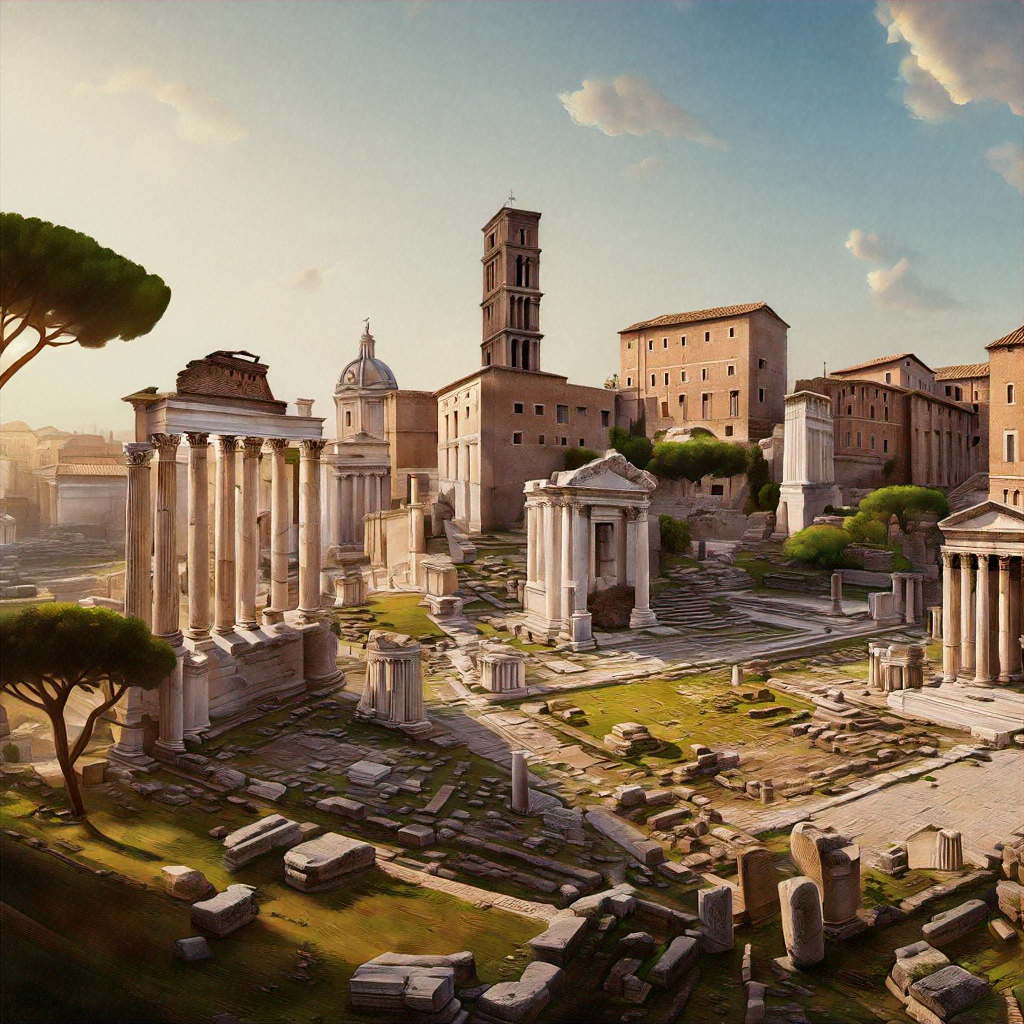
Opening Scene - August 24, 410 CE
The pre-dawn silence over Rome broke with the grinding of ancient hinges. The Salarian Gate, standing guard over the northern approach to the Eternal City, swung open. Not by Roman hands. Slaves inside the city, themselves of Gothic origin, had unlocked the massive portal in the dark hours before dawn, letting their kinsmen pour through the breach in Rome's defenses.
Alaric, King of the Visigoths, sat astride his war horse and watched his warriors stream through the gate. His weathered face, marked by years of battle and negotiation, betrayed little emotion. For three years he had laid siege to Rome, twice accepting bribes to withdraw. But now, after decades of broken promises from emperors and generals, he would take what he believed his people were owed.
The streets of Rome, still shadowed in darkness, filled with the sound of thousands of Gothic boots on ancient cobblestones. Many of the city's inhabitants were still asleep. They were about to wake to a nightmare not seen in eight centuries: Rome, the capital of civilization itself, overrun by those it had long dismissed as barbarians.
In her villa on the Caelian Hill, the noblewoman Anicia Faltonia Proba stood at her window clutching a small Christian cross. The sounds of breaking doors and screaming citizens echoed up from the valleys below. Smoke began to rise from scattered fires, and the morning sky turned an ominous orange. Her grandfather had served as consul of Rome. Now she watched as the world he had known crumbled before her eyes.
Historical Context
The sack of Rome did not occur in a vacuum. For over a century, the empire had been grappling with internal strife and external pressure. Emperor Constantine's decision to establish Constantinople as a second capital in 330 CE had gradually shifted the empire's center of gravity eastward. Rome, though still symbolically powerful, had ceased to be the administrative center of the empire.
The Gothic peoples, pushed westward by the advancing Huns, had been seeking settlement within Roman territories since the 370s CE. In 376, the Goths were allowed to cross the Danube as foederati, allied peoples who would serve the empire in exchange for land and autonomy. Roman mistreatment and exploitation drove them to rebellion, culminating in the devastating Battle of Adrianople in 378 CE, where Emperor Valens was killed.
Alaric himself had risen to prominence inside this fractured political landscape. Born around 370 CE, he had actually served in Roman armies and expected to be granted a position of authority within the empire's military structure. When those ambitions were repeatedly frustrated, particularly by Stilicho (the half-Vandal regent of Western Emperor Honorius), Alaric turned his military expertise against Rome.
The empire's inability to defend Italy reflected deeper systemic rot. The professional Roman army had been increasingly replaced by Germanic foederati. Tax revenues had declined as wealthy landowners secured exemptions, and the currency had been debased. By 410, the empire's defensive strategy relied more on diplomacy and tribute than on soldiers.
The Main Narrative
As the sun rose over Rome on that fateful August morning, three distinct dramas played out across the city. In the western districts near Vatican Hill, Christian refugees crowded into the great basilica of St. Peter's. Alaric, himself an Arian Christian, had declared the major churches to be sanctuaries. The basilica's massive doors were barred, and inside, Bishop Innocent I led prayers while the sounds of looting and violence echoed through the streets outside.
In the Forum Romanum, center of the old Republic's political life, a group of senators gathered in the Curia Julia. These men, descendants of Rome's ancient families, debated whether to organize resistance. Their deliberations were academic. They had no troops to command, no real power to wield. When Gothic warriors broke into the senate house, they found only empty chairs and ancient dignity.
The Subura told a different story. In Rome's crowded working-class district, the sack was most brutal. Wooden apartments were set ablaze and shops were looted. Residents who couldn't flee were enslaved. A grain merchant named Lucius, recorded in a contemporary account, watched his life's work destroyed as Gothic warriors broke open his storehouses and distributed his grain among themselves.
The Visigoths' approach was methodical. Alaric's men focused on portable wealth: gold, silver, precious stones, fine textiles, and valuable hostages who could be ransomed. They largely spared the city's infrastructure and major buildings, though some fires did spread out of control.
The most dramatic moment came when Gothic warriors entered the Palace of the Valerii on the Caelian Hill and found Galla Placidia, half-sister of Emperor Honorius. Her capture was both symbolic and strategic. She would later become a crucial figure in Gothic-Roman relations, eventually marrying Alaric's successor, Ataulf.
The emperor himself was not in Rome. He sat safely in Ravenna, protected by its marshes. When informed that Rome had fallen, Honorius reportedly exclaimed in relief, thinking his favorite chicken (named "Roma") had merely died. The anecdote, whether true or not, perfectly captures the disconnect between the imperial court and the reality facing Rome's citizens.
Consequences and Impact
The sack lasted only three days, but its psychological impact on the Roman world was immense. St. Jerome, writing from distant Bethlehem, declared that "the city which had taken the whole world was itself taken." The event sent shockwaves through the empire and prompted St. Augustine to write "The City of God," defending Christianity against pagan claims that Rome's fall was divine punishment for abandoning the old gods.
The material damage was substantial but not catastrophic. Many aristocratic families fled to their estates in North Africa or the East, taking their wealth with them. This accelerated the economic decline of the city and the shift of power to Constantinople. The ransoming of hostages drained still more wealth from the Western Empire's coffers.
Most significantly, the sack shattered the myth of Rome's invincibility. The city would be sacked again in 455 by the Vandals, and the Western Empire itself would fall in 476 CE. What happened in August 410 marked the beginning of the end for Roman power in the West.
Looking Ahead
As Alaric's Goths departed Rome, laden with treasure and hostages, they moved south with the intention of crossing to Africa. Storms wrecked their fleet, and Alaric died before the year's end. In our next episode, we'll follow his successor Ataulf as he leads the Visigoths into Gaul, setting the stage for the establishment of the first independent Germanic kingdom within the former Roman Empire.
Editor's Context
Read this episode as part of a longer argument about institutional strain: Rome did not simply collapse because one battle, emperor, or migration went wrong. The important pattern is how military pressure, political legitimacy, taxation, and local survival choices reinforced each other. The date markers (410 CE, 378 CE) are included because chronology is one of the easiest places for narrative history to become misleading. The episode's themes (history, empire, power) are the editorial lens for weighing cause and consequence rather than treating the story as isolated trivia.
Reviewed under the EmpiresDiary editorial workflow by Obadiah.
Sources & Further Reading
Selected bibliography for this series
The Fall of the Roman Empire: A New History of Rome and the Barbarians
Peter Heather, The Fall of the Roman Empire: A New History of Rome and the Barbarians. Oxford University Press, 2005. (scholarly)
The Fall of Rome and the End of Civilization
Bryan Ward-Perkins, The Fall of Rome and the End of Civilization. Oxford University Press, 2005. (scholarly)
The World of Late Antiquity
Peter Brown, The World of Late Antiquity. Thames & Hudson, 1971. (scholarly)
Res Gestae
Ammianus Marcellinus, Res Gestae. Primary late Roman narrative source for the fourth century. (primary)
Drafted with AI. Edited and fact-checked by Obadiah before publication. See the workflow and editorial policy.