The Eternal Winter
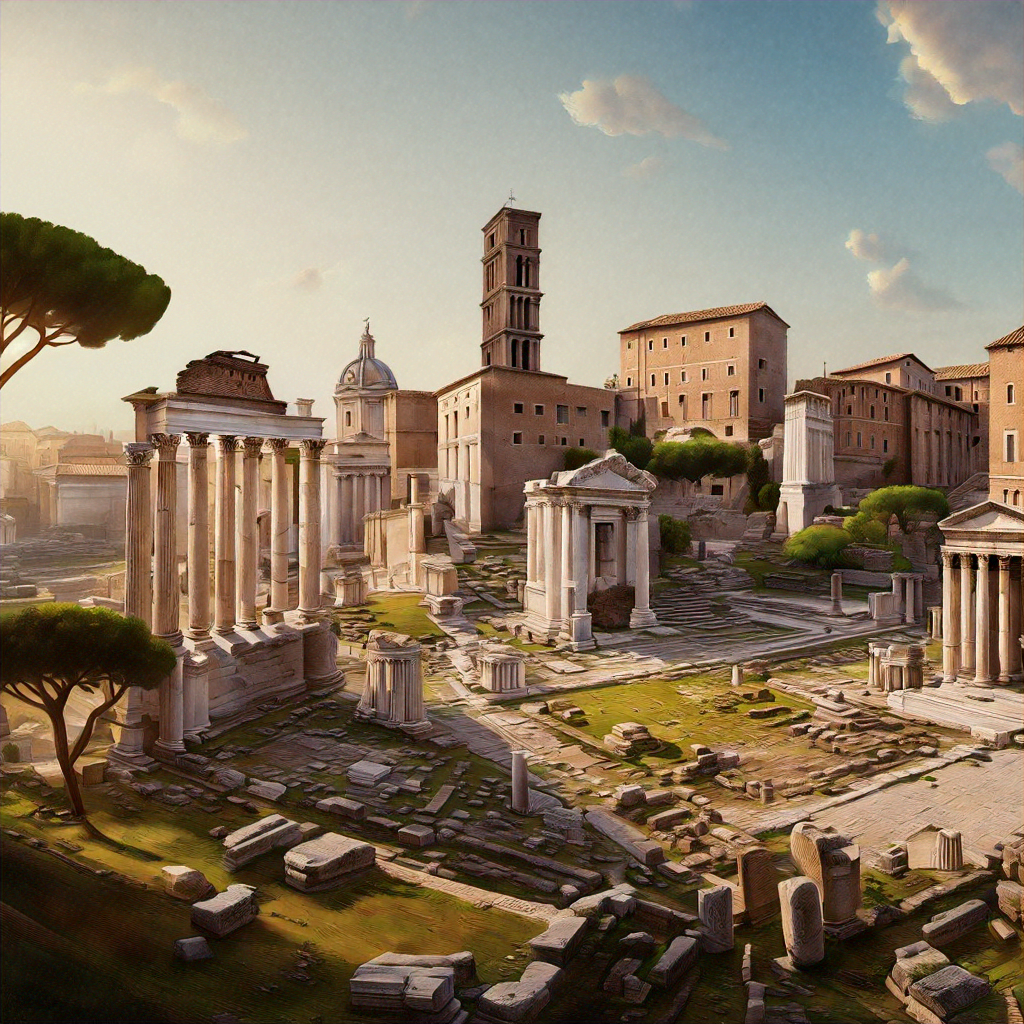
Opening Scene: The Sun Dims
Constantinople, Summer 535 CE. The morning sun should have been blazing over the Bosphorus, but instead a sickly pale disk hung in a milky white sky. Procopius, the court historian to Emperor Justinian, stood on the walls of the great city and scratched notes onto his wax tablet with increasing concern. For months the sun had been dimmed, as if perpetually veiled by thin clouds. Crops were failing across the empire, and strange frosts appeared even in the warmest months.
"Like a great eclipse, the sun gives forth its light without brightness," he wrote, his stylus pressing deep into the wax. "Men have neither peace nor hope, for the year has been turned into an eternal winter."
In the harbors below, ships sat idle. Their captains wouldn't risk journeys when they could barely see the horizon, and the bustling trade that kept the empire's heart beating had slowed to a trickle. In the streets, citizens huddled in heavy cloaks despite the summer season, whispering about divine punishment and the end of days.
That evening, making his way to the imperial palace to deliver his daily report, Procopius passed the great dome of Hagia Sophia, still under construction. The massive structure seemed to float in the ethereal gloom like a ghost ship. Inside the palace he found Emperor Justinian pacing restlessly, his dreams of reconquering the Western Empire now threatened by this inexplicable darkness that had thrown the natural world into chaos.
Historical Context: A World in Transition
By 535 CE, the Roman Empire had evolved far from its classical form. The West had fallen to Germanic kingdoms sixty years earlier, while the Eastern Empire, which we call Byzantine, maintained Roman civilization from Constantinople. Under Emperor Justinian (527-565 CE), the East experienced a final flowering of Roman power and culture.
Justinian had launched an ambitious program to reconquer the lost western provinces. His brilliant general Belisarius had already retaken North Africa from the Vandals in 534, and plans were underway for campaigns in Italy and beyond. The empire's economy was strong, its armies were well-supplied, and its cultural achievements reached new heights, exemplified by the construction of Hagia Sophia.
Natural disasters would soon test all of that. Modern science has revealed that a massive volcanic eruption, likely in Iceland or Southeast Asia, ejected millions of tons of sulfur dioxide into the atmosphere in early 535 CE. This created a persistent atmospheric veil that reduced sunlight and temperatures globally, triggering what scientists now call the Late Antique Little Ice Age.
The timing couldn't have been worse. The empire was already stretched thin by Justinian's expensive military campaigns and building projects. The population was still recovering from a series of plague outbreaks, and the agricultural system required predictable weather patterns to feed the empire's millions.
The Crisis Unfolds
The effects of the climate catastrophe rippled through Roman society like cracks in a frozen lake. In the countryside, farmers watched helplessly as crops withered in the fields. The grape harvest failed completely in many regions, olive trees produced little or no fruit, and grain yields fell by half or more.
In Syria, John of Ephesus recorded: "The sun became dark and its darkness lasted for eighteen months. Each day it shone for about four hours, and still this light was only a feeble shadow." Similar accounts emerged from across the empire and beyond, from Ireland to China.
Food shortages hit the cities first. In Rome, the urban prefect struggled to maintain the grain dole as prices soared and shipments from Egypt became unreliable. Constantinople's massive population faced similar pressures, leading to bread riots in the winter of 535-536. Justinian's administration imposed price controls on basic foodstuffs and ordered grain ships diverted from their usual routes to supply the capital, but these measures provided only temporary relief.
The military consequences were severe. Belisarius's Italian campaign, launched in 536, faced not only Gothic resistance but also widespread famine. His armies struggled to feed themselves in the devastated countryside, and the naval supply lines were disrupted by unusual storms and poor visibility.
The crisis created openings for the empire's enemies. The Persians under Khosrow I pressed harder on the eastern frontier, knowing that Roman forces were weakened. In the Balkans, Slavic tribes crossed the Danube in greater numbers, finding little resistance as garrison troops dealt with food riots in their own cities.
Consequences: A Turning Point
The environmental disaster of 535-537 CE marked a crucial turning point in Roman history. The empire survived, but its resilience was permanently weakened. The immediate effects included:
- Widespread famine and population decline
- Economic disruption that drained the imperial treasury
- Delayed military campaigns and territorial losses
- Increased social instability and religious tensions
Perhaps most significantly, the crisis was followed almost immediately by the outbreak of the Justinianic Plague in 541 CE. The weakened population, suffering from malnutrition and cold, proved especially vulnerable to the disease.
The combined weight of climate disaster and plague marked the end of the classical Mediterranean world. The complex urban civilization of antiquity began to simplify and ruralize, setting the stage for the medieval period.
Looking Ahead
As the sun finally brightened in 537 CE, the Roman world had changed irrevocably. In our next episode, we'll explore how the arrival of the Justinianic Plague dealt another devastating blow to an empire already reeling from environmental catastrophe. The question would no longer be whether Rome could maintain its power. It would be whether civilization itself could survive in a world turned upside down.
Editor's Context
Read this episode as part of a longer argument about institutional strain: Rome did not simply collapse because one battle, emperor, or migration went wrong. The important pattern is how military pressure, political legitimacy, taxation, and local survival choices reinforced each other. The date markers (534, 535 CE) are included because chronology is one of the easiest places for narrative history to become misleading. The episode's themes (history, empire, power) are the editorial lens for weighing cause and consequence rather than treating the story as isolated trivia.
Reviewed under the EmpiresDiary editorial workflow by Obadiah.
Sources & Further Reading
Selected bibliography for this series
The Fall of the Roman Empire: A New History of Rome and the Barbarians
Peter Heather, The Fall of the Roman Empire: A New History of Rome and the Barbarians. Oxford University Press, 2005. (scholarly)
The Fall of Rome and the End of Civilization
Bryan Ward-Perkins, The Fall of Rome and the End of Civilization. Oxford University Press, 2005. (scholarly)
The World of Late Antiquity
Peter Brown, The World of Late Antiquity. Thames & Hudson, 1971. (scholarly)
Res Gestae
Ammianus Marcellinus, Res Gestae. Primary late Roman narrative source for the fourth century. (primary)
Drafted with AI. Edited and fact-checked by Obadiah before publication. See the workflow and editorial policy.