The Three-Year Siege
Opening Scene: August 24, 410 CE
The summer night hung heavy over the Salarian Gate. Torch flames flickered along Rome's ancient walls as exhausted sentries fought against sleep, straining their eyes into the darkness. For three years the city had endured blockade, famine, and the constant threat of Gothic armies. But on this night, something was different.
Inside the gate, a small group of slaves worked quietly, their movements hidden by shadow. Alaric's agents had promised them freedom in exchange for one simple act: opening the massive bronze doors that had protected Rome for centuries. As midnight approached, the creaking of hinges pierced the silence.
The sound that followed would haunt Romans for generations. Thousands of Gothic warriors, waiting silently in the dark, began their surge through the breach. Their boots thundered on the ancient stones as war cries shattered the night air. Alaric the Goth, once an ally of Rome, now led his people in the unthinkable: the first capture of Rome by a foreign army in eight centuries.
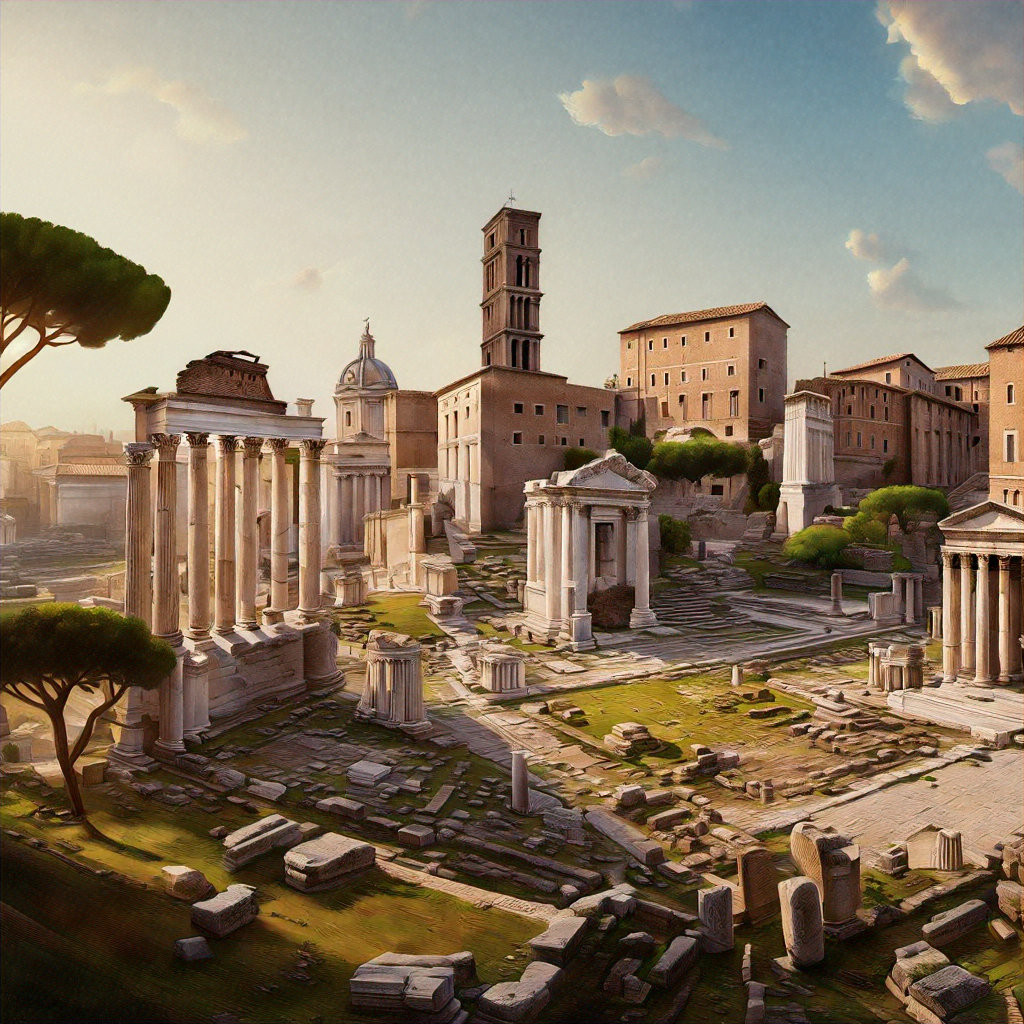
Inside their villas, wealthy Roman families woke to breaking doors and shattering glass. The city's prefect, Proclus, rushed to organize a defense, but it was already too late. Gothic warriors poured through the streets, their torches throwing wild shadows across buildings that had stood since the Republic. The marble columns of the Forum, the golden roofs of temples, the countless treasures of empire: all lay exposed to the invaders.
On the Palatine, aristocratic women frantically stripped off their jewelry, knowing the Goths would take anything of value. Some fled to the great churches carrying what wealth they could, hoping Alaric would honor his Christian faith and spare those who sought sanctuary. Others simply waited in terror as the sounds of destruction drew closer.
Historical Context: The Long Road to Catastrophe
The sack of Rome didn't happen in isolation. It was the culmination of decades of deteriorating relations between Rome and the Gothic peoples. Since the 370s CE, various Gothic groups had been pushing into Roman territory, driven by pressure from the Huns and drawn by the empire's wealth. Emperors often chose to settle these migrants as federates: allied tribes who would provide military service in exchange for land and supplies.
Alaric himself embodied this complicated relationship. Born around 370 CE to a noble Gothic family, he had served in Roman armies and expected recognition and reward for that service. The empire repeatedly broke its promises to him and his people. By 395, Alaric had become king of the Visigoths and began using military pressure to negotiate better terms.
The political situation in Rome had grown increasingly unstable. The empire was officially divided between East and West, with the Western capital moved to Ravenna. The child-emperor Honorius relied on his brilliant but ruthless general Stilicho, himself of partially Germanic descent. Stilicho worked to maintain a balance between Roman interests and Gothic demands, but court intrigue led to his execution in 408. That removed the last effective mediator between Rome and Alaric.
Rome itself had changed. Though still the symbolic heart of empire, it was no longer the seat of imperial power. Its population had declined from a million-plus to perhaps 500,000, and many of its defensive structures had fallen into disrepair. The city depended on massive grain shipments from Africa, which made it vulnerable to blockade. Most importantly, its citizens had lost the military tradition that had once made Rome unconquerable.
The Three Days That Changed History
When Alaric's forces entered Rome, he implemented a carefully planned strategy. His men were ordered to spare churches and those who sought sanctuary within them. This wasn't mere piety. It was practical politics. Alaric was a Christian (an Arian rather than a Catholic) and knew that unnecessary brutality would make future negotiations harder.
The Gothic king established his headquarters in the Basilica Aemilia, directing his forces from the heart of the Forum Romanum. From there he sent out organized groups to secure key locations and gather valuables. One contemporary account describes the scene:
"They came not as mere raiders but as an army with purpose. Some carried torches, others bore tools for breaking down doors, and still others pushed carts to carry away treasure. They moved with discipline, checking each building methodically, though this did not make their presence less terrifying to the citizens."
The Roman senator Marcella experienced the invasion firsthand. When Gothic warriors broke into her Aventine mansion, she offered them the simple robes she wore, explaining she had given her wealth to the poor. The warriors, expecting greater riches, tortured her before accepting her truth and escorting her to the sanctuary of a church.
Not all Romans faced the invaders with such dignity. Zosimus records that some wealthy citizens tried to bribe their way to safety while others disguised themselves as slaves. The city's grain reserves were quickly looted, triggering panic among the population. The Goths set fires strategically, mainly to create fear and drive out hidden valuables, though they avoided wholesale destruction of the city.
One Gothic captain named Wulfila left an account (preserved in a later copy) describing his men's amazement at Rome's riches: "We found more gold in a single senator's house than our entire tribe sees in a year. The women wore silk and jewels that could feed a village for a lifetime. How could they not expect us to take such things?"
Consequences: The Psychological Wound
The physical damage to Rome, while significant, was actually limited. Alaric's forces withdrew after three days, carrying vast wealth but leaving most buildings intact. The psychological impact, though, was devastating and permanent.
For centuries, Romans had believed their city was eternally protected by divine favor. That illusion was now shattered. St. Jerome, writing from distant Bethlehem, put it plainly: "My voice sticks in my throat, and, as I dictate, sobs choke my utterance. The City which had taken the whole world was itself taken."
The sack accelerated the already ongoing shift of power away from Rome. More wealthy families abandoned the city for safer estates in the countryside. Trade networks, already fragile, suffered further disruption. The event demonstrated that the Western Empire could no longer protect even its symbolic heart.
It also changed how Romans viewed the Germanic peoples. "Barbarians" had long served in Roman armies and even as officials, but after 410 there was a deeper fear and distrust. That suspicion would complicate every subsequent effort to integrate Gothic and other Germanic groups into what remained of the Western Empire.
Looking Ahead
Alaric died shortly after the sack, but his success inspired other Germanic leaders. Our next episode follows the Vandals under Gaiseric as they built a maritime empire in North Africa, cutting off Rome's vital grain supply. The city would be sacked again in 455, this time by invaders who showed far less restraint than Alaric's Goths. The countdown to 476 CE and the final fall of the Western Empire had truly begun.
Editor's Context
Read this episode as part of a longer argument about institutional strain: Rome did not simply collapse because one battle, emperor, or migration went wrong. The important pattern is how military pressure, political legitimacy, taxation, and local survival choices reinforced each other. The date markers (395, 370 CE) are included because chronology is one of the easiest places for narrative history to become misleading. The episode's themes (history, empire, power) are the editorial lens for weighing cause and consequence rather than treating the story as isolated trivia.
Reviewed under the EmpiresDiary editorial workflow by Obadiah.
Sources & Further Reading
Selected bibliography for this series
The Fall of the Roman Empire: A New History of Rome and the Barbarians
Peter Heather, The Fall of the Roman Empire: A New History of Rome and the Barbarians. Oxford University Press, 2005. (scholarly)
The Fall of Rome and the End of Civilization
Bryan Ward-Perkins, The Fall of Rome and the End of Civilization. Oxford University Press, 2005. (scholarly)
The World of Late Antiquity
Peter Brown, The World of Late Antiquity. Thames & Hudson, 1971. (scholarly)
Res Gestae
Ammianus Marcellinus, Res Gestae. Primary late Roman narrative source for the fourth century. (primary)
Drafted with AI. Edited and fact-checked by Obadiah before publication. See the workflow and editorial policy.