When the Gates Fell
Opening Scene: August 24, 410 CE
The sound of splintering wood echoed through Rome's Salarian Gate as the ancient bronze doors finally gave way. Through the gathering darkness, thousands of Gothic warriors poured into the streets of the Eternal City, their torches casting wild shadows against buildings that had stood for centuries. Alaric, King of the Visigoths, rode at their head, his golden torc glinting in the firelight as he led his people into the heart of the empire that had both nurtured and betrayed them.
Panic spread fast. Wealthy patricians fled their marble villas, clutching what valuables they could carry. The poor huddled in churches, praying that Christian sanctuaries would be respected by the nominally Christian Goths. On the Caelian Hill, the noble widow Anicia Faltonia Proba watched in horror as servants frantically packed family heirlooms, including texts of Virgil and Cicero that had been in her family for generations.
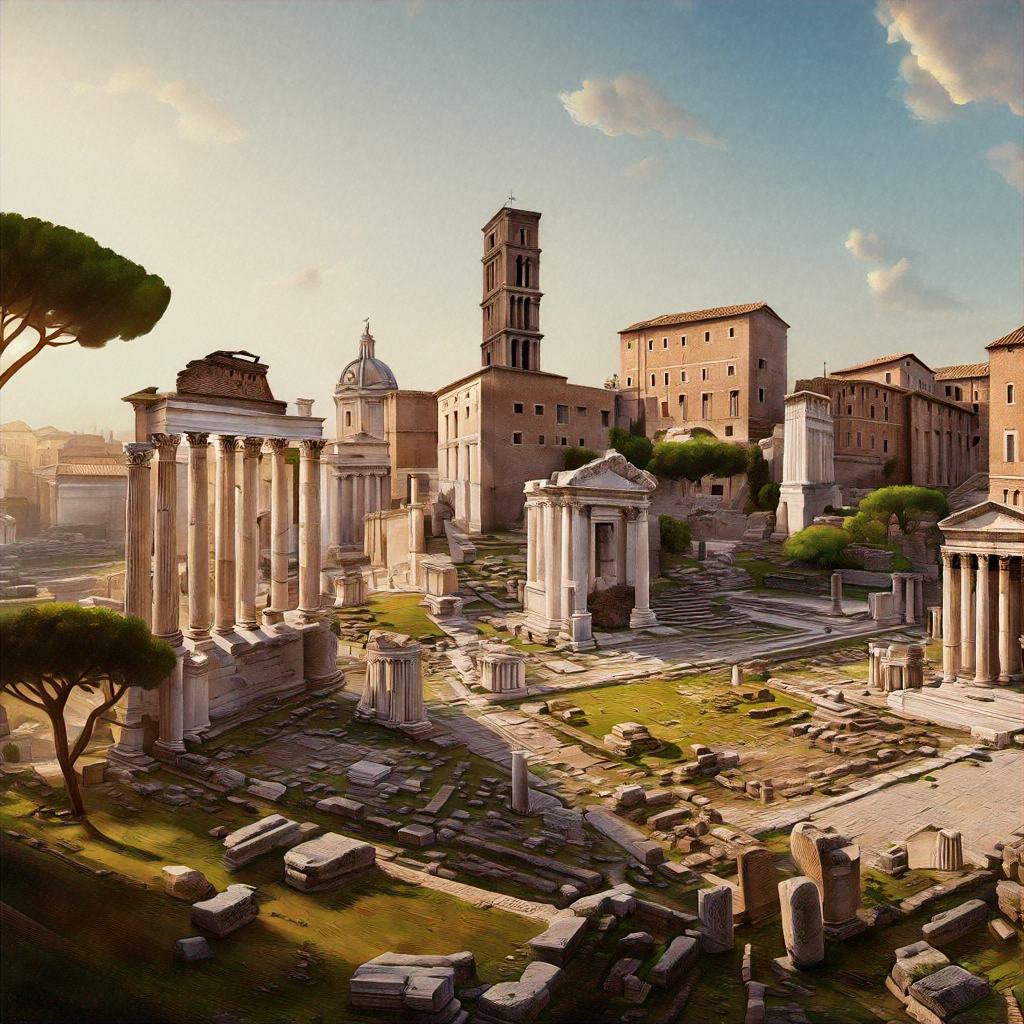
In the Forum Romanum, the few remaining senators gathered in the Curia Julia, their faces ashen. For the first time in eight hundred years, since the Gallic sack of 390 BCE, foreign invaders walked the streets of Rome. The very notion seemed impossible. Rome was the caput mundi, the head of the world, and its fall was unthinkable.
Yet fall it did. As the night wore on, the sound of breaking glass and crackling flames mixed with screams and the war cries of Gothic warriors. The city that had conquered the known world was now itself conquered, not by a rival empire, but by a people who had once been refugees on Rome's own frontiers.
Historical Context: The Long Road to Catastrophe
The sack of Rome did not occur in a vacuum. Its roots stretched back decades to the fateful decision in 376 CE to allow the Goths to cross the Danube frontier and settle in Roman territory. Fleeing from the advancing Huns, the Goths had begged for sanctuary. Emperor Valens saw an opportunity to acquire both taxpayers and military recruits, but the integration went catastrophically wrong.
Corrupt Roman officials starved and exploited the Gothic settlers, leading to a rebellion that culminated in the Battle of Adrianople in 378 CE, where Valens and two-thirds of the eastern Roman army perished. That disaster permanently changed the relationship between Rome and the Germanic peoples living within its borders.
Alaric himself embodied this complicated history. Born around 370 CE, he had grown up inside the Roman system, commanding Gothic troops in Roman service and fighting for the emperor Theodosius I. He harbored real ambitions of legitimate military command within the empire. Repeated betrayals and broken promises by Roman authorities, however, pushed him toward increasingly aggressive action.
The political division of the empire after Theodosius's death in 395 CE opened new opportunities for Alaric. The eastern empire under Arcadius remained relatively stable, but the western empire under the young Honorius was dominated by competing military strongmen, particularly Stilicho, himself of partially Germanic descent. That internal power struggle would prove fatal to the city's defenses.
Main Narrative: The Three Sieges of Rome
The path to Rome's fall unfolded in three acts. In 408 CE, Alaric led his first siege of the city, demanding payment in exchange for withdrawal. The Senate capitulated, stripping gold from ancient temples and melting down the statue of Virtus (Courage) to meet his demands. Later chroniclers would see that act as fatefully portentous.
Priscus Attalus, a senior Roman senator who witnessed these events, wrote: "We purchased our lives with gold. The barbarians stripped our city of its wealth, but also of its dignity. When we melted Virtus, we melted our own courage."
The second siege came in 409 CE. Alaric, frustrated with Honorius's continuing refusal to grant him the military command he desired, attempted to install his own puppet emperor, the aforementioned Priscus Attalus. The political gambit failed, but it demonstrated how far the traditional power structures had already eroded.
The final siege in 410 CE succeeded through treachery. According to the historian Procopius, slaves inside the city, themselves of Gothic origin, opened the Salarian Gate to their kinsmen. The sack that followed lasted three days, though it was relatively restrained by ancient standards. Alaric, as a Christian, ordered that churches be respected as sanctuaries and prohibited the killing of those who sought refuge there.
Orosius, a Christian historian writing shortly after the event, reported: "The Goths took Rome, but they took it as Christians. Many churches were filled with refugees whom even the enemy respected; Gothic warriors were seen leading Romans to sanctuary, protecting them from more violent elements among their own people."
Not everyone was so fortunate. Marcella, an elderly noblewoman who had transformed her home into a Christian monastery, was tortured by Goths demanding treasure she didn't possess. She died shortly after reaching the safety of the Basilica of St. Paul.
Consequences: The Psychological Impact
The sack of Rome in 410 CE was more symbolically devastating than materially destructive. The city recovered physically. The psychological impact on the Roman world was another matter entirely. St. Jerome, in far-off Bethlehem, wrote: "My voice sticks in my throat, and, as I dictate, sobs choke my utterance. The City which had taken the whole world was itself taken."
The event sparked a theological crisis among Christians, who struggled to understand how God could allow the Eternal City to fall to barbarians. That crisis prompted Augustine to begin writing "The City of God," arguing that the true Christian should focus on the heavenly city rather than the earthly one.
Politically, the sack demonstrated that the western empire could no longer protect even its symbolic heart. It accelerated the shift of power to local strongmen and Germanic leaders who could provide immediate protection, setting the stage for the eventual emergence of medieval kingdoms. The myth of Rome's invincibility was shattered, and with it, the confidence that Roman civilization would endure forever.
Looking Ahead
As Alaric's Goths departed Rome, laden with treasure, they moved south intending to cross to Africa, Rome's breadbasket. Nature had other plans. Storms destroyed their ships, and Alaric died shortly after, allegedly buried beneath a diverted river along with his treasures. In our next episode, we'll follow his successor Ataulf as he leads the Goths into Gaul, establishing what would become the first independent Germanic kingdom within the former Roman Empire.
Editor's Context
Read this episode as part of a longer argument about institutional strain: Rome did not simply collapse because one battle, emperor, or migration went wrong. The important pattern is how military pressure, political legitimacy, taxation, and local survival choices reinforced each other. The date markers (390 BCE, 378 CE) are included because chronology is one of the easiest places for narrative history to become misleading. The episode's themes (history, empire, power) are the editorial lens for weighing cause and consequence rather than treating the story as isolated trivia.
Reviewed under the EmpiresDiary editorial workflow by Obadiah.
Sources & Further Reading
Selected bibliography for this series
The Fall of the Roman Empire: A New History of Rome and the Barbarians
Peter Heather, The Fall of the Roman Empire: A New History of Rome and the Barbarians. Oxford University Press, 2005. (scholarly)
The Fall of Rome and the End of Civilization
Bryan Ward-Perkins, The Fall of Rome and the End of Civilization. Oxford University Press, 2005. (scholarly)
The World of Late Antiquity
Peter Brown, The World of Late Antiquity. Thames & Hudson, 1971. (scholarly)
Res Gestae
Ammianus Marcellinus, Res Gestae. Primary late Roman narrative source for the fourth century. (primary)
Drafted with AI. Edited and fact-checked by Obadiah before publication. See the workflow and editorial policy.