The Sack of Milan
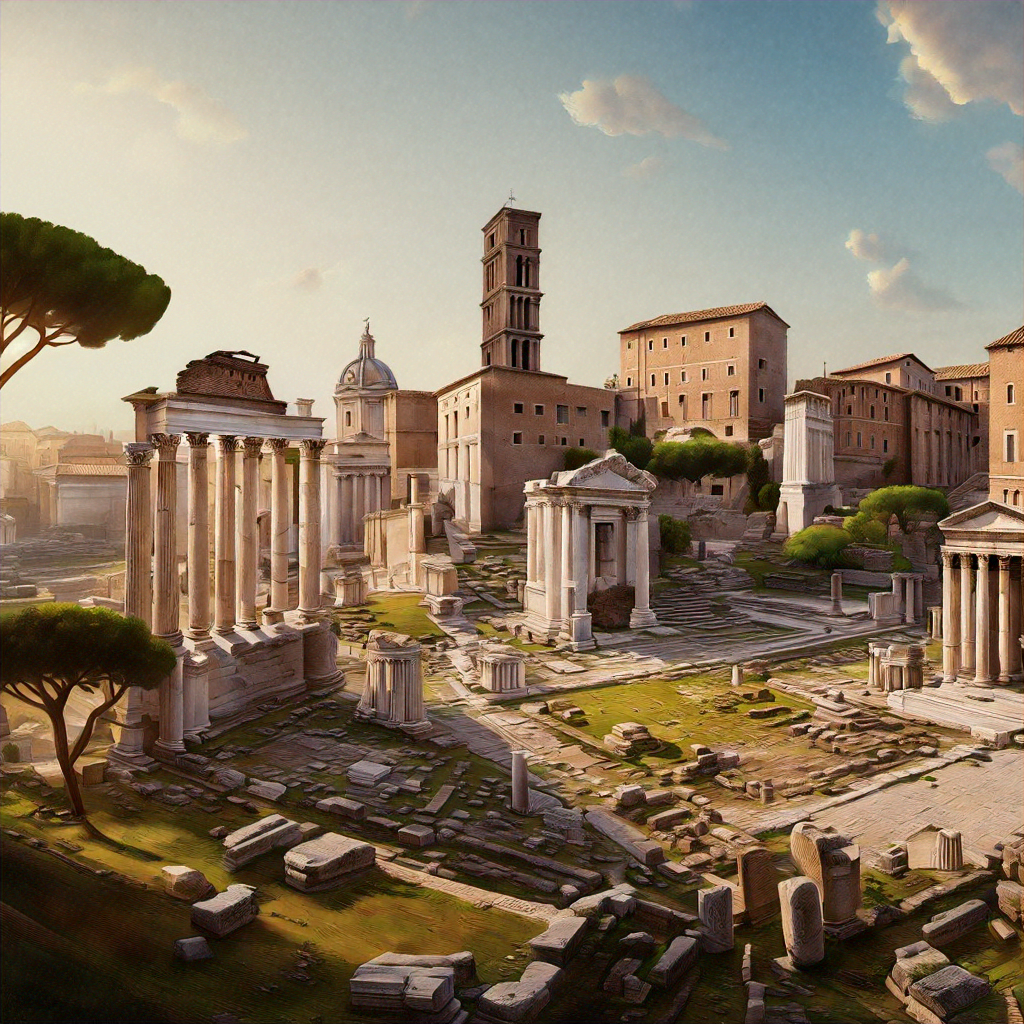
Opening Scene - 452 CE
The spring air carried the acrid smell of smoke across the Po Valley. From the towers of Milan, sentries gazed northward with growing dread at the massive dust clouds approaching from the Alpine passes. The mighty city, once an imperial capital and still one of the wealthiest urban centers in the Western Empire, was about to face its greatest test.
Flavius Majorianus, a young Roman military commander stationed in the city, gathered his officers in the early morning light. The reports from refugees were grim: Attila's Hunnic army had already devastated Aquileia, reducing the prosperous port city to rubble. Now the horsemen were methodically working their way across northern Italy, leaving a trail of destruction behind them.
Through the streets of Milan, civilians hurriedly packed their most precious belongings. The clatter of carts and the cries of children echoed off the stone buildings as wealthy families fled south toward Rome. In the churches, priests led desperate prayers while monks scrambled to hide sacred relics and manuscripts. The city's defenders worked feverishly to reinforce gates and stockpile weapons, but everyone knew the truth. Milan's walls, though impressive, were no match for Attila's siege engines.
As the sun climbed higher, the dust clouds resolved into the dreaded sight of the Hunnic army. Tens of thousands of mounted warriors spread across the horizon, their leather armor and weapons glinting in the morning light. The thundering of hooves grew louder as the vanguard approached, and the first arrows began to fall on Milan's outer defenses.
Historical Context
The arrival of Attila's forces at Milan in 452 CE marked a critical moment in the Western Roman Empire's terminal decline. Just two decades earlier, Milan had served as the de facto capital of the Western Empire, its strategic location and strong defenses making it an ideal administrative center. The city's wealth came from its position as a crucial trading hub between Italy and the northern provinces, with its workshops producing everything from fine textiles to military equipment.
Attila's campaign in Italy came at a time when the Western Empire was already reeling from multiple crises. The loss of Africa to the Vandals in 439 had deprived Rome of its crucial grain supply and tax revenues. Germanic peoples had established independent kingdoms in Gaul and Spain, and the Eastern Empire, focused on its own survival, offered little help to its western counterpart.
The Hun leader had built his reputation through a combination of military genius and calculated brutality. After extracting massive tributes from both halves of the Roman Empire in the 440s, Attila suffered a significant defeat at the Battle of the Catalaunian Plains in 451. He chose to invade Italy itself, a bold move aimed at both plunder and restoring his fearsome reputation.
The defense of northern Italy had been severely compromised by decades of military cutbacks and political instability. Many of the best troops had been withdrawn to protect Rome itself, leaving cities like Milan to rely primarily on local militias and hastily assembled forces.
The Main Narrative
The siege of Milan unfolded in three brutal phases over the spring of 452. In the initial assault, Attila's forces probed the city's defenses while his lighter cavalry ravaged the surrounding countryside. Majorianus organized a spirited defense, using the city's sophisticated system of walls and towers to good effect, and several Hunnic attacks were repelled with heavy losses.
Inside the city, different factions argued over strategy. The bishop, Eustorgius II, advocated negotiation, hoping to save the city's churches and people through tribute. The wealthy merchant guilds, led by the influential Quintus Aurelius, preferred resistance, believing their fortunes would be lost either way. The common people were split between those willing to fight and those who had simply seen enough of war.
As food supplies dwindled and disease began to spread, Attila changed tactics. His engineers constructed massive siege towers and battering rams while his forces diverted the water supply. The Huns also employed psychological warfare, executing prisoners within sight of the walls and letting survivors carry tales of the fate awaiting the defenders.
By the siege's final phase, Milan's situation had become desperate. Majorianus organized a last-ditch sortie that briefly broke through the Hunnic lines, but the counterattack was contained. When the city's northern wall finally fell, the fighting became street-by-street, building-by-building.
The Huns showed little mercy. Churches were looted, public buildings burned, and much of the population was either killed or enslaved. Majorianus and a small group of defenders managed to escape south, carrying word of the disaster to Rome. The destruction was so complete that contemporary chroniclers compared it to the fate of Carthage centuries earlier.
Consequences and Impact
The sack of Milan marked a turning point in the Western Empire's final decades. The city's destruction removed one of the last major administrative and economic centers in northern Italy, forcing a further retreat of Roman authority toward Rome itself. The loss of Milan's workshops and craftsmen dealt a severe blow to the empire's military production capabilities.
The psychological impact was perhaps even greater. If Milan, with its strong defenses and large population, could fall so completely, what hope did other cities have? That demonstration of Roman weakness encouraged further incursions by various Germanic peoples, accelerating the empire's fragmentation.
Ironically, Milan's destruction may have helped save Rome itself. The time and resources Attila spent reducing Milan, combined with disease spreading through his army and diplomatic pressure from the East, convinced him to withdraw from Italy later that year. His death in 453 brought an end to the immediate threat, but the damage to Roman power and prestige was permanent.
Looking Ahead
In our next episode, we'll examine how the sack of Milan affected the young commander Majorianus, who would later rise to become one of the Western Empire's last effective emperors. His attempts to rebuild Roman power would provide a final, brilliant flash of hope before the empire's collapse. Join us as we explore his remarkable story and tragic end.
Editor's Context
Read this episode as part of a longer argument about institutional strain: Rome did not simply collapse because one battle, emperor, or migration went wrong. The important pattern is how military pressure, political legitimacy, taxation, and local survival choices reinforced each other. The date markers (439, 451) are included because chronology is one of the easiest places for narrative history to become misleading. The episode's themes (history, empire, power) are the editorial lens for weighing cause and consequence rather than treating the story as isolated trivia.
Reviewed under the EmpiresDiary editorial workflow by Obadiah.
Sources & Further Reading
Selected bibliography for this series
The Fall of the Roman Empire: A New History of Rome and the Barbarians
Peter Heather, The Fall of the Roman Empire: A New History of Rome and the Barbarians. Oxford University Press, 2005. (scholarly)
The Fall of Rome and the End of Civilization
Bryan Ward-Perkins, The Fall of Rome and the End of Civilization. Oxford University Press, 2005. (scholarly)
The World of Late Antiquity
Peter Brown, The World of Late Antiquity. Thames & Hudson, 1971. (scholarly)
Res Gestae
Ammianus Marcellinus, Res Gestae. Primary late Roman narrative source for the fourth century. (primary)
Drafted with AI. Edited and fact-checked by Obadiah before publication. See the workflow and editorial policy.