The Gothic Exodus
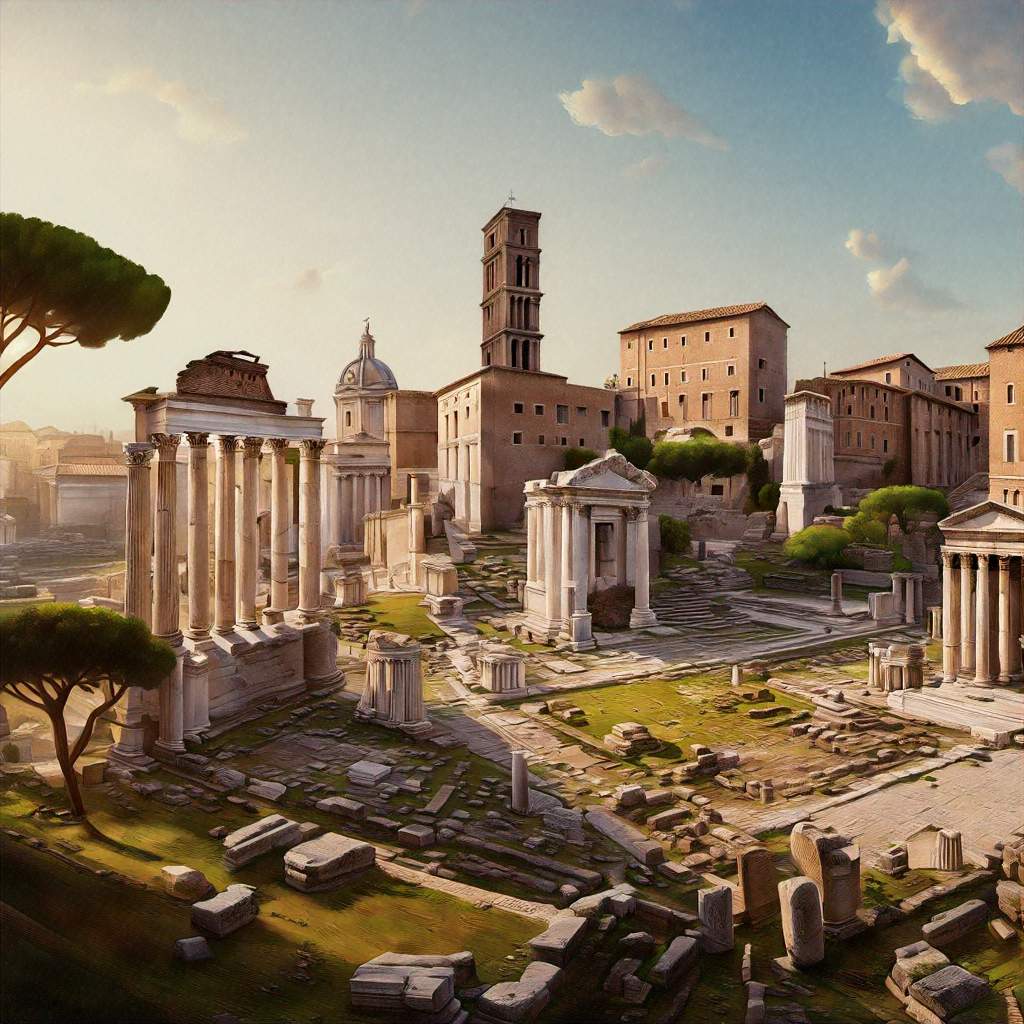
Opening Scene - The Banks of the Danube, 376 CE
The late summer sun beat down on the northern bank of the Danube River, where tens of thousands of Gothic men, women, and children huddled in desperate clusters. Their faces were gaunt from weeks of hard travel, their possessions reduced to what they could carry on their backs. Behind them lay the scorched grasslands they once called home, now overrun by Hunnic horsemen who had driven them to this moment.
Fritigern, leader of the Thervingi Goths, stood at the water's edge and stared across at the Roman shore. The mighty river had always marked the boundary between the civilized Roman Empire and the "barbarian" lands beyond. Now it represented his people's last hope for survival. Roman border guards watched from fortified posts on the southern bank, their red cloaks visible in the distance.
Through interpreters, Fritigern had already sent his plea to Emperor Valens: allow his people to cross into Roman territory as refugees and settlers. They would provide military service in exchange for farmland and protection. The alternative was death, either slow starvation or swift slaughter by the advancing Huns.
As Fritigern waited for the emperor's response, the cries of hungry children echoed across the riverbank. Autumn was approaching, and with it would come certain death if they remained exposed on the northern shore. Among his people, whispers of doubt began to spread. Had they made a terrible mistake in coming here? Would the Romans prove to be saviors, or simply a different kind of enemy?
Historical Context: Rome and the Goths
The arrival of the Goths at the Danube frontier marked a pivotal moment in Roman history. For centuries, Rome had managed its northern borders through a combination of military strength and diplomatic agreements with various Germanic peoples. The Goths themselves had a long and complicated relationship with the Empire, swinging between trading partners and raiders depending on the decade.
The Thervingi had established themselves in what is now modern Romania and Ukraine, developing a semi-settled agricultural society. They had gradually absorbed elements of Roman culture and Christianity, though in its Arian form. Many Gothic warriors had served as auxiliary troops in Roman armies.
Then the Huns arrived. Pushing westward from the steppes of Central Asia, they proved unlike any nomadic people Rome or the Goths had previously encountered. Their mastery of mounted archery and their tactical mobility made them nearly impossible to defeat in open battle. As they advanced, they triggered a cascade of tribal migrations that would reshape the map of Europe entirely.
Emperor Valens, ruling from Constantinople, faced a genuinely difficult calculation. The Empire needed soldiers and farmers, but absorbing such a large population of armed foreigners carried obvious risks. Previous settlement attempts had sometimes ended in disaster. Yet leaving the Goths to their fate might simply turn them into desperate enemies, or force them into the Hunnic confederation. Neither outcome was acceptable.
The Crisis Unfolds
Valens granted the Goths permission to cross, but the implementation was catastrophic. Roman officials, led by the commanders Lupicinus and Maximus, were supposed to disarm the Gothic warriors and disperse the refugees across different areas. Instead, overwhelmed by the numbers and hungry for personal profit, they began exploiting the desperate newcomers.
The promised food supplies never materialized. Corrupt officials sold dog meat and other offal to the starving Goths at extortionate prices, forcing many families to sell their children into slavery just to eat. Lupicinus kept large numbers of Goths confined near Marcianople in conditions that amounted to concentration camps, skimming off the supplies meant for their sustenance.
What broke the situation open was a feast. Lupicinus invited Fritigern and other Gothic leaders, apparently planning to assassinate them. The plot was discovered. Violence erupted, killing several Roman soldiers and Gothic nobles. Fritigern escaped and rallied his people to open rebellion.
The Goths, now joined by other displaced tribes and runaway slaves, began raiding the countryside for food. Roman attempts to contain them failed. At the Battle of Marcianople, Lupicinus led a hastily assembled force against the Goths and was completely routed, with most of his men killed. The situation had spiraled well beyond a border dispute.
Emperor Valens had been preparing a campaign against the Persians when the crisis in his European territories forced his attention westward. He requested help from his western co-emperor Gratian, then decided to engage the Goths before Gratian's forces could arrive. That decision would lead to one of the worst defeats in Roman military history.
The Battle of Adrianople - August 9, 378 CE
The two armies met near the city of Adrianople, in modern-day Turkey. Valens commanded approximately 15,000-20,000 Roman troops; Fritigern led a Gothic force of similar size. Eager for glory and unwilling to share credit with the approaching Gratian, Valens ordered an attack in the middle of a brutally hot summer day.
It went wrong almost immediately. Gothic cavalry that had been foraging nearby returned during the fighting and encircled the Roman forces. The Roman cavalry fled. Left exposed, the Roman infantry were packed together in tight formation with enemies pressing from every side. The slaughter was thorough. Valens himself was killed, though accounts differ on whether he died fighting or in a building where he'd taken refuge.
Lasting Impact
Adrianople shattered the aura of Roman military invincibility. It demonstrated that a "barbarian" force could defeat the Empire's best armies in pitched battle, and the death of an emperor at the hands of foreign forces inside Roman territory was a psychological blow from which the Empire never fully recovered.
The immediate aftermath saw the Goths rampaging through the Balkans. Their settlement was eventually negotiated on terms that made them semi-autonomous allies within Roman territory, a precedent that would be repeated with other peoples and would gradually transform the Empire from a centrally administered state into a patchwork of semi-independent kingdoms.
The Gothic crisis also exposed structural failures that ran deep: the inability to integrate foreign peoples without corruption gutting the process, the rot in provincial administration, and the fragility of frontier defenses. These problems didn't go away. They would continue to plague the Empire through its final century.
Looking Ahead
In our next episode, we'll look at how Theodosius I, Valens' successor, tried to restore Roman authority and manage the Gothic presence within the Empire. His policies of accommodation and integration proved controversial, setting the stage for even greater challenges ahead. The question hanging over everything was simple: could Rome adapt to this new reality, or had the events of 378 already locked the Empire onto a path it couldn't leave?
Editor's Context
Read this episode as part of a longer argument about institutional strain: Rome did not simply collapse because one battle, emperor, or migration went wrong. The important pattern is how military pressure, political legitimacy, taxation, and local survival choices reinforced each other. The date markers (378 CE, 376 CE) are included because chronology is one of the easiest places for narrative history to become misleading. The episode's themes (history, empire, power) are the editorial lens for weighing cause and consequence rather than treating the story as isolated trivia.
Reviewed under the EmpiresDiary editorial workflow by Obadiah.
Sources & Further Reading
Selected bibliography for this series
The Fall of the Roman Empire: A New History of Rome and the Barbarians
Peter Heather, The Fall of the Roman Empire: A New History of Rome and the Barbarians. Oxford University Press, 2005. (scholarly)
The Fall of Rome and the End of Civilization
Bryan Ward-Perkins, The Fall of Rome and the End of Civilization. Oxford University Press, 2005. (scholarly)
The World of Late Antiquity
Peter Brown, The World of Late Antiquity. Thames & Hudson, 1971. (scholarly)
Res Gestae
Ammianus Marcellinus, Res Gestae. Primary late Roman narrative source for the fourth century. (primary)
Drafted with AI. Edited and fact-checked by Obadiah before publication. See the workflow and editorial policy.