The Sack That Shook an Empire
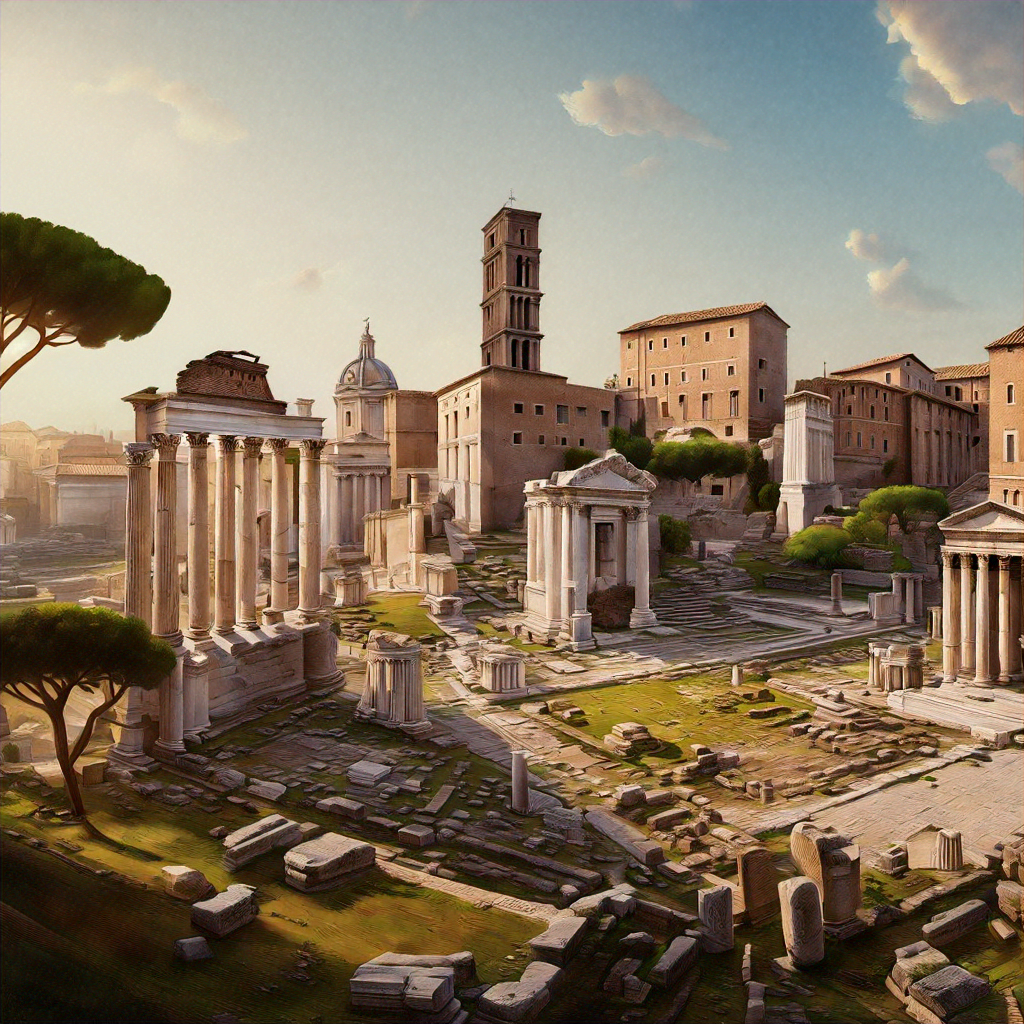
Opening Scene - August 24, 410 CE
The night air hung heavy over the seven hills of Rome. Along the Aurelian Walls, exhausted sentries peered into the darkness, their eyes straining to catch any movement from the Gothic army that had besieged them for months. But the real danger was already inside.
Near the Porta Salaria, in the northeastern section of the city, a group of slaves silently worked to unlock the massive gate. They had been promised freedom by Alaric's agents - freedom from their Roman masters who, even in these desperate times, continued to live in luxury while the common people starved. As the first light of dawn approached, the ancient hinges groaned, and the unthinkable happened: for the first time in nearly 800 years, enemy forces entered Rome itself.
The sound of Gothic war horns shattered the pre-dawn silence. Alaric's warriors, who had waited months for this moment, poured through the opening like a human flood. Their torches illuminated the terror on the faces of Roman civilians who awoke to find barbarians in their streets. The Gothic king had given strict orders - there would be no wholesale slaughter, but looting was permitted. His men had earned their reward.
In her villa on the Caelian Hill, the wealthy widow Anicia Faltonia Proba heard the screams and knew the worst had happened. She hurriedly gathered her household, including her Christian servants, into the family's private basilica. Like many elite Romans, she hoped that sanctuary in a church might spare them from the worst of the violence. Across the city, thousands of others had the same idea, flooding into St. Peter's Basilica, the Lateran, and other Christian holy sites.
Historical Context
The sack of Rome in 410 CE marked a psychological turning point in the decline of the Western Roman Empire. Though the city was no longer the seat of imperial government (which had moved to Ravenna), Rome remained the symbolic heart of the empire and the center of its traditional aristocracy.
The path to this catastrophe had begun decades earlier. In the late 4th century, Gothic tribes, pushed westward by the advancing Huns, had been settled inside Roman territory as foederati (allies) in exchange for military service. But the Romans repeatedly broke their agreements with the Goths and treated them as second-class citizens despite their crucial role in defending the empire's borders.
Alaric, who became king of the Visigoths around 395 CE, had actually served in the Roman military and sought legitimate power within the imperial system. He wanted land for his people and recognition as a Roman military commander. When diplomatic efforts failed, he led his forces into Italy in 401, but was defeated by the Roman general Stilicho. After Stilicho's execution in 408, Alaric saw an opportunity and laid siege to Rome, demanding gold, grain, and status for his people.
Emperor Honorius, safe in Ravenna, refused to negotiate seriously with the man he saw as a barbarian upstart. Three successive sieges followed, with the Roman Senate eventually paying enormous ransoms. But when Honorius continued to reject Alaric's demands for a permanent settlement, the Gothic king decided to take what he wanted by force.
The Three Days That Changed History
As Alaric's forces spread through Rome's streets, different dramas played out across the ancient capital. In the Forum Romanum, centuries-old temples were stripped of their gold and silver ornaments. The Palace of the Vestal Virgins was ransacked, though the elderly priestesses had long since fled. Some of the city's wealthy families managed to buy protection by offering bribes to Gothic officers, while others lost everything.
The Christian churches generally remained inviolate, as Alaric was himself a Christian (albeit an Arian rather than Catholic Christian). Gothic soldiers even escorted some Roman civilians to sanctuary in the major basilicas. One group of warriors, finding an elderly nun guarding the church's sacred vessels, were so impressed by her courage that they provided her protection and helped carry the treasures to St. Peter's for safekeeping.
Not everyone was so fortunate. In the Subura, Rome's crowded working-class district, some residents fought back against the looters and paid with their lives. The great warehouses along the Tiber were broken open, their contents distributed among the Gothic warriors or destroyed outright. Fires broke out in several regions, though Alaric's men worked to contain them - they wanted to plunder the city, not destroy it.
Senator Quintus Aurelius Symmachus, a leading pagan aristocrat, watched in horror as the Temple of Jupiter Optimus Maximus was stripped bare. For him and other traditionalists, this desecration of Rome's ancient religious heart symbolized the end of an era. His Christian neighbor, however, saw divine punishment for Rome's historic sins, a view that would be elaborated by St. Augustine in his influential work "City of God."
The imperial family, having abandoned Rome for Ravenna years before, could only receive reports of the disaster. Emperor Honorius, famously more concerned with his pet chickens than affairs of state, allegedly mistook news of "Roma" being lost for news about a favorite rooster named "Roma." Whether true or apocryphal, the story captured the disconnect between the imperial court and the suffering of Rome's citizens.
Consequences and Legacy
The sack lasted only three days, and Alaric's forces soon withdrew, laden with treasure and captives. The physical damage to Rome was relatively limited - most buildings remained intact, and the population recovered. But the psychological impact was enormous. Throughout the empire, people struggled to comprehend how the Eternal City could fall to "barbarians."
This event accelerated the transformation of Roman society. Many aristocratic families, their wealth depleted by ransom payments and looting, never recovered their former status. Some fled to their estates in North Africa or Gaul. The power of the traditional Roman Senate declined further, while the influence of the Christian Church grew stronger.
The sack also marked a turning point in how Romans viewed themselves and their empire. The myth of Rome's invincibility was shattered. St. Jerome, in far-off Bethlehem, wrote: "My voice sticks in my throat, and, as I dictate, sobs choke my utterance. The City which had taken the whole world was itself taken."
Looking Ahead
As Alaric's Goths moved south through Italy, they carried with them not just Rome's treasure but also its mystique. The sack of 410 would not be the last time Rome fell to invaders - the Vandals would prove far less restrained in 455. The Western Empire had less than seventy years left, and the path to its final collapse now seemed clear. In our next episode, we'll follow the Gothic kingdom as it establishes itself in southern Gaul, creating one of the first "successor states" to Roman power in the West.
This episode was created with AI assistance and audited for factual accuracy. See our AI methodology and editorial policy.