The Shadow Emperor
The Man Behind the Throne
The summer sun beat down on Rome in 465 CE as Libius Severus, the nominal Western Roman Emperor, sat uneasily upon his throne. He wore the purple robes and golden diadem of imperial authority, but everyone in the palace knew where the true power lay: with the imposing figure of Ricimer, the Germanic Master of Soldiers who stood watchfully in the shadows. Tall, battle-scarred, and dressed in the finest Roman military regalia, Ricimer had engineered Severus's rise to power the previous year. Courtiers and officials directed their petitions not to the throne but to the stern figure beside it.
This scene captured the reality of the Western Roman Empire's terminal decline. Real authority now rested not with the emperors themselves but with powerful military commanders of barbarian descent. None wielded this shadow authority more completely than Flavius Ricimer, the half-Suebic, half-Visigothic general who would dominate Western Roman politics for nearly sixteen years through a succession of puppet emperors.
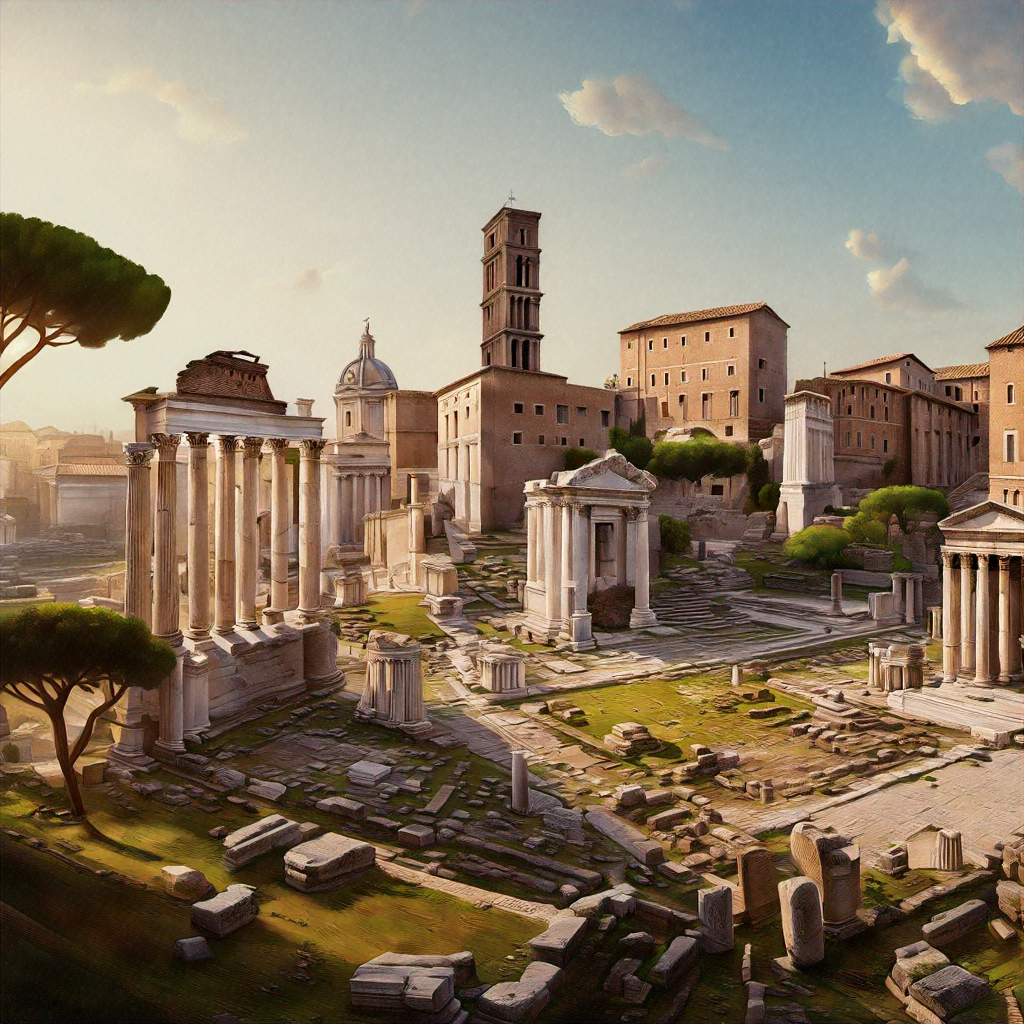
The Rome over which Ricimer presided was a far cry from the mighty empire of centuries past. The Western Empire had lost Britain, most of Gaul, and large portions of Spain and North Africa. Italy itself was increasingly vulnerable to barbarian incursions. Yet even as the empire crumbled, the struggle for control over its remaining power and prestige consumed its leading figures entirely.
Rise of the Kingmaker
Ricimer's path to power began in the imperial military, where his tactical brilliance and political cunning helped him rise rapidly through the ranks despite his barbarian heritage. By 456 CE, he had become one of the empire's most important military commanders. That year, while serving under Emperor Avitus, Ricimer won a crucial naval victory over the Vandals near Corsica, which enhanced his reputation and broadened his influence considerably. Avitus then appointed Ricimer magister militum. Majorian became emperor only in 457, after he and Ricimer together deposed Avitus at the Battle of Piacenza in October 456.
He was not content to remain a subordinate. In 461, he turned against Majorian, who had proven too independent-minded for his tastes. After engineering a military defeat that undermined the emperor's position, Ricimer had Majorian arrested and executed on August 7, 461. To replace him, Ricimer elevated Libius Severus to the purple, a man chosen specifically for his malleability.
The pattern was set. For the next decade and a half, Ricimer would remain the power behind the throne, making and unmaking emperors while carefully avoiding claiming the imperial title himself. His barbarian ancestry made it impossible for him to rule directly, but his military strength and political influence allowed him to rule through others.
The Puppet Show
The reign of Libius Severus demonstrated both the extent and the limitations of Ricimer's power. While he controlled Italy and could dictate imperial policy within its borders, much of the remaining Western Empire slipped further from central control. In Gaul, the powerful general Aegidius refused to recognize Severus and effectively ruled independently. The Vandal king Gaiseric continued his attacks on imperial territories, knowing that Ricimer's focus on Italy left the Mediterranean exposed.
Perhaps most dangerously, the Eastern Roman Emperor Leo I viewed Severus as an illegitimate usurper. No help would be forthcoming from Constantinople at a time when the West desperately needed military and financial support. Ricimer found himself in an increasingly difficult position: powerful enough to control the West's imperial administration, but not strong enough to address its mounting external threats.
The situation reached a crisis in 465 when Libius Severus died, possibly poisoned on Ricimer's orders. For months, Ricimer ruled the West directly, not even bothering to name a replacement emperor. Pressure from Constantinople eventually forced his hand. After lengthy negotiations, Leo I proposed Anthemius, a distinguished Eastern Roman commander, as the new Western Emperor.
A Fatal Partnership
The arrival of Anthemius in Rome in 467 seemed to offer genuine hope for the West's revival. Backed by Eastern resources and military support, Anthemius was no mere puppet. Initially, Ricimer appeared to accept a more equal partnership, sealed by his marriage to Anthemius's daughter Alypia. Together they launched an ambitious campaign against the Vandals in 468.
The campaign proved a catastrophic failure. It squandered enormous resources and destroyed any realistic chance of recovering North Africa. Relations between Anthemius and Ricimer deteriorated rapidly. The emperor began promoting his own supporters and building an independent power base, and Ricimer, accustomed to total control, withdrew to Milan with his troops.
By 472, the situation had devolved into open civil war. Ricimer marched on Rome with an army that included large numbers of barbarian mercenaries, once again demonstrating his talent for choosing the right moment to strike. After a months-long siege, the city fell in July. Ricimer had Anthemius executed and installed yet another puppet, Olybrius, as emperor.
The Final Act
The triumph was short-lived. Ricimer died just forty days after his victory, on August 18, 472, possibly of a hemorrhage. His death marked the end of an era: sixteen years during which a barbarian military commander had been the de facto ruler of what remained of the Western Roman Empire.
His legacy was deeply ambiguous. While he had maintained some semblance of Roman authority in Italy, his repeated interference in imperial succession and his reliance on barbarian troops had further weakened the empire's institutions and legitimacy. The power vacuum left by his death would contribute directly to the final collapse of the Western Empire just four years later.
Seeds of Dissolution
The story of Ricimer illustrated how power in the late Western Empire had shifted decisively away from its traditional sources of authority. Emperors had become disposable figures while military strongmen of barbarian descent held real control. This transformation proved fatal.
As we shall see in our next episode, the brief period between Ricimer's death and the empire's final collapse in 476 would see this process accelerate. His nephew Gundobad briefly attempted to continue the role of kingmaker, but the machinery of imperial power had been fatally undermined. The stage was set for Odoacer to deliver the final blow to the Western Roman Empire.
Editor's Context
Read this episode as part of a longer argument about institutional strain: Rome did not simply collapse because one battle, emperor, or migration went wrong. The important pattern is how military pressure, political legitimacy, taxation, and local survival choices reinforced each other. The date markers (461 CE - Execution of Majorian, 465 CE - Death of Libius Severus) are included because chronology is one of the easiest places for narrative history to become misleading. The episode's themes (Power behind the throne, Military authority vs civil authority, Barbarian influence) are the editorial lens for weighing cause and consequence rather than treating the story as isolated trivia.
Reviewed under the EmpiresDiary editorial workflow by Obadiah.
Drafted with AI. Accuracy review and corrections are ongoing — if you spot an error, please report it. See our workflow and editorial policy.