The Tetrarchy Shatters
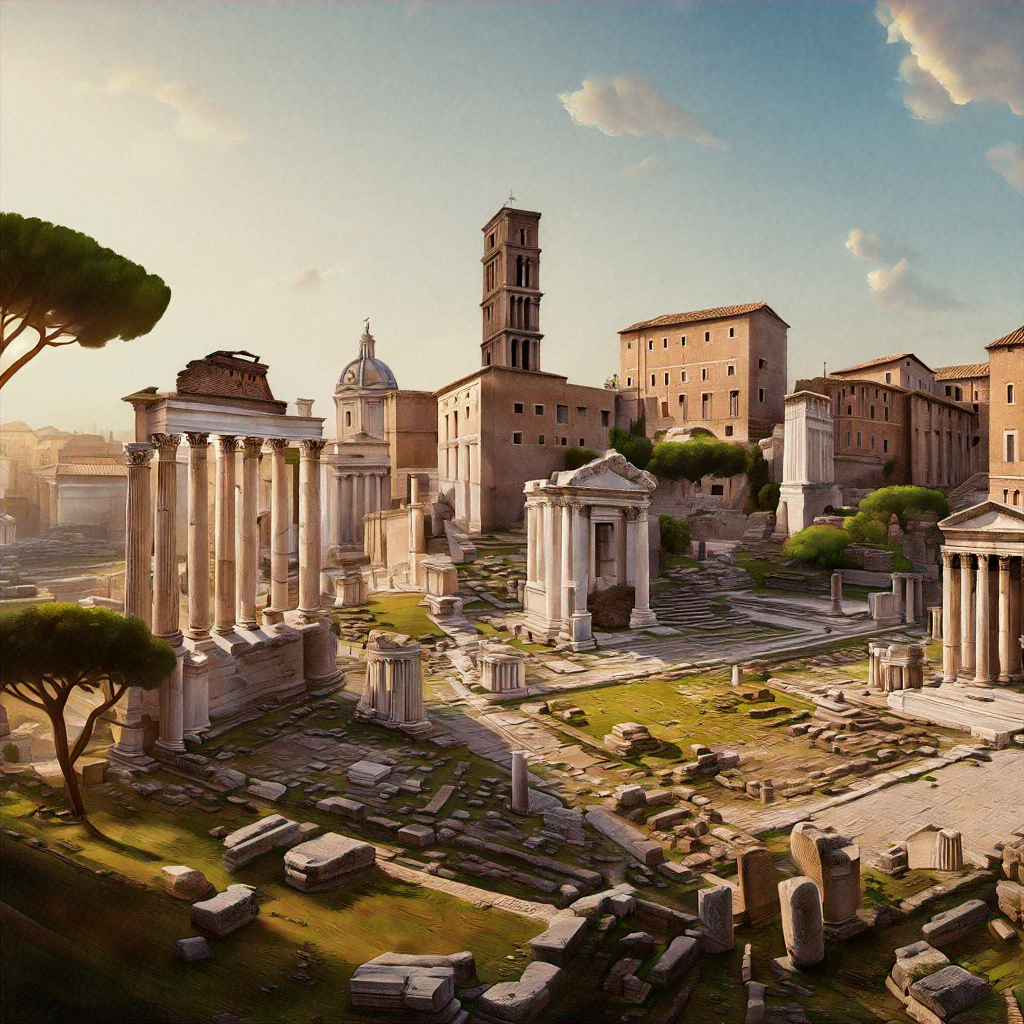
The old emperor's hands trembled as he removed his purple imperial cloak. Before a stunned crowd gathered in the military parade ground outside Nicomedia, Diocletian, master of the Roman world for twenty years, was doing the unthinkable. He was voluntarily stepping down from power.
The late winter wind whipped across the parade ground as thousands of soldiers and citizens watched in disbelief. Their emperor, the man who had rescued Rome from near collapse, stood on a raised platform. Diocletian's face was deeply lined, his hair now white, but his voice still carried authority as he addressed the crowd. He told the soldiers it was time to pass the burden of empire to younger, stronger shoulders, and that the moment had come, as promised when the Tetrarchy was established, to hand power to those chosen and trained to succeed him.
With ceremonial gravity, Diocletian draped his imperial cloak over the shoulders of Galerius, his chosen successor in the East. On the same day, some two thousand kilometers away at Milan, a clearly reluctant Maximian performed the parallel ceremony, handing the purple to Constantius Chlorus, who would rule the West. The crowds responded with dutiful acclamation, but undercurrents of uncertainty rippled through both gatherings. Everyone knew that Maximian's son Maxentius and Constantius's son Constantine had been passed over in favor of the Tetrarchy's designated heirs. Both young men had watched the proceedings knowing their ambitions had been deliberately set aside.
As the ceremony at Nicomedia concluded, Diocletian prepared to depart for his retirement palace in Split on the Dalmatian coast. He had created an entirely new system of imperial rule, the Tetrarchy or "rule of four," to bring stability to the empire. But as he studied the faces of those he was leaving behind, a shadow of doubt crossed his weathered features. Had he truly built something that would endure? Or had he simply delayed an inevitable explosion of competing ambitions?
The Tetrarchy emerged from the chaos of the Third Century Crisis (235-284 CE), when the Roman Empire nearly collapsed under the weight of civil wars, barbarian invasions, economic depression, and plague. In less than fifty years, more than twenty men had claimed the imperial throne, most dying violently. The empire had split into three competing segments: the Gallic Empire in the west, the Palmyrene Empire in the east, and a rump Roman state in between.
Diocletian, rising from humble origins in Dalmatia to become emperor in 284, reunified the empire through military prowess and administrative genius. He recognized, though, that no single person could effectively govern such a vast territory. His solution was the Tetrarchy, a system of shared imperial rule between four co-emperors:
- Two senior emperors (Augusti): Diocletian in the East and Maximian in the West
- Two junior emperors (Caesars): Galerius in the East and Constantius Chlorus in the West
Each ruler would govern a quarter of the empire, with clear lines of succession. After a set period, the Augusti would retire, the Caesars would be promoted, and new Caesars would be chosen on merit. Heredity was beside the point. It was a radical departure from traditional Roman practice, where emperors typically designated their sons as heirs.
The system seemed to work at first. The four rulers coordinated military responses to threats, standardized administration, and enacted sweeping economic reforms. But it rested on two shaky foundations: the willingness of emperors to actually retire, and the acceptance of non-hereditary succession by powerful imperial families.
The first cracks appeared immediately after Diocletian's retirement. Constantius Chlorus, now Augustus of the West, demanded that Galerius send his son Constantine to join him in Britain. Galerius reluctantly complied, knowing that Constantine's presence could destabilize the succession plan but unable to refuse his co-Augustus.
Constantius died at York in July 306. His troops immediately proclaimed Constantine as Augustus, a direct challenge to the Tetrarchic system. Galerius, trying to preserve some semblance of order, offered a compromise: Constantine could be Caesar, with Severus as the Western Augustus. Constantine accepted. Temporarily.
Meanwhile in Rome, Maximian's son Maxentius seethed at his exclusion from power. When tax increases sparked riots in the city, he saw his opportunity. With support from the Praetorian Guard, Maxentius declared himself emperor in October 306. The people of Rome, nostalgic for the days when their city was the empire's center, rallied to him.
The compromise couldn't hold. Maxentius, seeking legitimacy, convinced his father Maximian to emerge from retirement and reclaim the purple. Now there were six men claiming imperial power:
- Galerius as senior Augustus in the East
- Severus as Augustus in the West
- Constantine as Caesar (but acting as Augustus) in Gaul and Britain
- Maxentius controlling Italy and Africa
- Maximian attempting to reclaim authority
- Licinius, newly appointed by Galerius
The following years saw constantly shifting alliances. Severus attempted to oust Maxentius, was abandoned by his troops, and was executed. Maximian first supported his son, then betrayed him to ally with Constantine (even offering his daughter Fausta in marriage), before finally turning against Constantine and meeting his end in 310. Galerius led a failed invasion of Italy that ended in humiliation.
By 311, when Galerius died of a painful illness that Christians celebrated as divine punishment, the Tetrarchy was effectively dead. The careful system of divided authority and peaceful succession had collapsed into exactly what it was meant to prevent: civil war between competing claimants to imperial power.
The consequences were far-reaching:
- It demonstrated that traditional dynastic claims still trumped administrative efficiency in Roman political culture
- The failure to peacefully manage imperial succession would continue to plague the empire
- The division between East and West, though temporarily overcome, was reinforced by the period of divided rule
- Constantine's eventual triumph would lead to Christianity's emergence as the empire's dominant religion
Perhaps most importantly, the Tetrarchy's collapse showed that Rome's fundamental problem, how to peacefully transfer power in an autocratic system, remained unsolved. Future emperors would face the same challenges that had prompted Diocletian's reforms in the first place.
As the dust settled, two main contenders for supreme power remained: Constantine in the West and Licinius in the East. Their uneasy alliance would soon dissolve into open conflict, leading to a final showdown that would determine not just who ruled the Roman Empire, but what kind of empire it would become. The next episode will explore how Constantine's victory transformed Roman society and set the stage for the empire's Christian future.
Editor's Context
Read this episode as part of a longer argument about institutional strain: Rome did not simply collapse because one battle, emperor, or migration went wrong. The important pattern is how military pressure, political legitimacy, taxation, and local survival choices reinforced each other. The date markers (235, 305 CE) are included because chronology is one of the easiest places for narrative history to become misleading. The episode's themes (history, empire, power) are the editorial lens for weighing cause and consequence rather than treating the story as isolated trivia.
Reviewed under the EmpiresDiary editorial workflow by Obadiah.
Drafted with AI. Accuracy review and corrections are ongoing — if you spot an error, please report it. See our workflow and editorial policy.