The Purple Death
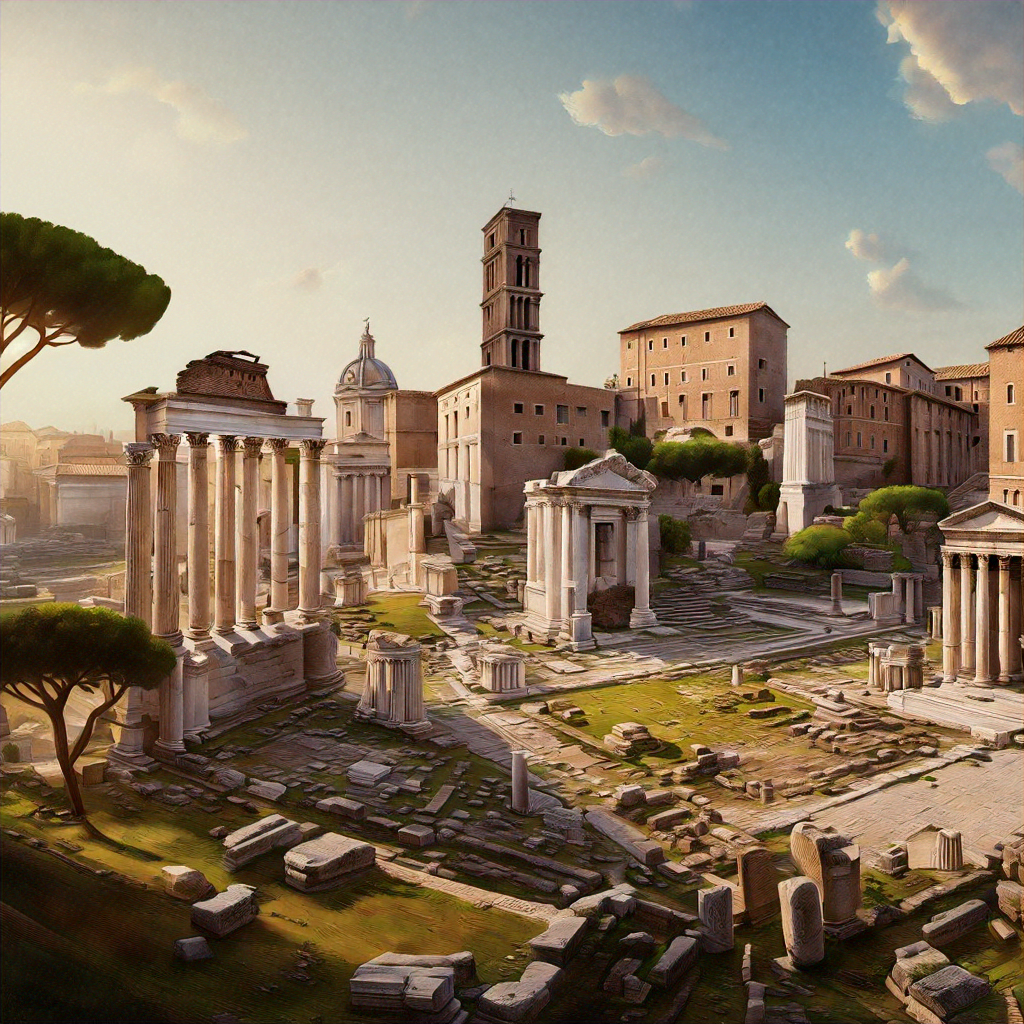
Opening Scene: Constantinople Burns
The stench of death hung heavy over Constantinople in the summer of 542 CE. From his chambers in the Great Palace, Emperor Justinian I could see the columns of black smoke rising across the city – not from warfare or revolt, but from the countless funeral pyres burning day and night. The bodies were simply too numerous to bury properly anymore.
His advisor Procopius recorded the horrifying scenes: "The dead were piled like cordwood in the streets. Entire families perished within days, their homes becoming tombs. The harbor lay silent, ships anchored with crews of corpses. Even the rats that usually plagued the granaries had vanished."
The emperor himself was not immune. As he paced the marble floors of his palace, Justinian felt the first telltale signs – a splitting headache, followed by a fever that seemed to burn from within. Within hours, the lymph nodes in his groin and armpits had swollen to the size of eggs, turning a ghastly purple-black. The bubonic plague had claimed its most prestigious victim yet.
As Justinian lay delirious in his sickbed, attended by his wife Theodora and what few physicians remained alive, the empire he had spent decades trying to restore teetered on the brink of collapse. The plague would kill nearly half the population of the Eastern Roman Empire, dealing a blow from which it would never fully recover. This was the first recorded outbreak of what would later be known as the Justinianic Plague – the initial wave of the first great pandemic in human history.
Historical Context: An Empire Restored
To understand the devastating impact of the plague, we must first understand Justinian's grand vision for the Roman Empire. When he ascended to the throne in 527 CE, the Western Empire had been gone for over 50 years, fallen to Germanic kingdoms. But the Eastern Empire, centered on Constantinople, remained wealthy and powerful.
Justinian dreamed of reconquering the lost western territories and restoring Rome to its former glory. Through his brilliant general Belisarius, he had already retaken North Africa from the Vandals in 533-534 CE and was in the process of reconquering Italy from the Ostrogoths when disaster struck.
The empire seemed poised for a renaissance. Trade routes stretched from Britain to India. The great church of Hagia Sophia was under construction, a testament to Roman engineering and wealth. The legal code was being reformed and standardized. Christianity had become the empire's unifying force.
But beneath this golden surface, cracks were showing. The constant warfare had drained the treasury. Taxpayers groaned under heavy burdens. And in 541 CE, reports began arriving of a strange and deadly disease spreading from Egypt along the Mediterranean trade routes.
The Plague Strikes
The plague first appeared in the Egyptian port city of Pelusium in 541 CE. Merchants and sailors quickly carried it to Alexandria and other Mediterranean ports. By 542, it had reached Constantinople.
The Byzantine historian Procopius provided a detailed account of the symptoms: "They had a sudden fever...On the same day in some cases, in others on the following day, a swelling developed in the groin or armpit...Then immediately followed...spitting of blood. Death came in most cases by the fifth day."
The disease struck all levels of society indiscriminately. The wealthy could not buy their way to safety; the poor could not hide from it. In Constantinople alone, at the peak of the outbreak, an estimated 5,000-10,000 people died daily. The city's population of 500,000 would be reduced by nearly half.
The social fabric began to unravel. John of Ephesus described how "Noble and middle-class men remained unburied, lying about in the streets...Many houses became common graves." Some people barricaded themselves in their homes. Others abandoned all caution, spending their savings in wild revelry, believing death was inevitable.
The plague devastated the military as well. Justinian's campaigns in Italy ground to a halt as soldiers succumbed by the thousands. The Persians and various barbarian tribes, though also affected by the plague, took advantage of Roman weakness to launch raids across the frontiers.
When Justinian himself fell ill, many thought the empire would not survive. But against all odds, the emperor recovered – though many of his subjects saw his survival as divine punishment rather than blessing, blaming his policies for bringing God's wrath upon them.
The Empire Reels
The immediate impact was catastrophic. Trade collapsed as merchants refused to sail and cities quarantined themselves. Agricultural production plummeted as rural populations were decimated. Tax revenues dried up just when they were needed most to maintain the military and public services.
The plague returned in waves every 8-12 years for the next two centuries, preventing population recovery. Estimates suggest that the Eastern Roman Empire's population dropped from 30 million to 15-20 million between 541 and 700 CE.
Justinian's dream of reconquest was effectively dead. Though parts of Italy were eventually retaken, the empire lacked the manpower and resources to hold them long-term. The plague marked the real end of the classical Roman world and the beginning of the medieval era in the Mediterranean.
Looking Ahead
As we'll see in our next episode, the plague's demographic devastation would have far-reaching consequences. The weakened empire would soon face a new threat – the explosive emergence of Islam from the Arabian Peninsula. The plague had created a power vacuum that would reshape the Mediterranean world forever. Join us next time as we explore how a small band of Arab warriors would challenge what remained of Roman power in the East.
This episode was created with AI assistance and audited for factual accuracy. See our AI methodology and editorial policy.